
ERCOT's RTC+B Market Reform and Its Impact on Energy Storage Assets
 Aime Summary
A Structural Shift in Market Design
ERCOT's RTC+B replaces the traditional Operating Reserve Demand Curve (ORDC) with Ancillary Service Demand Curves, which reflect the scarcity value of specific ancillary services, including those provided by batteries. This change allows for more precise pricing of grid services, recognizing the unique value of storage in maintaining stability. For instance, batteries can now be re-dispatched in real time to shift energy from low locational marginal price (LMP) periods to high LMP hours, optimizing resource utilization. This co-optimization framework not only improves efficiency but also supports the integration of intermittent renewables like solar and wind by providing backup power and demand response capabilities.
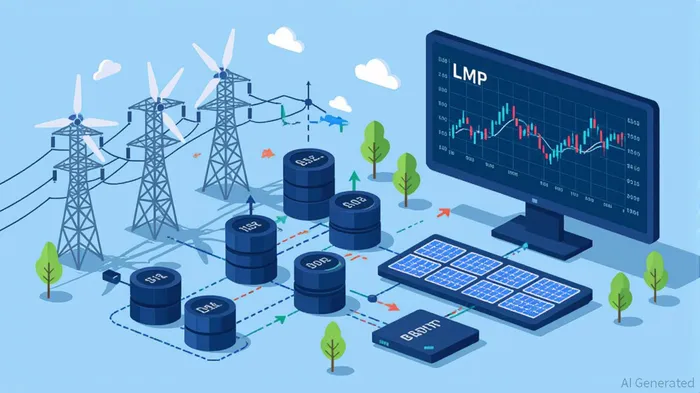
However, the transition to RTC+B has introduced operational complexities for battery operators. New rules, such as state-of-charge requirements, have raised the bar for participation and increased the risk of penalties. These adjustments highlight the tension between enhancing grid reliability and ensuring economic viability for storage assets.
Financial Implications and Investment Trends
The financial performance of energy storage assets post-RTC+B reveals a mixed landscape. While the reform is projected to deliver up to $6.4 billion in annual wholesale market savings through efficient resource utilization, initial market behavior has shown sharp increases in ancillary service prices, particularly for non-spin reserves, tripling compared to pre-RTC+B levels. This volatility underscores the challenges of balancing market efficiency with revenue stability for storage operators.
A critical concern is the decline in ancillary service revenues for battery energy storage systems (BESS) in ERCOT. Revenues from these services have fallen nearly 90% since 2023 due to market saturation, with BESS projected to earn only $17/kWh in 2025 compared to $149/kWh in 2023. This trend has pushed operators to adopt sophisticated strategies, such as energy arbitrage and site selection, to remain competitive. For example, batteries are increasingly being deployed in locations with high LMP volatility to maximize arbitrage opportunities, leveraging the real-time re-dispatch capabilities enabled by RTC+B.
Navigating Risk and Opportunity
The RTC+B framework's impact on risk profiles for storage investors is twofold. On one hand, the reduction in market volatility-achieved through co-optimization and ASDCs-lowers the uncertainty of revenue streams. On the other hand, the saturation of ancillary service markets and the shift toward energy arbitrage expose operators to new risks, such as over-reliance on narrow profit margins and exposure to weather-driven LMP fluctuations.
To mitigate these risks, market participants are advised to adopt hedging strategies, such as Day-Ahead/Real-Time Spreads, to secure consistent revenues. Additionally, hybrid battery configurations that combine energy storage with generation assets are gaining traction, allowing operators to diversify income streams and hedge against market downturns. These strategies reflect a broader industry shift toward resilience and adaptability in the face of evolving market structures.
Long-Term Value Creation or Volatility?
The question of whether RTC+B creates long-term value or volatility for storage investors hinges on the interplay between structural benefits and operational challenges. The reform's emphasis on grid efficiency and renewable integration aligns with global clean energy goals, positioning batteries as critical infrastructure for decarbonization. By streamlining data submission and enhancing market visibility for ESRs, RTC+B also fosters a more competitive environment, potentially driving down costs for consumers while expanding the role of storage in grid operations.
However, the erosion of premium ancillary service revenues and the complexity of navigating new market rules pose significant hurdles. Investors must weigh the long-term economic benefits of a more efficient grid against the short-term risks of reduced profitability. The key to unlocking value lies in innovation-whether through advanced battery technologies, hybrid systems, or strategic market participation-to capitalize on the opportunities created by RTC+B.
Conclusion
ERCOT's RTC+B Market Reform represents a bold step toward a modernized, resilient grid that supports the clean energy transition. While the integration of batteries into real-time pricing introduces both opportunities and challenges, the reform's structural advantages-enhanced efficiency, reduced volatility, and expanded market participation-position energy storage as a cornerstone of Texas's energy future. For investors, success will depend on adaptability, strategic foresight, and a commitment to leveraging the dynamic potential of a grid reimagined for the 21st century.

Blending traditional trading wisdom with cutting-edge cryptocurrency insights.
Latest Articles
Stay ahead of the market.
Get curated U.S. market news, insights and key dates delivered to your inbox.


AInvest
PRO
AInvest
PRO



Comments
No comments yet