
ERCOT's RTC+B Market Reform and Its Impact on Energy Storage Assets
 Aime Summary
Market Structure and Operational Implications
RTC+B replaces the legacy ORDC with Ancillary Service Demand Curves (ASDCs), enabling granular pricing for specific ancillary services and treating batteries as a single resource with a state-of-charge (SoC). This change allows batteries to respond dynamically to real-time supply and demand fluctuations, enhancing grid reliability and reducing curtailment of renewable energy. For example, in a modeled "mid-day soak and shift" scenario, batteries under RTC+B stored surplus solar generation during peak production hours and discharged during high-demand periods, avoiding curtailment and reducing total system costs by 5.5%.
However, this operational flexibility comes with trade-offs. According to market analysis, RTC+B may reduce market volatility and the frequency of premium pricing for storage assets. Additionally, new data submission requirements-such as SoC visibility and ancillary service deployment factors-introduce operational complexity for operators.
Financial Impact and Revenue Streams
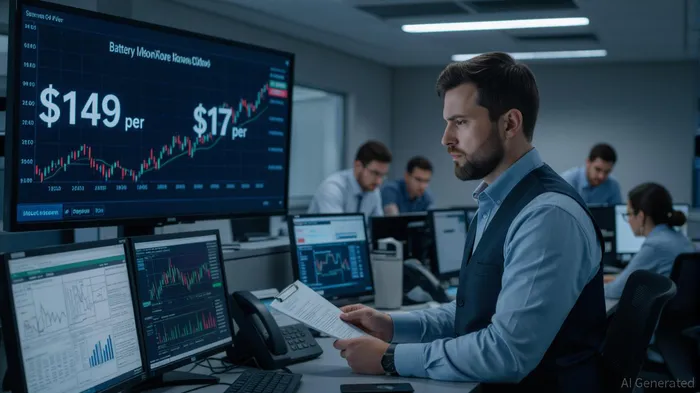 The financial implications of RTC+B are stark. According to EIR, average annual battery revenue in ERCOT plummeted from $149 per kilowatt in 2023 to just $17 per kilowatt in 2025, a near 90% decline attributed to market saturation and reduced ancillary service prices. While the reform is projected to deliver $2.5–$6.4 billion in annual wholesale market savings through improved efficiency, these gains do not directly translate to higher battery ROI, as system-wide costs are expected to decrease according to ERCOT.
Case studies highlight both opportunities and challenges. In a "solar cliff" scenario, RTC+B's real-time re-dispatch prevented ancillary service price spikes and improved system efficiency. Conversely, the integration of batteries into co-optimization algorithms has created a more competitive environment, where batteries often set prices during peak hours, potentially eroding their own revenue margins.
Hybrid vs. Standalone Business Models
The profitability of hybrid (energy + ancillary services) versus standalone battery storage systems under RTC+B hinges on strategic adaptability. Hybrid systems, which combine storage with other generation or demand-side resources, may capture more value by leveraging real-time dispatch signals and node-specific arbitrage opportunities. For instance, in H1 2025, 42% of battery fleet revenue came from ancillary services, with top-performing assets capturing over 100% of their Day-Ahead (DA) TB2 energy.
However, standalone systems face headwinds. According to YesEnergy, the requirement to maintain minimum SoC levels to qualify for ancillary services, coupled with the risk of reassignment to the energy market, limits their ability to compete. Some operators have already exited the day-ahead ancillary service market entirely, citing these risks. Hybrid models, by contrast, offer greater flexibility to navigate these constraints, though they require advanced automation and optimization tools to maximize revenue according to Voltus.
Long-Term Projections and Strategic Adaptations
From 2026 to 2030, the long-term profitability of battery storage in Texas remains uncertain. On one hand, RTC+B's integration of batteries into real-time dispatch could enhance asset utilization and reduce curtailment of renewables, indirectly supporting ROI through cost savings according to ERCOT. On the other, the proliferation of storage assets may drive down ancillary service prices, challenging traditional revenue streams according to ERCOT.
Strategic adaptations will be critical. Operators must prioritize:
1. Energy Arbitrage and Ancillary Service Stacking: Leveraging real-time price signals to optimize charging/discharging cycles and stack multiple revenue streams according to Gridbeyond.
2. Node-Specific Strategies: Targeting locations with high locational marginal pricing (LMP) volatility to maximize arbitrage opportunities according to Tyba.
3. Advanced Automation: Deploying AI-driven tools to manage SoC constraints, bid dynamically in day-ahead markets, and avoid penalties according to Voltus.
Conclusion
ERCOT's RTC+B reform is a double-edged sword for battery storage investors. While it enhances grid reliability and unlocks new efficiency gains, it also reshapes revenue dynamics, favoring operators with agile, hybrid business models and advanced technological capabilities. For long-term profitability, success will depend on the ability to navigate reduced volatility, adapt to real-time market signals, and capitalize on the unique value proposition of storage in a decarbonizing grid.

Blending traditional trading wisdom with cutting-edge cryptocurrency insights.
Latest Articles
Stay ahead of the market.
Get curated U.S. market news, insights and key dates delivered to your inbox.






Comments
No comments yet