
ERCOT's RTC+B Market Reform and Its Impact on Clean Energy Asset Valuation
 Aime Summary
A New Paradigm for Grid Efficiency
ERCOT's RTC+B program replaces the outdated Operating Reserve Demand Curve (ORDC) with Ancillary Service Demand Curves (ASDCs), a shift that better reflects the value of grid stability services in a system increasingly powered by intermittent renewables like solar and wind according to ERCOT. By co-optimizing energy and ancillary services in real time, the market now treats battery storage as a single, integrated resource with a defined state of charge, rather than as separate generators and loads according to Resurety. This change allows for more precise dispatch of resources, reducing operational inefficiencies and curtailment of renewable energy.
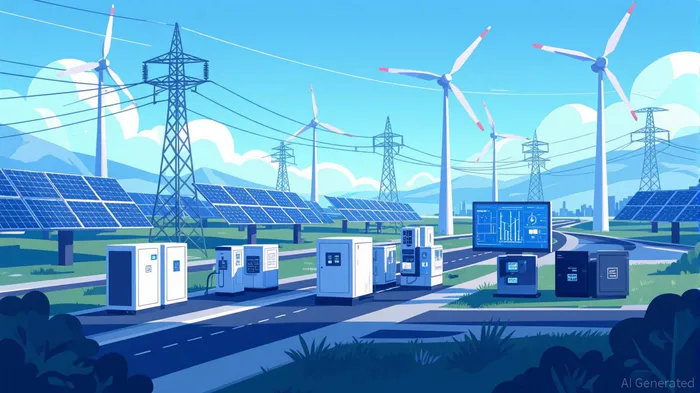
The benefits are tangible. In a simulated case study, RTC+B enabled a 2.7% reduction in system costs during a peak demand scenario by reallocating battery resources to provide regulation up services according to Enverus. Another scenario, dubbed the "Solar Cliff," demonstrated how the system could respond to sudden drops in solar generation by dispatching combustion turbines earlier, avoiding price spikes and ensuring reliability according to RenewAFI. These examples underscore how RTC+B enhances grid flexibility-a critical attribute as Texas's renewable capacity continues to surge.
Clean Energy Asset Valuation: Winners and Trade-offs
For clean energy investors, the RTC+B reform introduces both opportunities and complexities. On the positive side, the projected annual savings from improved grid efficiency are expected to lower the levelized cost of energy (LCOE) for renewable projects by reducing curtailment and operational volatility according to Resurety. The integration of battery storage as a single-model resource also enhances asset utilization, allowing developers to capture value from multiple ancillary services simultaneously according to Enverus.
However, the reform's emphasis on efficiency may temper long-term returns for certain technologies. By reducing market volatility and the premium prices associated with scarcity events, RTC+B could lower the internal rate of return (IRR) for battery projects that previously relied on high-price differentials during peak demand according to RenewAFI. Additionally, the introduction of state-of-charge constraints limits the ability of batteries to stack multiple ancillary services, potentially constraining revenue streams according to Resurety.
Grid Modernization as a Catalyst for Transition
The broader lesson here is that grid modernization is not just a technical imperative but an economic one. By aligning market design with the realities of a decarbonizing grid, ERCOT is creating a system that rewards innovation while penalizing inertia. The Public Utility Commission of Texas (PUCT) has long emphasized the need for market evolution to support reliability and affordability according to ERCOT, and RTC+B is a direct response to that mandate.
For investors, this means that the most successful clean energy projects will be those that align with the new market's priorities: flexibility, responsiveness, and integration. Solar and wind developers who pair their assets with advanced storage systems, for instance, will be better positioned to capitalize on the real-time co-optimization framework. Similarly, projects that demonstrate resilience to weather-related disruptions-such as those leveraging AI-driven forecasting tools-will gain a competitive edge in a system where predictability is paramount according to Enverus.
The Road Ahead
ERCOT's RTC+B reform is a testament to the power of market design to shape the energy transition. While the immediate financial impacts on clean energy assets remain nuanced, the long-term trajectory is clear: a grid that is smarter, cheaper, and more sustainable. For investors, the challenge will be to navigate the evolving dynamics of volatility, revenue streams, and technological integration. But for those who embrace the change, the rewards are substantial.
As the Independent Market Monitor notes, the savings from RTC+B are not just a one-time windfall-they represent a structural shift in how Texas manages its energy future according to Resurety. In a world where climate risks and energy security concerns are escalating, such innovations are not optional; they are essential. The question is no longer whether the grid can adapt, but how quickly investors can align their portfolios with the new reality.

Blending traditional trading wisdom with cutting-edge cryptocurrency insights.
Latest Articles
Stay ahead of the market.
Get curated U.S. market news, insights and key dates delivered to your inbox.


AInvest
PRO
AInvest
PRO



Comments
No comments yet