
ERCOT's RTC+B Market Reform: A Game Changer for Grid Stability and Energy Cost Efficiency
 Aime Summary
A New Paradigm for Grid Efficiency
ERCOT's RTC+B program is projected to deliver annual wholesale market savings of $2.5 to $6.4 billion by optimizing resource utilization and reducing curtailment of renewable energy according to Resurety. By modeling batteries as single devices with a state-of-charge, the program allows for precise dispatch of stored energy, enhancing grid flexibility and reducing manual interventions that previously caused congestion according to ERCOT. This co-optimization of energy and ancillary services is expected to cut total system costs by up to 5.5%, according to Enverus, while improving reliability during periods of high demand or renewable generation variability.
For investors, the RTC+B framework signals a structural shift in how energy storage is valued. Batteries can now submit bids for multiple ancillary services and energy in real time, unlocking new revenue streams. However, this also demands advanced forecasting tools and operational agility to manage state-of-charge constraints and dispatch requirements according to ERCOT.
Energy Storage: A Booming Investment Frontier
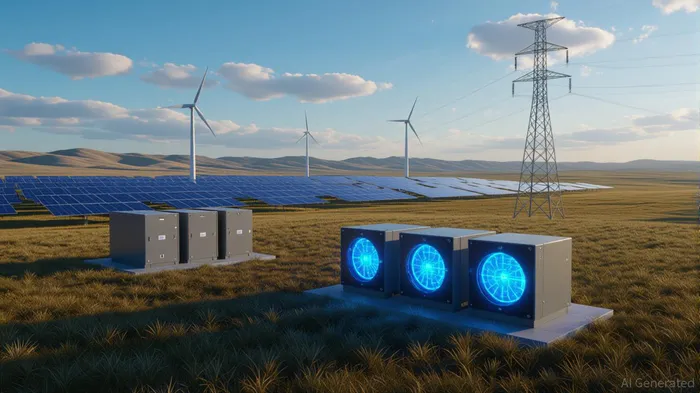 Texas's energy storage market is poised for explosive growth, driven by policy tailwinds and the RTC+B-enabled market design. By mid-2026, ERCOT is expected to add 4.7 GW of battery energy storage systems (BESS), according to Enverus, supported by $2.28 billion in Texas Energy Fund loans. Hybrid projects combining solar, wind, and storage are particularly attractive, as they allow operators to capture high-value ancillary service revenues while mitigating penalties for non-performance according to Ascend Analytics.
Key projects under development include the Mallard Energy Storage project (250 MW/500 MWh) near Dallas, which uses Wärtsilä's advanced battery technology and is backed by a tolling agreement with a Fortune 500 company according to PowerMag, and the Gunnar Reliability Project (150 MW/300 MWh) in Hidalgo County, set to begin operations by late 2026 according to PowerMag. GridStor's 350 MWh project in Hidalgo County further underscores the state's reliance on BESS to meet peak demand according to ESS News.
The solar sector, which broke 17 records in 2025, is also accelerating storage deployment. Battery systems are critical for absorbing surplus solar energy during the day and discharging it during evening peaks, reducing reliance on natural gas peaker plants according to Lone Star Solar Services. This trend is expected to continue as ERCOT's demand grows by 21% from 2024 to 2026 according to Lone Star Solar Services.
Grid Infrastructure: Meeting the Challenges of a High-Demand Future
Texas's grid infrastructure is undergoing a $70% increase in annual capital expenditure from 2021–2025 to 2025–2029, according to Reuters, driven by surging demand from data centers and industrial operations. Over 220 GW of projects, including 70% data centers, are slated to connect to the grid by 2030 according to CNBC. However, speculative development risks overbuilding, prompting Texas to implement measures such as $100,000 fees for initial studies and requirements for secured site ownership according to CNBC.
Transmission expansion is critical to connecting remote renewables to load centers. Without it, grid congestion and reliability risks will escalate, especially as electricity demand is projected to double by 2030 according to Foley. Funding mechanisms include ratepayer contributions, direct charges on large consumers, public-private partnerships, and federal grants according to Foley.
Strategic Investment Opportunities
- Battery Storage Developers: Companies like Wärtsilä and GridStor are leading the charge in deploying large-scale BESS projects. Their partnerships with Fortune 500 firms and tolling agreements provide stable revenue streams according to ESS News.
- Hybrid Renewable Projects: Firms integrating solar, wind, and storage-such as Sunrun and NRG Energy's collaboration on distributed energy solutions-are well-positioned to capitalize on ancillary service markets according to ESS News.
- Grid Equipment Manufacturers: The need for advanced forecasting and optimization tools to manage state-of-charge constraints in RTC+B's real-time market presents opportunities for tech firms specializing in grid analytics according to ERCOT.
- Transmission Infrastructure: Investors in transmission expansion, supported by public-private partnerships, can benefit from long-term contracts and federal incentives as Texas addresses grid bottlenecks according to Foley.
Conclusion
ERCOT's RTC+B reform is not merely a technical upgrade but a catalyst for a new energy ecosystem in Texas. By redefining the role of batteries and ancillary services, the program is unlocking billions in savings while accelerating the transition to a renewable-powered grid. For investors, the path forward lies in targeting energy storage, hybrid projects, and grid infrastructure-sectors that are set to thrive in this reimagined market. As Texas's demand for electricity surges, the RTC+B framework ensures that innovation and efficiency remain at the forefront of the state's energy strategy.

Blending traditional trading wisdom with cutting-edge cryptocurrency insights.
Latest Articles
Stay ahead of the market.
Get curated U.S. market news, insights and key dates delivered to your inbox.




Comments
No comments yet