
The ERCOT RTC+B Market Reform: A Game-Changer for Grid Reliability and Battery Storage Economics
 Aime Summary
A Structural Overhaul for Grid Efficiency
ERCOT's RTC+B replaces the outdated Operating Reserve Demand Curve with Ancillary Service Demand Curves (ASDCs), enabling granular pricing for specific ancillary services such as regulation and responsive reserves. This shift allows the grid to dynamically adjust to supply-demand imbalances, particularly during volatile periods like solar "cliff" events, where sudden drops in renewable generation could previously destabilize the system. By modeling batteries as a single device with a state-of-charge parameter, the reform enhances their operational flexibility, allowing them to charge and discharge in real time to meet grid needs.
According to a report by Resurety, this co-optimization is projected to reduce annual system costs by $2.5 billion to $6.4 billion by 2026, primarily through improved utilization of low-cost renewable resources and reduced reliance on natural gas during peak hours. However, the same report notes that the increased efficiency may erode the premium pricing of ancillary services, potentially limiting long-term revenue streams for battery operators.
Strategic Reallocations in Battery Storage Portfolios
Institutional investors are already recalibrating their clean energy portfolios to align with the new market structure. The integration of BESS into co-optimization has altered revenue dynamics, shifting the value of storage from scarcity-driven pricing to a more stable, system-wide benefit. For example, batteries are now required to maintain strict state-of-charge constraints to fulfill committed services, which could limit the practice of stacking multiple ancillary services-a strategy previously used to maximize returns as reported by Canary Media.
Canary Media analysis highlights the dual-edged nature of these changes: while RTC+B enhances grid resilience, it introduces operational complexity for battery operators, who must navigate dynamic redispatch rules and shorter service duration limits. This has led some investors to prioritize projects with diversified revenue streams, such as combining BESS with solar or wind assets to hedge against market volatility.
Decentralized Infrastructure as a New Frontier
Beyond battery storage, the RTC+B reform is accelerating investment in decentralized grid infrastructure. ERCOT's recent launch of the Grid Research, Innovation, and Transformation initiative underscores a commitment to prototyping next-generation technologies, including AI-driven grid analytics and distributed energy resource (DER) integration. These advancements are expected to bolster the role of microgrids and community-based energy systems, which can operate semi-independently during outages-a critical feature in a climate-vulnerable region like Texas.
Moreover, the U.S. clean energy sector's projected $3.5 trillion in private investment by 2035 hinges on stable tax policies, which, as noted by the American Clean Power Association, could reduce energy system costs by 11% and sustain over 3.5 million jobs. Institutional investors are increasingly allocating capital to decentralized infrastructure projects that align with these policy-driven opportunities, recognizing their dual role in enhancing grid resilience and capturing regulatory tailwinds.
Navigating Risks and Opportunities
While the RTC+B framework offers clear economic and operational benefits, investors must remain vigilant about emerging risks. The short-term spike in ancillary service prices observed on the reform's first day of implementation-particularly for non-spin reserves-highlights the potential for market volatility. Additionally, the transition to a single-model treatment for batteries may require significant capital expenditures for operators to upgrade control systems and comply with new SOC constraints as detailed in RenewAFI analysis.
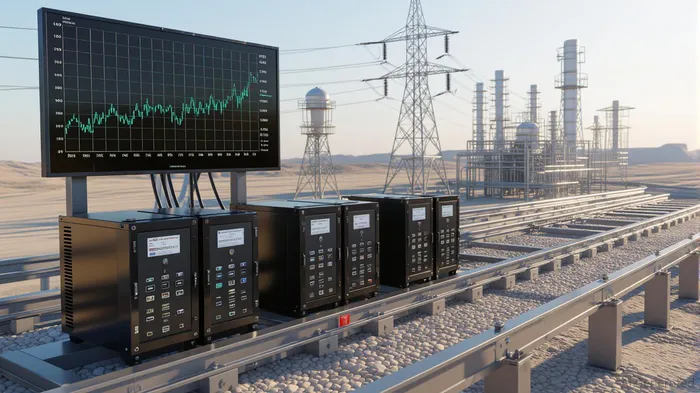 For asset managers, the key lies in balancing these risks with the long-term potential of a more resilient grid. Projects that leverage AI and real-time data analytics to optimize BESS performance, for instance, are likely to outperform in the new market environment as demonstrated by ERCOT's new initiatives. Similarly, partnerships with ERCOT's newly established Enterprise Data and Artificial Intelligence division could provide early access to cutting-edge tools for grid forecasting and resource allocation.
Conclusion
ERCOT's RTC+B reform is a watershed moment for Texas's energy market, offering a blueprint for integrating renewable resources and storage into a modernized grid. For investors, the challenge is to align portfolios with the evolving economics of battery storage and decentralized infrastructure while mitigating operational and regulatory risks. As the market stabilizes, those who adapt swiftly to the new paradigm-leveraging AI, diversifying revenue streams, and prioritizing resilience-will be best positioned to capitalize on the multi-billion-dollar opportunities unlocked by this transformative overhaul.

Blending traditional trading wisdom with cutting-edge cryptocurrency insights.
Latest Articles
Stay ahead of the market.
Get curated U.S. market news, insights and key dates delivered to your inbox.


AInvest
PRO
AInvest
PRO



Comments
No comments yet