
ERCOT's RTC+B Market Reform: A Game-Changer for Clean Energy and Battery Storage Investing


 Aime Summary
Pricing Mechanisms: Granular Signals and Enhanced Storage Value
At the heart of RTC+B is the replacement of the traditional Operating Reserve Demand Curve (ORDC) with Ancillary Service Demand Curves, which provide more precise pricing for specific ancillary services such as frequency regulation and voltage support. This granular approach allows battery storage operators to capture value not just for energy arbitrage but for the full spectrum of grid services they can provide. By modeling batteries as a single device with a dynamic state-of-charge, the market can dispatch stored energy more efficiently, reducing curtailment risks and maximizing revenue streams.
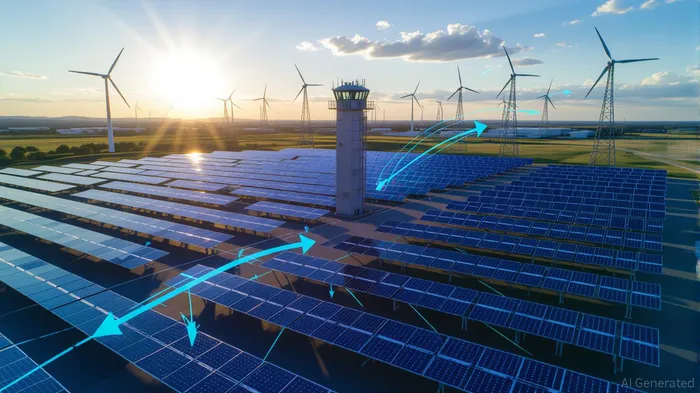 For example, a battery operator can now submit bids for both energy and ancillary services simultaneously, optimizing its asset's utilization in real time. This co-optimization reduces operational inefficiencies and replaces outdated supplemental reserve markets, which were often criticized for their lack of responsiveness. As a result, the RTC+B framework turns batteries from passive storage units into active participants in grid stability, directly increasing their economic viability.
Reliability and Grid Performance: A New Era of Resilience
The integration of battery storage into real-time co-optimization also addresses one of the most persistent challenges in renewable-heavy grids: variability. Wind and solar power, while essential for decarbonization, introduce intermittency that can strain grid operators. RTC+B mitigates this by enabling faster, more flexible responses to supply-demand imbalances. According to ERCOT, the program's design reduces manual interventions by operators and improves congestion management, enhancing system resilience.
This reliability boost is not just operational-it's economic. By smoothing the volatility of renewable generation, RTC+B reduces the need for costly peaking plants and lowers overall system costs. For investors in solar and wind projects, this means a more predictable revenue environment, as the grid's ability to absorb and balance variable output improves. The projected $2.5–$6.4 billion in annual savings underscores the scale of these benefits, offering a compelling case for long-term investments in renewables.
Asset Value and Investment Opportunities
The RTC+B reform reshapes the value proposition for three key asset classes:
1. Battery Storage: With access to multiple revenue streams and reduced operational complexity, storage projects now offer higher returns and lower risk. The ability to dynamically manage state-of-charge also extends battery lifespans, further improving economics.
2. Renewables: Enhanced grid flexibility reduces curtailment and ensures that solar and wind assets operate closer to their theoretical capacity factors. This directly increases the net present value of new projects.
3. Grid Infrastructure: The need for advanced automation, forecasting tools, and real-time data analytics creates opportunities for tech firms and infrastructure providers. As noted by GridBeyond, market participants must now adopt sophisticated software to remain competitive in the faster-paced RTC+B environment.
Investors should also consider the secondary effects of the reform. For instance, the displacement of inefficient reserve markets could free up capital for innovation in decentralized energy resources. Meanwhile, the program's emphasis on automation and digitalization aligns with broader trends in the energy transition, such as the rise of virtual power plants and distributed energy resource management systems.
Strategic Entry Points for Investors
The RTC+B rollout is not without challenges. Market participants must adapt to a more complex bidding process and invest in technologies to manage real-time operations. However, these hurdles represent opportunities for early movers. As REsurety highlights, the program's economic benefits are already materializing, with savings expected to compound as battery deployment scales.
For clean energy investors, the message is clear: the RTC+B model is a blueprint for the future. By prioritizing assets that align with its principles-flexibility, digital integration, and multi-service capability-portfolios can capitalize on a market that rewards innovation. In Texas, where energy transition is no longer a distant goal but an active reality, the time to act is now.

La combinación de la sabiduría tradicional en el comercio con las perspectivas más avanzadas sobre criptomonedas.
Latest Articles
Stay ahead of the market.
Get curated U.S. market news, insights and key dates delivered to your inbox.


AInvest
PRO
AInvest
PRO



Comments
No comments yet