
ERCOT's RTC+B Market Reform: A Game-Changer for Battery Economics and Clean Energy Contracts
 Aime Summary
The Mechanics of RTC+B and Its Impact on Battery Economics
At the heart of ERCOT's reform is the co-optimization of energy and ancillary services in real time, with battery storage treated as a single device with a defined state of charge. This allows batteries to be dispatched more efficiently, balancing supply and demand while providing critical grid services like frequency regulation and voltage support according to ERCOT. By integrating battery state-of-charge into real-time dispatch, ERCOT reduces inefficiencies caused by outdated market rules that treated batteries as separate entities for energy and ancillary services.
The reform also replaces the previous Operating Reserve Demand Curve (ORDC) with Ancillary Service Demand Curves (ASDCs), which more accurately value the specific contributions of batteries to grid stability. This shift has immediate financial implications: batteries can now generate revenue from multiple streams simultaneously, increasing their utilization rates and reducing downtime. However, as battery capacity becomes less scarce, the volatility that once drove high returns for storage assets may diminish. In 2025, average returns for merchant battery energy storage systems (BESS) in ERCOT have already fallen below $45/kW-year, signaling a need for investors to adapt to a more competitive landscape. 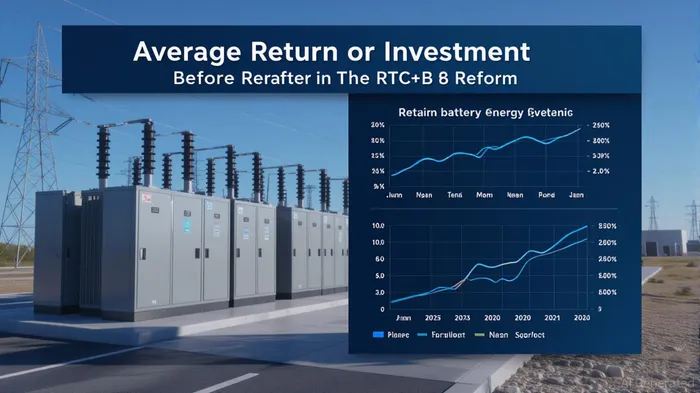
Implications for VPPA Buyers and Contract Design
Virtual Power Purchase Agreements (VPPAs) have long been a tool for corporations to hedge against energy price volatility while supporting renewable energy deployment. With RTC+B, VPPA buyers stand to benefit from more stable and predictable pricing structures, as batteries help smooth out the intermittency of wind and solar generation according to research. The reform also introduces new opportunities for hybrid projects-where batteries are co-located with solar or wind assets-to maximize value. For example, co-located solar and battery projects can shift generation to peak demand hours, reducing curtailment risks and enhancing revenue streams.
However, the evolving market dynamics necessitate a reevaluation of VPPA contract structures. Energy buyers must now account for the interplay between Day-Ahead and Real-Time markets, where tighter spreads post-RTC+B could affect the arbitrage potential of behind-the-meter storage. Structured offtake agreements, such as tolling agreements or capacity payments, may become more attractive as a way to lock in returns in a less volatile environment according to industry analysis.
Actionable Insights for Investors
For storage investors and clean energy developers, the RTC+B reform presents both opportunities and challenges. Here's how to position for success:
Prioritize Structured Offtake Agreements: With merchant BESS returns declining, investors should seek projects with guaranteed offtake through tolling agreements, power purchase agreements (PPAs), or co-located generation partnerships according to market research. These structures mitigate revenue uncertainty and align with the new market's emphasis on predictable dispatch.
Leverage Hybrid Project Dynamics: Standalone battery projects are becoming less viable in ERCOT's competitive ancillary service markets. Instead, focus on hybrid systems that pair storage with solar, wind, or even hydrogen production to diversify revenue streams and improve project economics.
Monitor Market Volatility and Pricing Signals: While RTC+B reduces system-wide costs, it also flattens price spreads that historically benefited storage. Investors must closely track how real-time pricing evolves and adjust asset management strategies accordingly.
4 Engage with VPPA Buyers Early: The reform's benefits for grid stability and cost savings make it an attractive proposition for corporate buyers. Early engagement can help shape contract terms that reflect the new market realities, such as incorporating battery performance metrics into VPPA pricing models according to industry experts.
Conclusion
ERCOT's RTC+B market reform is a landmark development for Texas energy markets, delivering billions in savings while redefining the role of battery storage. For investors, the key takeaway is clear: adaptability is paramount. The era of high-margin, volatility-driven storage returns is waning, but the opportunities for structured, hybrid, and grid-integrated projects are expanding. As the market matures, those who align their strategies with the principles of co-optimization and multi-service revenue streams will be best positioned to thrive in ERCOT's next chapter.

Blending traditional trading wisdom with cutting-edge cryptocurrency insights.
Latest Articles
Stay ahead of the market.
Get curated U.S. market news, insights and key dates delivered to your inbox.


AInvest
PRO
AInvest
PRO



Comments
No comments yet