
ERCOT's RTC+B Market Reform and Energy Storage Valuation: A New Era for Grid Modernization and Battery-as-Asset Economics
 Aime Summary
Technical Foundations of RTC+B: A Paradigm Shift
At its core, RTC+B replaces the outdated Operating Reserve Demand Curve (ORDC) with Ancillary Service Demand Curves (ASDCs), enabling granular pricing for specific ancillary services like regulation up/down and frequency response. This shift allows batteries to be modeled as single devices with a state-of-charge, rather than as separate charging and discharging assets. By treating BESS as unified resources, the market can dynamically dispatch stored energy to address supply-demand imbalances, reducing manual operator interventions and improving grid reliability.
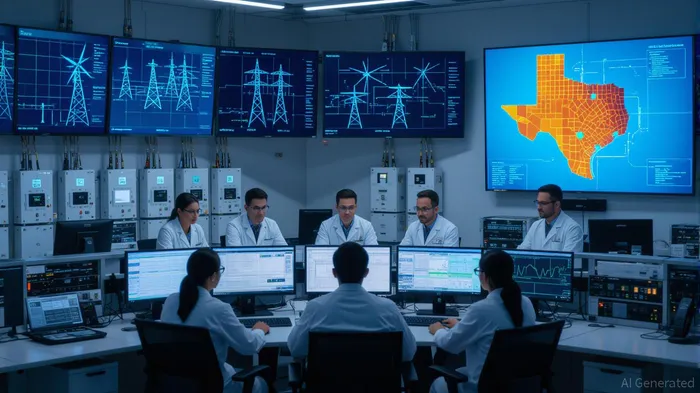 The reform also introduces real-time co-optimization of energy and ancillary services every five minutes, a departure from the previous once-a-day construct. This dynamic framework ensures that resources are allocated based on real-time scarcity values, optimizing system efficiency and reducing congestion costs. For batteries, this means greater flexibility to pivot between energy arbitrage and ancillary services, depending on market conditions.
Economic Implications: Cost Savings and Revenue Diversification
The financial impact of RTC+B is staggering. According to a report by Resurety, the reform is projected to deliver annual wholesale market savings of $2.5–$6.4 billion by reducing operational costs and curbing energy volatility. These savings stem from smarter resource utilization, reduced curtailment of renewable energy and more efficient procurement of ancillary services. For battery operators, the new design opens avenues for diversified revenue streams.
Case studies conducted by Enverus using the SCUC/ED engine illustrate the economic benefits. In a "Swap the Reg" scenario, real-time battery dispatch reduced total system costs by 2.7% by optimizing regulation up services. Similarly, a "Solar Cliff" case demonstrated how RTC+B enabled faster responses to solar generation shortfalls, avoiding price spikes and maintaining grid stability. These outcomes highlight the potential for batteries to act as both cost mitigators and revenue generators in a real-time co-optimized market.
However, the transition is not without challenges. Data from H1 2025 shows that battery revenues were heavily reliant on ancillary services, which accounted for 42% of fleet-wide earnings. With the saturation of the battery market in ERCOT, ancillary service revenues for BESS have plummeted-dropping from $149/kWh in 2023 to $17/kWh in 2025. This decline underscores the need for operators to adapt to a revenue model that prioritizes energy arbitrage and strategic site selection over ancillary services alone.
Investment Considerations: Balancing Risk and Reward
For investors, the RTC+B framework presents a dual-edged sword. On one hand, the projected $2.5–$6.4 billion in annual savings and enhanced grid efficiency create a robust foundation for long-term value creation. On the other, the reduced volatility in energy prices and ancillary service revenues necessitates a reevaluation of traditional battery-as-asset valuation metrics like Levelized Cost of Energy (LCOE) and Internal Rate of Return (IRR).
The Enverus case studies suggest that the key to profitability lies in leveraging the real-time co-optimization framework to maximize asset utilization. For instance, the "Mid-Day Soak and Shift" scenario demonstrated a 5.5% reduction in system costs by storing surplus solar energy and discharging during peak demand, a strategy requiring sophisticated bidding algorithms. Such strategies require sophisticated bidding algorithms and node-specific market intelligence, which may increase operational complexity but also enhance returns.
Moreover, the implementation of stricter state-of-charge constraints under RTC+B adds another layer of complexity. While these constraints ensure feasible dispatch, they also limit the flexibility of batteries to arbitrage energy prices across extended periods. Investors must weigh these operational trade-offs against the long-term benefits of a more resilient and cost-effective grid.
Conclusion: A Catalyst for Grid Modernization
ERCOT's RTC+B reform is more than a technical upgrade-it is a catalyst for grid modernization that redefines the economics of battery storage. By integrating BESS into real-time co-optimization, the market has unlocked new pathways for efficiency, reliability, and cost savings. While the initial phase of implementation has exposed challenges like revenue volatility and operational complexity, the long-term outlook remains optimistic.
For battery-as-asset projects, success under RTC+B will hinge on adaptability. Operators must embrace advanced data analytics, strategic site selection, and dynamic bidding strategies to thrive in this new paradigm. Investors, in turn, should view the reform as an opportunity to capitalize on a grid that is evolving to meet the demands of a decarbonized future.
As the Texas grid transitions into this next phase, one thing is clear: the era of static, siloed energy markets is over. The future belongs to those who can harness the power of real-time co-optimization.

Blending traditional trading wisdom with cutting-edge cryptocurrency insights.
Latest Articles
Stay ahead of the market.
Get curated U.S. market news, insights and key dates delivered to your inbox.


AInvest
PRO
AInvest
PRO



Comments
No comments yet