
ERCOT's RTC+B Market Reform and Energy Storage Investment: A New Era for Grid Optimization and Clean Energy Contracting


 Aime Summary
Battery Economics: From Scarcity to Stability
ERCOT's RTC+B program integrates battery energy storage systems into real-time market operations for the first time, modeling them as unified assets with dynamic state-of-charge (SoC) parameters. This co-optimization of energy and ancillary services allows batteries to bid into the market based on their current charge levels, enabling more precise dispatch and reducing curtailment of renewable energy. According to a report by Resurety, this innovation is projected to deliver annual wholesale market savings of $2.5–$6.4 billion by 2026, driven by reduced reliance on combustion turbines during peak demand and improved grid flexibility.
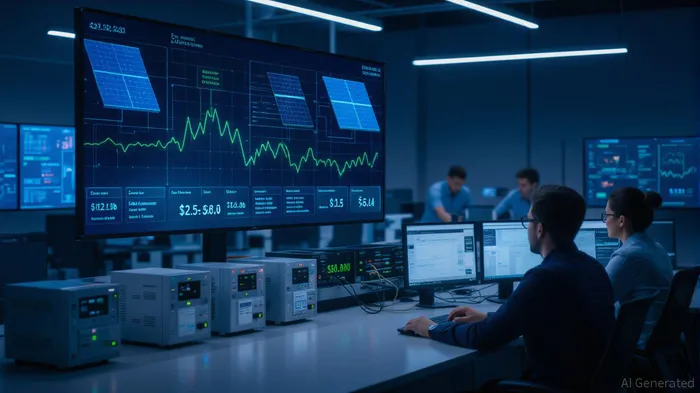 However, the economic benefits for battery operators are not without caveats. The replacement of the Operating Reserve Demand Curve (ORDC) with Ancillary Service Demand Curves (ASDCs) under RTC+B means that batteries are now compensated for specific ancillary services (e.g., frequency regulation) rather than receiving a flat premium for reserve capacity. While this creates more accurate price signals, it also reduces the frequency of high-revenue scarcity events that previously made BESS a lucrative investment. Ascend Analytics warns that this shift could lead to a "roller coaster" of revenues for battery operators, driven by weather-dependent fluctuations in solar and wind generation.
For example, during periods of high solar output, batteries may earn less from discharging into the grid due to lower energy prices, while their value in providing ancillary services could spike during sudden generation drops. This volatility requires operators to adopt sophisticated revenue stacking strategies, balancing energy arbitrage with ancillary service participation.
Clean Energy Contracting: New Financial Instruments and PPA Dynamics
The RTC+B framework also introduces novel financial instruments that are redefining power purchase agreements (PPAs) and investment structures. One key innovation is the Day-Ahead Ancillary Service-Only Offers (ASOOs), which allow qualified scheduling entities to bid for ancillary services without requiring a physical resource. This opens the door for virtual power plants and software-driven grid services to compete alongside traditional generators, potentially lowering PPA prices for buyers.
Moreover, the retirement of legacy mechanisms like the Non-Spin $75/MWh TPO price floor under RTC+B has streamlined market operations, reducing administrative costs and increasing liquidity. For developers, this means shorter timelines for project approvals and more predictable revenue streams, which could attract institutional capital to battery projects. However, the reduced volatility in ancillary service pricing may also temper the premium once offered in PPAs for projects with storage components.
A case in point is the recent 15-year PPA signed by a Texas solar-plus-storage developer, which now includes a clause tying payments to real-time ancillary service performance metrics under the RTC+B framework. Such contracts reflect a shift from fixed-price guarantees to variable revenue models that align with grid conditions, a trend likely to accelerate as market participants adapt to the new paradigm.
Investment Implications and Strategic Considerations
For investors, the RTC+B reform presents a dual-edged sword. On one hand, the projected $2.5–$6.4 billion in annual savings and the enhanced role of batteries in grid stability make Texas a magnet for clean energy capital. On the other, the transition to a scarcity-driven revenue model requires operators to adopt advanced analytics and real-time optimization tools to maximize returns.
Key strategic considerations include:
1. Technology Agnosticism: Projects must be designed to flexibly switch between energy arbitrage and ancillary service provision.
2. Geographic Diversification: Battery operators in regions with high renewable penetration (e.g., West Texas) may face greater revenue volatility compared to those in areas with more balanced generation mixes.
3. Regulatory Alignment: Developers should monitor ERCOT's ongoing adjustments to the UDSP and offer caps, which could further refine market dynamics.
Conclusion
ERCOT's RTC+B program is a landmark reform that redefines the value proposition for energy storage and clean energy contracting. While the upfront costs of adapting to the new market design are non-trivial, the long-term benefits-enhanced grid resilience, reduced system costs, and a more dynamic revenue landscape-position Texas as a bellwether for the future of U.S. energy markets. For investors, the challenge lies in balancing the promise of innovation with the realities of a rapidly evolving regulatory and technological environment.

Blending traditional trading wisdom with cutting-edge cryptocurrency insights.
Latest Articles
Stay ahead of the market.
Get curated U.S. market news, insights and key dates delivered to your inbox.


AInvest
PRO
AInvest
PRO



Comments
No comments yet