
ERCOT's RTC+B Market Reform: A Catalyst for Grid Modernization and Clean Energy Investment
 Aime Summary
Grid Modernization: A Foundation for Resilience
The RTC+B framework replaces the outdated ORDC with Ancillary Service Demand Curves (ASDCs), which dynamically reflect the value of different grid support services. By modeling batteries as single devices based on their state-of-charge (SoC), the system enables more precise dispatch of energy and ancillary services, reducing manual interventions and congestion. This real-time co-optimization aligns with the growing share of intermittent renewables like solar and wind, which require flexible resources to balance supply and demand.
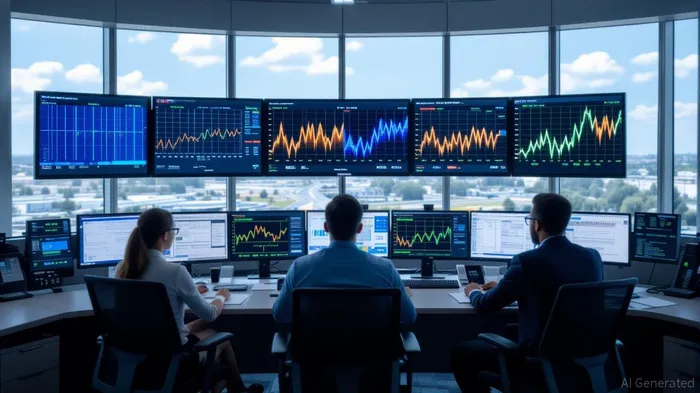 A key innovation is the five-minute Security Constrained Economic Dispatch (SCED), which allows the grid to respond rapidly to fluctuations in renewable generation and load. According to a report by Resurety, these changes are projected to yield annual wholesale market savings of $2.5–$6.4 billion by optimizing resource utilization and minimizing curtailment of clean energy. For grid operators, this marks a generational upgrade in efficiency and resilience.
Clean Energy Investment: New Opportunities and Risks
For renewable energy investors, RTC+B creates a more predictable and economically viable environment. By enabling batteries to participate in ancillary services markets, the reform opens new revenue streams for storage projects, which can now earn income from both energy arbitrage and grid support. This dual-income model enhances the financial feasibility of battery projects, particularly in a market where solar and wind penetration continues to rise.
However, the reform also introduces uncertainties. For instance, the requirement for batteries to maintain specific SoC levels to qualify for ancillary services has led to hesitancy among operators, potentially reducing competition and driving up prices for these services. As Canary Media notes, this could indirectly affect energy prices and investor returns. Additionally, while the system's efficiency may lower overall costs, it could reduce the frequency of high-revenue ancillary service calls, challenging the profitability of some storage assets.
Strategic Implications for Investors
The RTC+B framework's emphasis on real-time market signals and ASDCs provides investors with clearer pricing mechanisms to optimize asset performance. For example, renewable developers can leverage granular data on ancillary service values to design projects that align with grid needs, such as pairing solar with storage to address peak demand periods.
Moreover, the projected $1 billion in annual savings from smarter resource allocation underscores the long-term appeal of Texas's energy market for clean energy investment. However, success will depend on adaptability. As Energy-Storage.News highlights, operators must refine bidding strategies to navigate the new market dynamics and capitalize on evolving revenue opportunities.
Conclusion
ERCOT's RTC+B reform is a cornerstone of grid modernization, offering a blueprint for integrating renewable energy at scale while maintaining reliability. For investors, the reform presents a dual-edged opportunity: the potential for enhanced returns through diversified revenue streams, coupled with the need to navigate regulatory and operational complexities. As Texas transitions to a cleaner, more dynamic grid, strategic alignment with RTC+B's market design will be critical for unlocking the full value of clean energy investments.

Blending traditional trading wisdom with cutting-edge cryptocurrency insights.
Latest Articles
Stay ahead of the market.
Get curated U.S. market news, insights and key dates delivered to your inbox.


AInvest
PRO
AInvest
PRO



Comments
No comments yet