
ERCOT's RTC+B and Its Impact on Energy Storage Valuation: Strategic Investment in Battery Assets and Grid Reliability Infrastructure


 Aime Summary
The RTC+B Framework: A Paradigm Shift for Energy Storage
ERCOT's RTC+B replaces the outdated "combo model," which treated battery charging and discharging as separate assets, with a unified energy storage resource (ESR) framework. This change allows batteries to participate dynamically in energy and ancillary services markets, enabling real-time re-dispatch and co-optimization of resources according to a report. By integrating state-of-charge (SOC) constraints into market-clearing processes, the design enhances grid flexibility and reduces operational costs. According to Enverus, this co-optimization is projected to deliver annual wholesale market savings of $2.5–$6.4 billion, with significant benefits for renewable integration and system reliability.
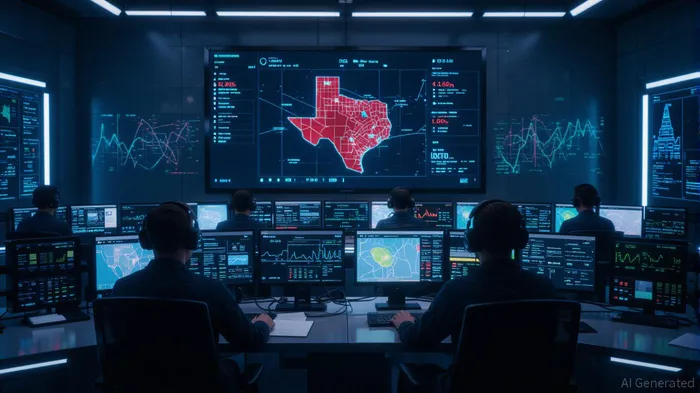 However, the transition has introduced new challenges. Battery operators now face stricter SOC requirements for ancillary services, which occur every five minutes, and must navigate a more complex bidding landscape. For instance, operators can submit up to ten bid pairs per interval for energy and five for ancillary services, necessitating advanced forecasting tools to maximize revenue streams. As noted by Ascend Analytics, the success of battery assets under RTC+B hinges on the adoption of platforms like SmartBidder, which optimize risk management and real-time decision-making.
Energy Storage Valuation: A Tale of Declining Profits and Rising Opportunities
Despite the market design's efficiency gains, profitability for battery energy storage systems (BESS) has plummeted. Average annual revenue for BESS in ERCOT dropped from $149 per kilowatt in 2023 to just $17 per kilowatt in 2025, driven by market saturation and declining ancillary service prices. This decline has forced operators to prioritize strategic site selection, operational timing, and energy arbitrage over fleet scale.
Yet, long-term fundamentals remain bullish. A Pexapark analysis highlights a 19% year-over-year increase in the expected energy arbitrage value of BESS over the next decade, driven by load growth and renewables integration. This suggests that while short-term margins are under pressure, the structural value of storage in balancing intermittent renewables and managing peak demand is set to rise.
Strategic Investment in Battery Assets: Navigating Complexity
For investors, the key to unlocking value in this evolving landscape lies in three pillars:
1. Advanced Analytics and Automation: The complexity of RTC+B demands tools that can model SOC constraints, optimize bid strategies, and predict grid conditions. Operators leveraging platforms like GridBeyond's optimization software are better positioned to capture revenue from multiple market products.
2. Colocation and Hybrid Systems: Colocated battery assets with solar or wind projects can capitalize on synergies, such as arbitraging excess renewable generation and reducing curtailment. Case studies from Enverus demonstrate that such systems can reduce total system costs by up to 5.5% during mid-day solar overgeneration scenarios.
3. Regulatory and Market Adaptation: Operators must stay ahead of evolving rules, such as revised qualification requirements for ancillary services. Those who adapt quickly-by securing high-value ancillary service contracts or optimizing dispatch timing-will outperform peers in a competitive market.
Grid Reliability and Infrastructure Investment: A Dual Opportunity
ERCOT's RTC+B is not just a market design-it's a foundational upgrade for grid reliability. By co-optimizing energy and ancillary services, the system reduces the risk of blackouts and narrows day-ahead to real-time price spreads according to a report. For infrastructure investors, this creates opportunities in two areas:
- Battery Storage as a Grid Stabilizer: The ability of BESS to provide rapid frequency regulation and voltage support under RTC+B makes them critical for maintaining reliability during extreme weather events. A Resurety report estimates that the new design could save Texas consumers $1 billion annually by reducing energy costs and curtailment.
- Grid Modernization Projects: The implementation of RTC+B has spurred capital allocation trends favoring infrastructure upgrades, such as advanced metering and real-time monitoring systems. These investments are essential for managing the increased complexity of a battery-integrated grid.
Conclusion: A Market in Transition
ERCOT's RTC+B represents a pivotal shift in how energy storage is valued and deployed. While near-term profitability for BESS is challenged by market saturation, the long-term outlook is bolstered by rising energy arbitrage potential and the structural need for grid flexibility. For investors, success hinges on strategic site selection, technological sophistication, and a deep understanding of the interplay between market rules and grid dynamics. As Texas's grid evolves, those who align their portfolios with the dual imperatives of profitability and reliability will be best positioned to thrive.

Blending traditional trading wisdom with cutting-edge cryptocurrency insights.
Latest Articles
Stay ahead of the market.
Get curated U.S. market news, insights and key dates delivered to your inbox.


AInvest
PRO
AInvest
PRO



Comments
No comments yet