
ERCOT's RTC+B and Its Impact on Energy Storage Valuation


 Aime Summary
The RTC+B Revolution: A New Paradigm for Grid Operations
According to Ascend Analytics, ERCOT's RTC+B replaces the outdated "combo model," which treated batteries as both generators and loads, with a "single model" that recognizes BESS as unified assets with a state-of-charge (SoC). This change allows for real-time co-optimization of energy and ancillary services every five minutes, a stark departure from the previous system, where ancillary services were locked in the day-ahead market and fixed in real time as research shows. By integrating BESS as a single resource, the grid can now dynamically allocate batteries between energy and reserve roles, unlocking efficiency gains and reducing reliance on costly thermal generation during peak demand according to ERCOT.
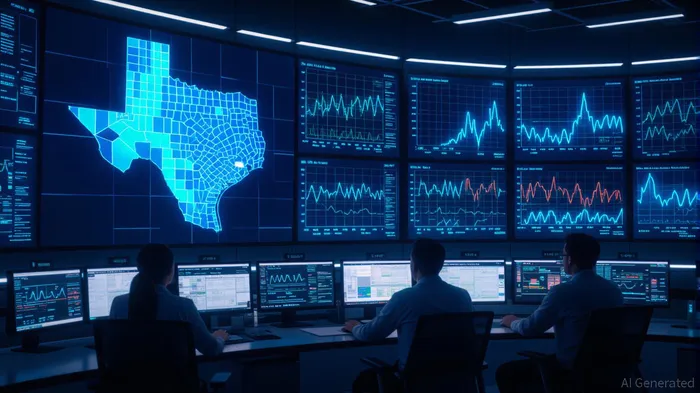
The implementation of Ancillary Service Demand Curves (ASDCs) further sharpens the market's responsiveness. Unlike the previous Operating Reserve Demand Curve (ORDC), which added price uncertainty, ASDCs embed scarcity pricing directly into real-time dispatch, ensuring ancillary services are procured at the lowest possible cost as data indicates. According to a report by Enverus, this co-optimization is projected to save Texas consumers between $2.5 billion and $6.4 billion annually by 2026 according to Pexapark.
Battery Economics: From Stacked Revenues to Dynamic Bidding
The financial implications for BESS operators are profound. Prior to RTC+B, batteries could "stack" multiple ancillary services (e.g., regulation up/down, frequency response) alongside energy arbitrage, maximizing revenue streams. However, the new SoC constraints under RTC+B limit this stacking, requiring operators to maintain sufficient charge to fulfill all committed services according to RenewAfi. This shift has already led to a 52% drop in year-to-date battery revenues for 2025, settling at $26/kW compared to $54.1/kW in 2024 according to ModoEnergy.
Yet, the long-term outlook is bullish. Case studies highlight the potential for cost savings and efficiency gains. In the "Swap the Reg" scenario, batteries were re-dispatched to provide regulation up services during peak demand, reducing system costs by 2.7% as Enverus reports. Similarly, the "Mid-Day Soak and Shift" case demonstrated how surplus solar energy could be stored and discharged when most valuable, avoiding curtailment and cutting system costs by 5.5% as Pexapark notes. These examples underscore how RTC+B enhances the value proposition of BESS by enabling agile, real-time monetization.
However, success hinges on advanced tools. Operators must now adopt dynamic bidding strategies that adjust with each Security-Constrained Economic Dispatch (SCED) run. Platforms like Ascend's SmartBidder and Enverus's MUSE are becoming essential to navigate the increased complexity and avoid under-optimization according to Enverus.
Clean Energy Contracting: A New Era of Flexibility and Risk
The RTC+B framework is also reshaping clean energy contracting strategies. Power Purchase Agreements (PPAs) are now being structured to account for the reduced scarcity pricing and enhanced grid flexibility. For instance, a 10-year solar PPA in ERCOT priced at $48.86/MWh in late 2025 reflects the market's adjustment to lower energy costs, though analysts argue the forward curve has yet to fully price in the long-term benefits of RTC+B according to RenewAfi.
New contract structures are emerging to hedge against the volatility introduced by real-time dispatch. Multi-hour block products in the day-ahead market allow Retail Electric Providers (REPs) to secure capacity during high-demand periods, while shorter duration limits for BESS in ancillary services encourage broader participation as Amperon explains. These innovations are critical for managing the risks associated with tighter SoC constraints and the need for precise forecasting.
Challenges and the Road Ahead
Despite the promise, challenges loom. The initial days of RTC+B saw ancillary service prices triple due to reduced battery participation, highlighting the market's unpreparedness for the new rules according to Canary Media. Operators must now invest in sophisticated forecasting and compliance systems to avoid penalties and revenue leakage. For investors, this means prioritizing companies with robust digital infrastructure and real-time optimization capabilities.
Moreover, the transition to a single-model BESS framework may initially reduce margins for smaller players lacking the tools to adapt. However, the long-term benefits-lower system costs, enhanced renewable integration, and a more resilient grid-position ERCOT as a model for other U.S. markets.
Conclusion: A Game-Changer for Energy Storage and Clean Energy
ERCOT's RTC+B is more than a technical upgrade; it's a catalyst for reimagining energy storage valuation and clean energy contracting. While the short-term pain of declining revenues and operational complexity is real, the long-term gains in efficiency, reliability, and scalability are undeniable. For investors, the key lies in identifying operators and technologies that can thrive in this dynamic environment. As the market matures, those who master the art of real-time co-optimization will not only survive but dominate the next era of energy markets.

Fundir la sabiduría tradicional comercial con conocimientos de última generación referentes a criptomonedas.
Latest Articles
Stay ahead of the market.
Get curated U.S. market news, insights and key dates delivered to your inbox.






Comments
No comments yet