
ERCOT's RTC+B and Its Impact on Energy and Battery Market Dynamics
 Aime Summary
A Structural Revolution in Grid Operations
RTC+B replaces the legacy Operating Reserve Demand Curve (ORDC) with Ancillary Service Demand Curves (ASDCs), enabling granular pricing for specific ancillary services and allowing batteries to toggle between energy and reserve roles dynamically according to market analysis. By modeling batteries as unified assets with a state of charge (SoC), rather than as separate charging and discharging entities, ERCOT has streamlined participation for storage operators, reducing complexity and unlocking new revenue opportunities. This shift eliminates the need for day-ahead ancillary service commitments, allowing resources to respond to real-time grid needs with unprecedented agility as observed in operational reports.
The economic benefits are already materializing. According to a report by Resurety, the program is projected to reduce total system costs by optimizing resource utilization and avoiding curtailment of renewable energy. For instance, in a "Swap the Reg" case study, batteries supplied full regulation up services during critical hours, enabling combined cycle gas turbines to focus on energy production and reducing system costs by 2.7%. Similarly, the "Solar Cliff" scenario demonstrated how real-time re-dispatch of batteries mitigated solar generation shortfalls, preventing ancillary service price spikes as shown in market analysis. These examples underscore how RTC+B transforms batteries from passive assets into active arbitrageurs of grid stability.
Immediate Opportunities for Clean Energy Buyers and Storage Investors
For clean energy buyers, RTC+B offers a dual advantage: lower energy costs and enhanced reliability. By co-optimizing energy and reserves, the market reduces the volatility of locational marginal prices, making long-term power purchase agreements (PPAs) more predictable. Storage investors, meanwhile, gain access to layered revenue streams. In the first half of 2025, 42% of battery earnings in ERCOT came from ancillary services, with top-performing assets capturing 119% of their theoretical revenue opportunity (TB2). Under RTC+B, this trend is expected to accelerate as batteries become central to balancing renewable intermittency.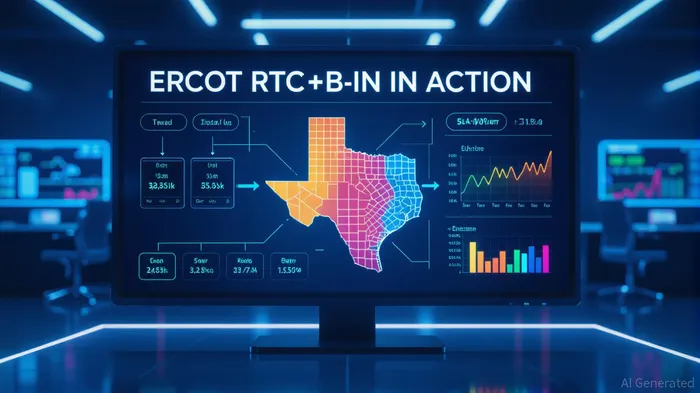
Hybrid projects, which combine solar/wind with storage, stand to benefit disproportionately. The ability to layer day-ahead and real-time market participation with ancillary services allows these projects to maximize asset utilization. For example, the "Mid-Day Soak and Shift" case study showed that batteries could store surplus solar energy during peak generation hours, avoiding curtailment and reducing system costs by 5.5%. Such projects are now incentivized to adopt advanced forecasting tools and dynamic bidding strategies to exploit real-time price signals.
Challenges and Strategic Adaptation
While the opportunities are clear, the transition to RTC+B demands adaptation. Battery operators must now submit detailed data on state of charge and ancillary service deployment factors, a departure from previous practices. Additionally, the Constraint Competitiveness Test (CCT) now includes both injection and withdrawal sides of battery portfolios, raising compliance hurdles. These requirements, though initially burdensome, will likely drive innovation in data analytics and asset management, creating a competitive edge for early adopters.
Financing mechanisms are also evolving. Hybrid projects are increasingly leveraging structured finance models that layer revenue from energy, reserves, and capacity markets. For instance, tax equity partnerships and green bonds are being tailored to capture the multi-dimensional value of storage under RTC+B as reported in financial analysis. Investors who integrate real-time optimization software into their asset management frameworks-such as those offered by companies like Yes Energy and Amperon-will further enhance returns according to market experts.
Conclusion: A New Era for Grid-Edge Investment
ERCOT's RTC+B is more than a market design change; it is a catalyst for a new era of grid-edge investment. By treating batteries as dynamic, unified resources, the program aligns with the broader decarbonization agenda while delivering immediate economic value. For clean energy buyers, the result is a more predictable and resilient supply chain. For storage investors, it is a blueprint for monetizing flexibility in a world where renewables dominate.
As the grid evolves, the winners will be those who embrace the complexity of RTC+B-not as a regulatory hurdle, but as an opportunity to redefine the economics of energy. The Texas market, once a pioneer in deregulation, is now setting a global precedent for how storage and renewables can coexist in a real-time, co-optimized future.

Combina la sabiduría tradicional en el comercio con los conocimientos más actualizados sobre criptomonedas.
Latest Articles
Stay ahead of the market.
Get curated U.S. market news, insights and key dates delivered to your inbox.






Comments
No comments yet