
ERCOT's RTC+B: A Game-Changer for Grid Stability and Battery Valuation


 Aime Summary
The RTC+B Revolution and Its Financial Impact
ERCOT's RTC+B, launched on December 5, 2025, marks the first time batteries are integrated into the real-time pricing mechanism of a major U.S. grid operator. By co-optimizing energy and ancillary services simultaneously, the system reduces inefficiencies in dispatch, lowers volatility, and better aligns renewable energy's intermittent nature with demand. According to a report by Resurety, this reform is projected to slash wholesale energy costs by $2.5–$6.4 billion annually. These savings stem from smarter pricing, reduced operational friction, and the ability to leverage batteries as both energy storage and grid support tools. For investors, this means a revaluation of battery assets as they become critical to maintaining grid reliability in a decarbonizing world.
Battery Integration and Real-Time Dispatch
The key innovation in RTC+B is its treatment of batteries as dual-purpose assets. Traditionally, batteries were either energy resources or ancillary service providers, but not both. 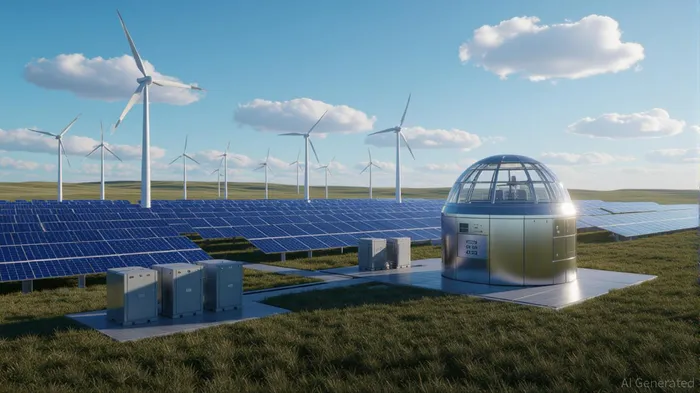 ERCOT's new model allows batteries to bid into both markets simultaneously, maximizing their value. This co-optimization ensures that batteries are dispatched where they're most needed-whether to store excess solar/wind energy or provide frequency regulation-without conflicting with other grid functions. For example, during peak demand, a battery might sell stored energy to the grid while also offering rapid-response ancillary services, earning revenue streams that were previously siloed.
This shift isn't just theoretical. ERCOT's Independent Market Monitor (IMM) has already validated the cost savings, noting that the integration of batteries into real-time markets will reduce the need for overbuilding fossil fuel-based peaker plants. For investors, this signals a structural decline in the value of traditional peaking assets and a corresponding rise in the importance of hybrid systems that pair renewables with storage.
From ORDC to ASDC: A Pricing Paradigm Shift
ERCOT's replacement of the Operating Reserve Demand Curve (ORDC) with Ancillary Service Demand Curves (ASDC) is another cornerstone of the RTC+B rollout. The ORDC, a legacy model, treated all grid reserves as a single, undifferentiated resource. The ASDC, by contrast, assigns distinct values to specific ancillary services like frequency response, voltage support, and spinning reserves. This granularity allows for more precise pricing, ensuring that resources like batteries-which excel at rapid, targeted grid support-are fairly compensated.
The implications are profound. By valuing ancillary services more accurately, ERCOT is creating a market where battery operators can monetize their unique capabilities. This, in turn, accelerates the deployment of storage systems, further driving down costs through economies of scale. For institutional investors, this is a clear signal to overweight battery-backed infrastructure in their energy portfolios.
Strategic Investment Opportunities
Now is the time to act. The RTC+B rollout has already triggered a surge in demand for battery energy storage systems (BESS) and long-term infrastructure contracts that lock in the benefits of this new paradigm. Here's where to focus:
- Hybrid Energy Assets: Projects that combine solar/wind with storage are now more profitable than standalone renewables. The ability to arbitrage energy and ancillary service markets creates a diversified revenue stream that insulates against price swings in either sector.
- Battery-Backed PPA Contracts: Power purchase agreements (PPAs) that include storage components are becoming more attractive as they offer greater reliability and lower LCOE (levelized cost of energy) for off-takers.
- Grid Infrastructure Contracts: Companies that provide modular, battery-integrated grid solutions-such as microgrids or virtual power plants-are poised to benefit from ERCOT's emphasis on distributed resilience.
ERCOT's system currently manages over 90% of Texas's power load, and its success with RTC+B is likely to influence other ISOs (independent system operators) nationwide. This creates a compounding effect: as more regions adopt similar models, the demand for battery assets and hybrid infrastructure will only grow.
Conclusion
ERCOT's RTC+B isn't just a win for Texas consumers-it's a blueprint for the future of U.S. energy markets. By unlocking $2.5–$6.4 billion in annual savings and redefining the role of batteries, this initiative has created a new asset class that bridges the gap between clean energy and grid reliability. For investors, the message is clear: hybrid energy systems and battery-backed infrastructure are no longer speculative plays. They're foundational holdings in a decarbonizing world.

Blending traditional trading wisdom with cutting-edge cryptocurrency insights.
Latest Articles
Stay ahead of the market.
Get curated U.S. market news, insights and key dates delivered to your inbox.






Comments
No comments yet