
ERCOT's RTC+B and the Future of Energy Storage: Strategic Investment Opportunities in Grid Modernization


 Aime Summary
The $2.5–$6.4 Billion Savings: A Breakdown of Efficiency Gains
ERCOT's Independent Market Monitor estimates that RTC+B will reduce annual wholesale energy costs by $2.5–$6.4 billion. This figure stems from three key components:
1. Ancillary Services Optimization: By co-optimizing energy and ancillary services every five minutes, the program replaces outdated reserve markets with dynamic, scarcity-priced mechanisms. Ancillary services-critical for grid stability-now use Ancillary Service Demand Curves instead of the previous Operating Reserve Demand Curve (ORDC), which failed to reflect the true value of reserves. This change alone is projected to save $1.6 billion annually.
2. Congestion Management: RTC+B leverages batteries and other flexible resources to mitigate transmission bottlenecks, reducing the need for costly manual interventions. Improved congestion management could account for up to $2 billion in savings according to ERCOT's December 5, 2025 announcement.
3. Battery Utilization: Treating batteries as a single resource with state-of-charge (SoC) parameters allows for more efficient dispatch. For example, re-dispatching batteries during peak demand hours has already demonstrated a 2.7% reduction in system costs.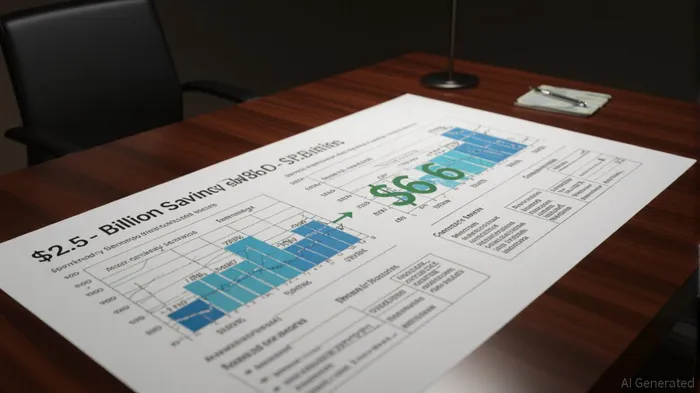 These savings are not theoretical. A case study by Enverus highlights how RTC+B's real-time co-optimization could lower average energy prices by enabling faster responses to supply fluctuations, particularly as renewable penetration grows.
Batteries as Grid Infrastructure: The New Revenue Paradigm
RTC+B transforms batteries from mere storage assets into core grid infrastructure. By modeling them as unified devices with SoC visibility, the program allows batteries to bid into both energy and ancillary service markets simultaneously. This flexibility is a game-changer:
- Ancillary Service Stacking: Batteries can now offer multiple services (e.g., regulation and contingency reserves) without prior day-ahead commitments. For instance, the Contingency Reserve Service duration requirement was reduced from 2 hours to 1 hour, increasing eligible battery capacity by 29%.
- Dynamic Pricing: The replacement of ORDCs with ASDCs means batteries are compensated based on actual service delivery, not just availability. This scarcity pricing mechanism could drive higher revenues during periods of grid stress.
However, this newfound flexibility comes with complexity. Battery operators must now manage SoC constraints in real time to avoid penalties. For example, during high-price intervals, tighter SoC requirements could reduce battery revenues by 14% compared to pre-RTC+B levels. This underscores the need for advanced optimization tools-a niche ripe for innovation.
Strategic Investment Opportunities
The RTC+B rollout creates three distinct investment avenues:
1. Grid Modernization Technologies: Companies providing real-time optimization software, SoC monitoring systems, and grid analytics tools will benefit. The demand for these solutions is acute: batteries now require precise state-of-charge management to comply with RTC+B's rules.
2. Battery Asset Operators: While revenue volatility persists, the ability to stack ancillary services and bid dynamically into real-time markets enhances long-term profitability. Investors should target operators with robust SoC management capabilities and diversified service portfolios.
3. Ancillary Service Providers: The retirement of the Supplementary Ancillary Service Market and the financial binding of day-ahead ancillary services create a more competitive landscape. Firms with expertise in real-time bidding algorithms and reserve market participation stand to gain.
Risks and Considerations
Despite the upside, investors must navigate challenges. Battery revenues in November 2025 settled at $2.38/kW-month, a 13% year-on-year decline, suggesting market maturation pressures. Additionally, the transition to ASDCs may initially favor larger players with sophisticated bidding strategies, squeezing smaller operators. Regulatory clarity on SoC constraints and ancillary service stacking rules will also be critical.
Conclusion: A Defining Moment for Texas Energy
ERCOT's RTC+B is more than a market design update-it is a blueprint for the future of grid resilience. By unlocking $2.5–$6.4 billion in annual savings and redefining the role of batteries, the program positions Texas as a global leader in energy innovation. For investors, the path forward is clear: those who align with grid modernization and battery integration will not only capitalize on immediate efficiencies but also secure a stake in the next era of clean energy markets.

Mezclando la sabiduría tradicional en el comercio con las perspectivas de vanguardia en el área de las criptomonedas.
Latest Articles
Stay ahead of the market.
Get curated U.S. market news, insights and key dates delivered to your inbox.


AInvest
PRO
AInvest
PRO



Comments
No comments yet