
ERCOT's RTC+B and the Future of Energy Storage: Grid Modernization and Battery Valuation Shifts


 Aime Summary
A New Market Paradigm
ERCOT's RTC+B replaces the outdated Operating Reserve Demand Curve with Ancillary Service Demand Curves (ASDCs), enabling co-optimization of energy and ancillary services every five minutes. This shift allows batteries to be modeled as a single resource-accounting for their state-of-charge (SoC)-rather than separate charging and discharging assets. The result is a more efficient allocation of resources, particularly during periods of renewable intermittency, such as sudden drops in solar output. For example, during a "solar cliff," RTC+B can dispatch the most cost-effective resources like combined cycle gas turbines to provide ancillary services while batteries adjust their SoC to meet demand.
Energy Storage Valuation: From Volatility to Stability
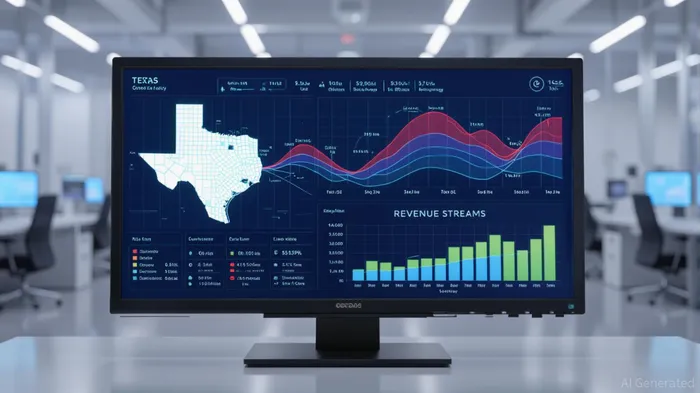 The financial landscape for battery operators has already begun to shift. In the first half of 2025, ancillary services accounted for 42% of total revenue for energy storage systems, compared to 40% from real-time energy and 18% from day-ahead energy. This diversification of revenue streams reflects the growing importance of batteries in maintaining grid stability. However, the increased efficiency of RTC+B has also reduced price volatility, making it harder for operators to capitalize on real-time price spikes. As one industry analyst notes, "The market is becoming more predictable, which is good for consumers but challenging for storage operators seeking high-margin opportunities."
The projected annual wholesale market savings of $2.5–$6.4 billion from RTC+B further complicate the valuation equation. While lower system costs benefit consumers, they may also compress margins for storage assets. A key risk for investors is the potential oversupply of battery capacity: with over 14 GW of deployed storage in Texas, competition for premium ancillary service payments could drive down prices. This dynamic mirrors broader trends in renewable energy markets, where technological advancements and scale have historically reduced unit costs but also eroded profit margins.
Grid Modernization: Efficiency and Resilience
ERCOT's overhaul is not just about cost savings-it's a foundational step toward a more resilient grid. By integrating batteries into real-time optimization, the market can respond faster to supply-demand imbalances, reducing the need for costly peaking plants. According to the ERCOT Independent Market Monitor, the new design could cut system costs by 17–21% annually. This efficiency gain is critical as Texas continues to integrate record levels of wind and solar power, which require flexible resources to balance their variability.
Moreover, RTC+B's emphasis on real-time responsiveness aligns with global trends in grid modernization. For instance, the European Union's recent market design reforms similarly prioritize co-optimization of flexibility resources. In Texas, the success of RTC+B could serve as a blueprint for other regions seeking to decarbonize while maintaining reliability.
Navigating the New Normal
For energy storage operators, adapting to RTC+B requires advanced tools and strategies. Platforms like Ascend Analytics' SmartBidder now incorporate RTC+B-compliant bidding algorithms to optimize SoC constraints and maximize revenue. These tools are essential for navigating the market's complexity, but they also highlight the growing technical barriers to entry. Investors must weigh the upfront costs of adopting such technologies against the long-term benefits of participating in a more competitive, transparent market.
Conclusion: A Transformative but Uncertain Future
ERCOT's RTC+B is a landmark achievement in grid modernization, offering a more efficient, responsive electricity market. For energy storage, the changes unlock new revenue streams but also introduce uncertainties around long-term profitability. Investors should focus on operators with robust optimization tools and diversified revenue portfolios, as these will be best positioned to thrive in a low-volatility, high-competition environment. While the path forward is not without risks, the broader benefits-lower costs, enhanced reliability, and a cleaner grid-make this transition a net positive for Texas and a model for the future of energy markets.

Combina la sabiduría tradicional en el comercio con las perspectivas más avanzadas sobre las criptomonedas.
Latest Articles
Stay ahead of the market.
Get curated U.S. market news, insights and key dates delivered to your inbox.






Comments
No comments yet