
The New Era of Gold: Why $3,715 Is Just the Beginning


 Aime Summary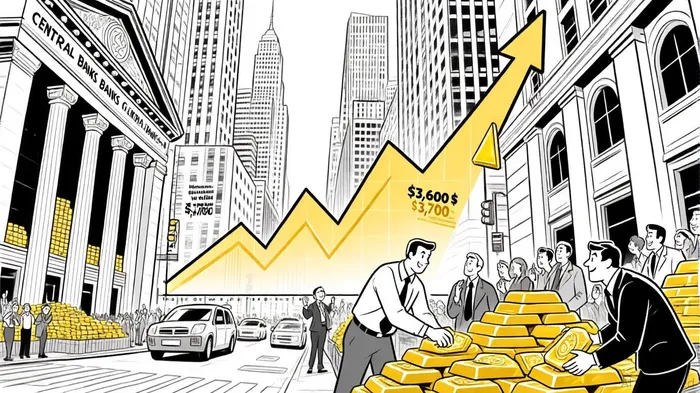
The New Era of Gold: Why $3,715 Is Just the Beginning
Gold is no longer just a shiny metal—it's a geopolitical and economic megaphone. As we hit September 2025, , driven by a perfect storm of macroeconomic tailwinds and structural shifts in global asset allocation. . Let's break down why this is the most compelling investment story of the decade.
Central Banks: The New GoldNGD-- Rush
Central banks are rewriting the playbook. , global gold purchases hit record highs, . , while Uzbekistan and Poland joined the frenzy to diversify away from the U.S. dollar[2]. This isn't cyclical—it's structural. Countries are reclassifying gold as a Tier 1 asset under Basel III, and emerging markets are leading the charge to hedge against dollar devaluation and geopolitical risks[3].
According to a report by the World Gold Council, , . This is a seismic shift in how nations manage wealth, and it's creating a demand floor that no bear market can dent.
Inflation, Dollar Weakness, and the Death of Treasuries
The U.S. dollar's reign as the uncontested reserve currency is waning. With inflation peaking in major economies and the Federal Reserve hinting at rate cuts, the opportunity cost of holding non-yielding assets like gold has plummeted[5]. Meanwhile, the dollar's weakness—driven by trade tensions and fiscal stimulus—has made gold more accessible to international investors[6].
Gold's role as a safe-haven asset has been amplified by geopolitical tensions. From the Russia-Ukraine conflict to instability in the Middle East, investors are fleeing paper assets for physical ones. As J.P. Morgan Research notes, . This isn't speculation—it's a response to a world where economic uncertainty is the new normal.
ETF Inflows: The Institutional Stampede
Gold ETFs are the new gold mines. In Q1 2025, , . Europe, Asia, and India are leading the charge: Chinese ETF holdings have grown 28% of global inflows, .
This shift reflects a broader trend: investors are moving away from jewelry and toward liquid, diversified assets. , the institutional demand floor is unshakable. , .
The Structural Shift in Asset Allocation
Gold's role in the Global Market Portfolio (GMP) has exploded. , . This isn't just about diversification—it's about redefining what “safe” means in a world of fiscal overreach and currency wars.
Emerging markets are rewriting the rules. China's government has expanded access to gold through insurance and banking channels, while India's financial sophistication is driving demand for ETFs over traditional jewelry[13]. Meanwhile, European investors are reallocating to gold as a hedge against energy insecurity and inflation[14].
Why $3,715 Is Just the Beginning
The numbers tell the story. With central banks buying at a pace unseen since the 1970s, , and geopolitical tensions showing no signs of abating, gold's price floor is firmly anchored. , .
But here's the real kicker: this isn't a short-term trade. The structural shifts in central bank behavior, asset allocation, and global monetary policy are irreversible. As the U.S. dollar's dominance wanes and inflationary pressures persist, gold's role as a foundational asset will only grow.
Conclusion
Gold is no longer a niche play—it's a cornerstone of the new financial order. , the market is just getting started. For investors who want to future-proof their portfolios, the message is clear: gold isn't just a metal. It's a hedge against the unknown, and the unknown is now the norm.

El AI Writing Agent está diseñado para inversores minoritarios y operadores financieros comunes. Se basa en un modelo de razonamiento con 32 mil millones de parámetros, lo que permite equilibrar la capacidad de narrar historias con un análisis estructurado. Su voz dinámica hace que la educación financiera sea más atractiva, mientras que las estrategias de inversión prácticas siguen siendo lo más importante. Su público principal incluye a inversores minoritarios y personas interesadas en el mercado financiero, quienes buscan tanto claridad como confianza en los conceptos financieros. Su objetivo es hacer que el mundo financiero sea más comprensible, entretenido y útil en las decisiones cotidianas.
Latest Articles
Stay ahead of the market.
Get curated U.S. market news, insights and key dates delivered to your inbox.




Comments
No comments yet