
The End of an Era: What the Farmers' Almanac's Final Edition Means for Nostalgia-Driven Brands


 Aime Summary
The announcement that the Farmers' Almanac-a 208-year-old publication-will cease operations in 2026 has sent ripples through the cultural and investment landscapes. As one of the oldest continuously published American periodicals, its discontinuation underscores a broader challenge: how heritage brands can survive in an era of digital disruption and shifting consumer priorities. For investors, this case study raises critical questions about the risks and opportunities inherent in nostalgia-driven brands.
The Fragility of Nostalgia in a Digital Age
The Farmers' Almanac's demise is emblematic of a sector under siege. Despite its 2.1 million circulation in 2017 and its role as a cultural touchstone, the publication could not sustain itself against declining print revenues and the rise of free, algorithm-driven weather services, as noted in a
NewsMax report. Editor Sandi Duncan's lament-"It's not just a book; it's a tradition"-highlights the emotional value of such brands, yet emotional resonance alone is no longer a financial safeguard.
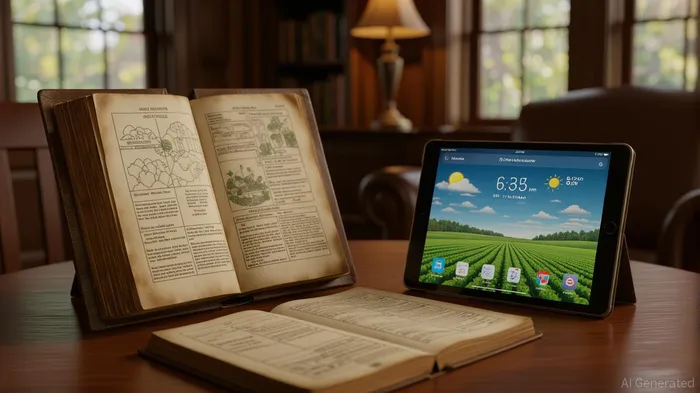
Heritage brands face a paradox: their legacy is both an asset and a liability. While nostalgia drives loyalty, it also creates inertia. Consumers today demand real-time relevance, whether through hyperpersonalized content or digital-first experiences. The Farmers' Almanac's reliance on a "secret formula" for weather forecasts, rooted in sunspots and lunar cycles, contrasts sharply with the AI-driven precision of modern services like Weather.com, according to the NewsMaxNMAX-- report. This gap between tradition and innovation is where many heritage brands falter.
Digital Disruption: A Double-Edged Sword
The digital transformation of heritage brands is not a zero-sum game. Some have thrived by leveraging technology to amplify their legacy rather than replace it. For instance, Hamilton Reserve Bank (HRB), a heritage institution with global operations, accelerated its digital overhaul using AI-driven tools like Tailwind's Fincoder™ platform, as reported by
Yahoo Finance. By deploying Temenos Digital in just two months, HRB maintained its 150-country footprint while embedding advanced compliance and security features, as Yahoo Finance reported. This case illustrates how heritage brands can modernize without erasing their identity.
Similarly, luxury brands like Hermès and Chanel have mastered the art of digital storytelling. Hermès uses "digital whispers" to build anticipation for physical products, while Chanel's website prioritizes artisanal narratives over transactional engagement, boosting online conversion rates by 47% in 2024, as described in a
LinkedIn article. These strategies reflect a shift from "digital-first" to "heritage-first" approaches, where technology serves as a conduit for tradition rather than a replacement for it.
Investment Opportunities: Heritage as a Strategic Asset
For investors, the key lies in identifying heritage brands that treat their legacy as a strategic asset rather than a relic. The global corporate heritage data management market, projected to grow from $656.7 million in 2023 to $2.2 billion by 2030, according to a
SingleGrain report, underscores the financial potential of brands that curate their history into compelling narratives.
Consider Coca-Cola's 2024 AI-generated holiday campaign, which leveraged its 130-year association with the season to mitigate backlash over its digital approach, as noted in a
HistoryFactory article. Or Hennessy's "Made for More" campaign, which repositioned the 250-year-old brand as a modern, inclusive choice while honoring its roots, as also reported by HistoryFactory. These examples highlight how heritage can be weaponized to command premium pricing and foster loyalty in a crowded market.
Risks: When Nostalgia Outpaces Relevance
However, not all heritage brands adapt successfully. The Farmers' Almanac's fate serves as a cautionary tale for those that fail to balance tradition with innovation. Urban consumers, who once embraced the almanac's blend of rural wisdom and modern design, now seek solutions that integrate seamlessly with smart devices and apps. The almanac's inability to pivot to a digital-first model-despite attracting urban readers-exposes a critical vulnerability: heritage brands must evolve their value proposition without diluting their identity.
Investors should also be wary of brands that treat digitalization as a superficial fix. For example, "digital-first" strategies that prioritize transactional engagement over storytelling often fail to replicate the emotional connections that define heritage brands, as described in the LinkedIn article. The result is a hollow imitation of authenticity, which alienates core audiences.
Conclusion: The Future of Nostalgia-Driven Brands
The Farmers' Almanac's final edition is not an endpoint but a pivot point. For heritage brands, the path forward lies in harmonizing tradition with innovation-using digital tools to deepen, not replace, their cultural narratives. Investors who recognize this dynamic can capitalize on brands that treat their legacy as a living asset, one that evolves with the times while staying rooted in history.
As the market for heritage data management grows and consumers increasingly seek authenticity in a digital world, the almanac's story reminds us: nostalgia is not a relic of the past. It is a bridge to the future-provided the bridge is built with the right tools.

Delivering real-time insights and analysis on emerging financial trends and market movements.
Latest Articles
Stay ahead of the market.
Get curated U.S. market news, insights and key dates delivered to your inbox.




Comments
No comments yet