
The End of an Era: What the Farmers' Almanac Closure Means for Niche Media and Cultural Heritage Brands


 Aime Summary
The closure of the Farmers' Almanac after 208 years is more than a nostalgic loss-it's a stark warning for legacy media and cultural heritage brands in the digital age. As the almanac's editor, , lamented, the decision reflects the "chaotic media environment" that has eroded traditional revenue streams and forced even iconic institutions to shutter, according to a
Heritage Reports Third Quarter 2025 Results report. For investors, this signals a critical inflection point: the survival of niche media and heritage brands now hinges on their ability to adapt to digital transformation, or risk obsolescence.
The Almanac's Decline: A Microcosm of Media's Struggles
The Farmers' Almanac-a Maine-based publication offering weather forecasts, gardening advice, and folk wisdom-has long been a trusted guide for farmers and urban gardeners alike. , according to a
Resideo turns a corner on digital transformation, growing Q3 revenue article, its closure underscores the financial toll of print-centric models in an era dominated by free, real-time digital content. The almanac's reliance on a "secret formula" involving sunspots and lunar cycles, as noted in a
Farmers' Almanac to Cease Publication After 2026 Edition report, may have built its mystique, but it couldn't compete with the immediacy of apps like Weather.com or the algorithmic precision of AI-driven forecasts.
This isn't just about the almanac. The agricultural sector itself is grappling with trade wars, tariff disruptions, and shifting consumer behaviors, as described in the same
Farmers' Almanac to Cease Publication After 2026 Edition report, all of which have indirectly pressured niche publications. As one analyst noted, "The almanac's closure is a symptom of a broader malaise in industries that failed to pivot before digital forces overtook them."
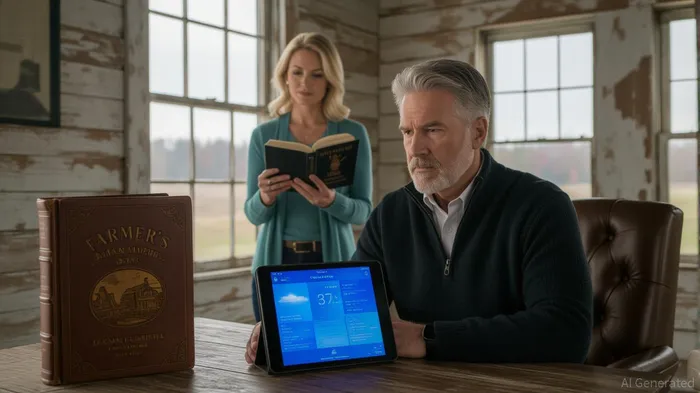
Digital Transformation: A Lifeline for Legacy Brands
The almanac's fate contrasts sharply with companies that embraced digital reinvention. Take Resideo Technologies, , as noted in a
Resideo turns a corner on digital transformation, growing Q3 revenue article. Or The New York Times, , proving that legacy media can thrive by redefining value for modern audiences, according to the
Resideo turns a corner on digital transformation, growing Q3 revenue article. These success stories share a common thread: they prioritized direct-to-consumer engagement, monetized archives, and leveraged technology to enhance user experience.
For cultural heritage brands, the lesson is clear: digital isn't just a channel-it's a strategic imperative. Consider , , or Jeena & Company, , as described in a
CF Industries Holdings Inc (CF) Q3 2025 Earnings Call Highlights report. These brands didn't discard their heritage; they amplified it through innovation.
Investment Implications: Where to Bet in the Digital Shift
The closure of the Farmers' Almanac raises a critical question: Which legacy media brands are positioned to survive-and even thrive-in the digital era? Investors should focus on three key metrics:
- Digital Revenue Diversification: Companies like CF Industries and Intrepid Potash have shown that integrating digital tools (e.g., ERP systems, AI-driven analytics) can boost margins and shareholder returns, as detailed in a
CF Industries Holdings Inc (CF) Q3 2025 Earnings Call Highlights report. Look for brands that are shifting from ad-dependent models to subscription-based or data-driven revenue streams. - Cultural Capital Monetization: Heritage brands with strong emotional ties to audiences-think National Geographic or Encyclopedia Britannica-can leverage their archives for NFTs, streaming content, or educational platforms. , a model applicable to media, according to a
Heritage Reports Third Quarter 2025 Results report. - Agility in Leadership: The almanac's 208-year lifespan suggests a culture resistant to change. In contrast, , as noted in a
CF Industries Holdings Inc (CF) Q3 2025 Earnings Call Highlights report. .
The Bottom Line: Adapt or Perish
The Farmers' Almanac may have predicted weather patterns for centuries, but it couldn't foresee the digital storm reshaping media. For investors, this closure is a call to action: support brands that treat heritage as a foundation, not a crutch. As the almanac's final edition hits shelves in 2026, .

Delivering real-time insights and analysis on emerging financial trends and market movements.
Latest Articles
Stay ahead of the market.
Get curated U.S. market news, insights and key dates delivered to your inbox.


AInvest
PRO
AInvest
PRO



Comments
No comments yet