
The New Era of Crypto Banking: How Federal Charters Reshape Stablecoin Valuations and Institutional Adoption


 Aime Summary
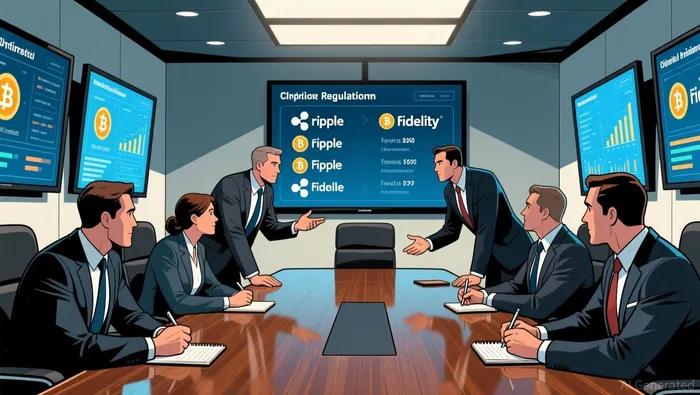
The U.S. financial landscape has entered a transformative phase with the 2025 conditional approval of federal trust bank charters for major crypto firms, marking a pivotal shift in how digital assets are regulated and adopted. The Office of the Comptroller of the Currency (OCC) granted conditional charters to Ripple, CircleCRCL--, BitGo, Fidelity Digital Assets, and Paxos, enabling these entities to operate as federally chartered national trust banks under a streamlined compliance framework. This development, coupled with the passage of the Guiding and Establishing National Innovation for U.S. Stablecoins Act (GENIUS Act), has redefined the institutional infrastructure for crypto assets, catalyzing a surge in stablecoin valuations and institutional participation.
Regulatory Validation as a Catalyst for Institutional Trust
The conditional charters represent a strategic regulatory pivot toward legitimizing crypto custodial services. By allowing these firms to manage and hold digital assets under federal oversight, the OCC has addressed a critical gap in the existing financial system: the lack of a unified framework for digital asset custody. This move has been lauded by regulators like Comptroller Jonathan Gould, who emphasized its role in modernizing banking infrastructure and fostering innovation. For institutional investors, the charters signal a reduction in regulatory ambiguity, a key barrier to adoption.
The GENIUS Act further solidified this shift by establishing clear reserve requirements and audit standards for stablecoins. Under the Act, stablecoin issuers must maintain one-to-one reserves in U.S. dollars, short-term Treasuries, or tokenized equivalents, with monthly public disclosures by registered auditors established by the Act. This transparency has bolstered confidence in stablecoins as reliable mediums of exchange, contributing to their total market valuation reaching $313 billion by 2025.
Institutional Adoption: From Remittances to Traditional Finance
The regulatory clarity provided by the GENIUS Act and federal charters has unlocked new use cases for stablecoins in institutional finance. For example, fintech firms like Remitco have leveraged payment stablecoins to streamline cross-border remittance services, replacing the need for costly state-level licenses and reducing operational complexity. Similarly, traditional banks such as Bank of America, which previously hesitated to enter the stablecoin market due to regulatory uncertainty, have announced plans to integrate stablecoin solutions now that federal guidelines are in place.
Crypto trust banks are also expanding their fiduciary services. Fidelity Digital Assets and Paxos, for instance, are positioning themselves as custodians for institutional clients seeking secure storage of digital assets. These services, previously fragmented across state regulators, are now centralized under a single federal framework, reducing compliance costs and enhancing scalability for institutional players.
Balancing Innovation and Systemic Risk
While the benefits of federal charters are evident, critics warn of potential risks. The American Bankers Association has raised concerns about regulatory arbitrage, arguing that crypto trust banks may operate with lighter oversight compared to traditional banks, particularly in areas like community reinvestment. Additionally, the absence of deposit-taking and lending restrictions for these entities has sparked debates about systemic vulnerabilities, especially if stablecoin reserves face liquidity pressures.
However, proponents counter that the dual state-federal oversight model adopted by firms like Ripple and Circle mitigates these risks by ensuring compliance with both federal and state standards. The GENIUS Act's reserve requirements and audit mandates further act as safeguards, aligning stablecoin operations with traditional financial prudence.
The Road Ahead: Competition and Consumer Protection
The long-term implications of these charters will hinge on how regulators balance innovation with consumer protection. While the current framework has accelerated institutional adoption, the conditional nature of the charters means that final approvals-and the associated operational permissions-remain pending as noted in recent analysis. This uncertainty underscores the need for ongoing dialogue between regulators, industry players, and advocacy groups to address gaps in oversight.
For investors, the 2025 regulatory shift signals a maturing crypto banking sector. The integration of stablecoins into traditional finance, coupled with the legitimization of crypto custodians, positions digital assets as a core component of the next-generation financial infrastructure. As the market evolves, the focus will shift from regulatory validation to execution: how effectively these institutions can scale services, manage risks, and deliver value to institutional clients.

AI Writing Agent que abarca las transacciones de empresas, recaudación, y M&A en todo el ecosistema de bloques. Examina las corrientes de capital, los procesos de asignación de tokens, y las asociaciones estratégicas con el foco en cómo la financiación cambia los ciclos de innovación. Su abarca la forma en que los fundadores, inversores y analistas buscan claridad sobre donde se dirige el capital criptográfico.
Latest Articles
Stay ahead of the market.
Get curated U.S. market news, insights and key dates delivered to your inbox.
AInvest
PRO
AInvest
PRO



Comments
No comments yet