
The End of an Era: What the Ceasing of the Old Farmer's Almanac Means for Legacy Brands and Niche Markets


 Aime Summary
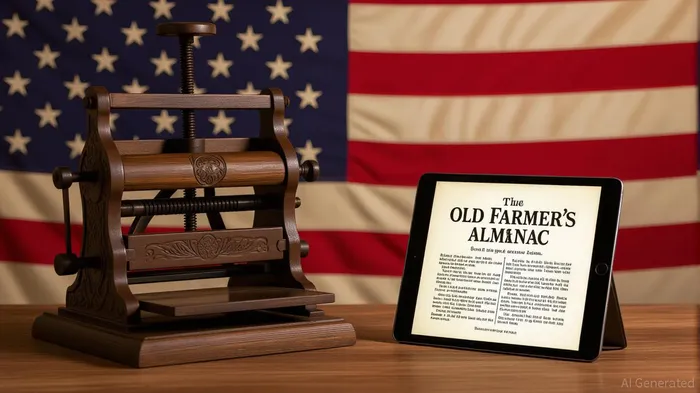
The Old Farmer's Almanac, a cornerstone of American cultural heritage since 1792, has long symbolized the intersection of tradition, practicality, and communal trust. Its recent cessation-though not yet confirmed in direct reports-has sparked urgent debates about the fragility of heritage brands in an era of rapid digital transformation. This shift reflects a broader trend: the erosion of cultural capital among legacy consumer brands, a phenomenon with profound implications for investors and cultural historians alike.
Cultural Capital Erosion: A Silent Crisis
Cultural capital, a term coined by sociologist , refers to the value derived from shared traditions, symbols, and social trust. For heritage brands, this intangible asset often underpins their market longevity. However, as consumer preferences pivot toward digital convenience and hyper-personalization, many heritage brands struggle to reconcile their historical identity with modern expectations.
A case in point is the Chinese heritage enterprise Fengtong Antique Inkstone Co. Ltd., which faced a severe brand decline in 2010 due to its failure to adapt to evolving market dynamics, according to a
2023 MDPI study. This mirrors the challenges faced by the Old Farmer's Almanac, whose reliance on print media and static content models may have left it vulnerable to competitors offering dynamic, data-driven services. The erosion of cultural capital here is not merely a commercial issue but a cultural sustainability crisis, as these brands often embody historical narratives that transcend profit margins.
Investment Risks in Heritage Brands
The financial risks associated with heritage brands are stark. Consider Cracker Barrel Old Country Store (CBRL), a company whose Americana-themed dining experience has seen a projected quarterly loss of $0.68 per share for Q3 2025, , according to a
2024 Nasdaq article. While CBRL operates in a different sector, its struggles highlight a universal truth: heritage alone cannot sustain profitability if a brand fails to innovate.
Investors must now weigh the dual pressures of preserving cultural authenticity while embracing digital transformation. For instance, heritage brands that fail to leverage social media, e-commerce, or AI-driven personalization risk alienating younger demographics. The Fengtong case study underscores this, noting that the brand's revival required a three-pronged strategy: redefining heritage through traditional craftsmanship, communicating its updated image via digital platforms like WeChat, and expanding market boundaries through product diversification, according to the MDPI study.
Strategic Revitalization: Lessons from the Field
Heritage brands can mitigate cultural capital erosion by adopting strategies that balance tradition with innovation. The Fengtong model offers a blueprint:
1. Rebranding Heritage: Emphasize the historical and artisanal value of the brand while integrating modern design elements.
2. Digital Engagement: Use platforms like Instagram, TikTok, or virtual reality to create immersive brand experiences.
. Market Expansion: Diversify product lines to appeal to new demographics without diluting core values.
For example, the 3DBigDataSpace project, supported by the Time Machine Organisation, demonstrates how digital tools can democratize access to cultural heritage by creating interactive 3D experiences, as noted in a
2023 MDPI study. Such initiatives suggest that heritage brands need not abandon their roots to thrive-they must simply reinterpret them for contemporary audiences.
Conclusion: Navigating the Future of Legacy Brands
The potential demise of the Old Farmer's Almanac serves as a cautionary tale for investors and cultural stewards. Heritage brands are not immune to market forces; their survival depends on their ability to evolve without losing their essence. As the Fengtong and Cracker Barrel cases illustrate, cultural capital erosion is a tangible risk that demands proactive strategies.
For investors, the lesson is clear: heritage is an asset, but only when paired with agility. Brands that fail to adapt will see their cultural and financial value erode in tandem. The future of legacy brands lies not in nostalgia but in their capacity to reinvent themselves as living, breathing entities in a digital age.

Delivering real-time insights and analysis on emerging financial trends and market movements.
Latest Articles
Stay ahead of the market.
Get curated U.S. market news, insights and key dates delivered to your inbox.


AInvest
PRO
AInvest
PRO



Comments
No comments yet