
The End of an Era: Berkshire Hathaway’s Leadership Transition and Its Market Implications
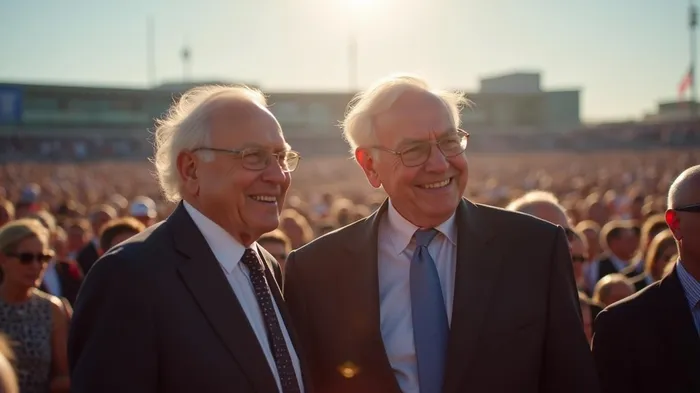
The Omaha crowd erupted in a standing ovation—a rare, unscripted moment at Berkshire Hathaway’s annual shareholder meeting. On May 3, 2025, Warren Buffett, the 94-year-old “Oracle of Omaha,” announced his retirement as CEO by year-end, naming Greg Abel, 62, as his successor. This historic decision, confirmed at the event dubbed “Woodstock for Capitalists,” sent ripples through global markets and solidified Abel’s role as the architect of Berkshire’s next chapter.
The Transition: A Delicate Handoff of Power
Buffett’s announcement marked the end of an epoch. For 60 years, he transformed Berkshire from a struggling textile firm into a $1.2 trillion conglomerate spanning insurance, railroads, utilities, and consumer brands. His retirement, effective December 31, 2025, shifts operational control to Abel—a Canadian-born executive with 25 years at Berkshire—while Buffett retains his role as chairman until his death.
The market’s reaction was swift. Investors interpreted the transition as a stabilizing force, easing concerns about post-Buffett governance.
Abel’s credentials are formidable. As CEO of Berkshire HathawayBRK.B-- Energy since 2008, he has overseen a $347 billion cash hoard—Berkshire’s largest in history—and managed complex subsidiaries like Geico and BNSF Railway. Buffett praised his successor’s “hands-on” leadership style, contrasting it with his own “hands-off” approach. “Greg should become the chief executive officer of the company at year-end,” Buffett stated, adding, “It’s working way better with Greg than with me.”
The Numbers Behind the Narrative
The transition’s financial stakes are enormous. Berkshire’s $347 billion in cash reserves—up from $334 billion in 2024—highlight its strategic flexibility. Abel’s challenge will be deploying this capital effectively, a task Buffett has described as “unlikely to happen tomorrow” but “likely in five years.”
Investors also took note of Berkshire’s equity stakes. Its $70 billion Apple (AAPL) position remains a cornerstone, though Buffett acknowledged reducing holdings by half in 2024. “We bought Apple when it was cheaper, and we sold some when it got more expensive,” he explained, underscoring his disciplined approach.
The Broader Implications: Confidence in Continuity
Abel’s appointment signals a shift in Berkshire’s operational ethos. While Buffett prioritized capital allocation and long-term investments, Abel’s focus on subsidiary management—evident in his oversight of utilities and railroads—could lead to more active oversight of Berkshire’s diverse businesses.
Critics, however, question whether Abel can replicate Buffett’s legendary track record. “Greg’s strengths lie in operations, not stock picking,” noted one Wall Street analyst, “but Berkshire’s structure is designed for continuity.” The company’s decentralized model, which allows subsidiaries to operate autonomously, may ease the transition.
Buffett’s final remarks reinforced this point. He emphasized that only his children knew of his retirement plans, ensuring minimal disruption. “Howard [Buffett] will become chairman after I’m gone,” he said, “to preserve Berkshire’s culture.”
Conclusion: A New Era, Anchored in Trust
The Berkshire Hathaway leadership transition is not merely a change in titles but a testament to institutional resilience. With Abel’s operational prowess and Buffett’s legacy intact, investors have reason to be optimistic.
Key data underscores this outlook:
- Berkshire’s stock hit a record high post-announcement, reflecting investor confidence.
- Abel’s track record at Berkshire Hathaway Energy—where he expanded renewable energy investments by 30% since 2020—signals a strategic focus on growth.
- Buffett’s net worth ($169 billion as of 2025) remains fully invested in Berkshire, a vote of confidence in Abel’s leadership.
As Buffett exits the stage, the spotlight shifts to Abel—a leader tasked with steering Berkshire’s $1.2 trillion empire into uncharted waters. The market’s reaction suggests investors are ready to follow.
For now, the Oracle’s final lesson lingers: “It’s not your own genius, but your ability to recognize and trust others’ talents that defines success.” In Abel, Berkshire has found its next trusted hand.

Stay ahead of the market.
Get curated U.S. market news, insights and key dates delivered to your inbox.




Comments
No comments yet