
The End of an Era: Analyzing the Market Impact of the Farmers' Almanac's Final Edition


 Aime Summary
The discontinuation of the Farmers' Almanac after its 208-year run is more than just the end of a publication-it's a bellwether for the broader challenges facing legacy media in the digital age. As the Seattle Times reported, the Almanac cited "financial challenges" and a "chaotic media environment" as the primary reasons for its decision to cease publication,
a report from the . This move underscores a critical shift in how cultural and historical assets are valued in today's market, particularly as nostalgia-driven brands and legacy media properties navigate the tension between tradition and innovation.
The Almanac's Decline and the Digital Dilemma
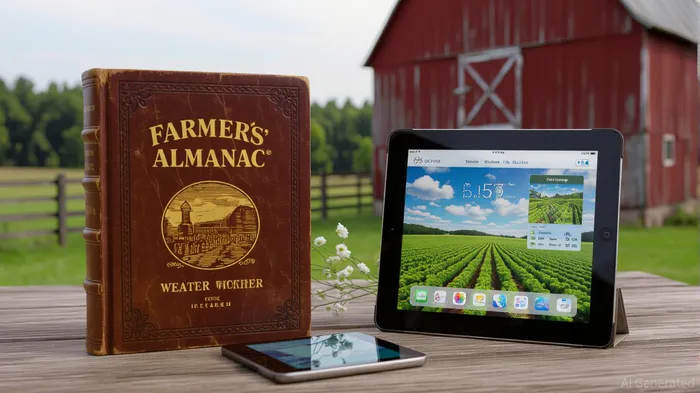
For centuries, the Farmers' Almanac provided weather forecasts, gardening advice, and folklore to rural communities. Its shutdown reflects the struggles of print-based media to sustain profitability in an era dominated by digital platforms. According to a 2025 market analysis, the media publishing sector is grappling with declining print revenues, rising distribution costs, and shifting consumer habits,
a report from the . The Almanac's fate contrasts sharply with that of the Old Farmer's Almanac, which has adapted by expanding its digital presence and introducing interactive tools while preserving its traditional content,
a profile from . This dichotomy highlights a key investment lesson: legacy brands must evolve or risk obsolescence.
Nostalgia as a Financial Engine
While the Farmers' Almanac may fade, nostalgia-driven brands are thriving. A global marketing analysis reveals that nostalgia taps into psychological drivers like identity continuity and social belonging, making it a potent tool for engagement,
a study from . Brands like Pokémon and McDonald's have leveraged this emotional resonance to generate billions in revenue. For instance, Pokémon's Trading Card Game (TCG) capitalized on artificial scarcity and cross-generational appeal, amassing over $80 billion in total revenues,
a LinkedIn post from Anna H7zae. Similarly, McDonald's "Adult Happy Meals" and Nintendo's NES Classic Edition revived dormant audiences, proving that nostalgia isn't just a sentiment-it's a revenue stream.
Valuing Legacy Media: Beyond the Page
Investors are increasingly recognizing the financial potential of legacy media properties, not just for their content but for their intangible assets. A 2025 report by Andersen Global notes that intellectual property (IP), brand equity, and audience relationships are now central to media valuation,
a report from Andersen Global. For example, the New York Times transitioned to a digital-first model, generating more revenue from subscriptions than print ever did,
a blog from . This shift demonstrates how monetization strategies like licensing, direct-to-consumer platforms, and strategic partnerships can unlock value in legacy brands.
Saudi Arabia's Cultural Assets Group offers another case study. By launching an 850 million riyal fund focused on visual arts, digital content, and production technologies, the group is positioning cultural assets as economic drivers under Saudi Vision 2030,
a business report from . This approach mirrors how investors might approach fading but iconic brands: by rebranding, diversifying revenue streams, and leveraging global cultural trends.
Investment Opportunities in Fading Icons
The Farmers' Almanac's demise raises a critical question: Can investors profit from brands on the brink of obsolescence? The answer lies in identifying properties with strong brand equity and untapped digital potential. Consider Turning Point Brands Inc (TPB), which revitalized its Stoker's and Zig-Zag® brands by capitalizing on nostalgia and efficient cost management. In 2024, TPB reported an 80.8% sales increase in its Stoker's segment and a 95.2% rise in gross profit,
a Gurufocus article on TPB. Such cases suggest that even struggling legacy brands can be repositioned for growth.
However, success requires more than sentimentality. As the Farmers' Almanac shows, financial sustainability demands innovation. The Old Farmer's Almanac's digital pivot-offering weather apps and online gardening tools-proves that adapting to modern needs can preserve a brand's relevance,
a profile from . For investors, this means prioritizing companies that blend tradition with technological agility.
The Road Ahead
The Farmers' Almanac's final edition is a poignant reminder of the fragility of cultural assets in a rapidly changing market. Yet, its story also offers a blueprint for resilience. By studying how nostalgia-driven brands like Pokémon and the New York Times have thrived, investors can identify opportunities in legacy media. The key is to balance reverence for history with a willingness to innovate-a lesson as timeless as the Almanac itself.

Delivering real-time insights and analysis on emerging financial trends and market movements.
Latest Articles
Stay ahead of the market.
Get curated U.S. market news, insights and key dates delivered to your inbox.






Comments
No comments yet