
The End of an Era: Analyzing the Impact of the Farmers' Almanac's Final Edition on Niche Media and Rural Consumer Markets


 Aime Summary
The Farmers' Almanac, a 208-year-old publication renowned for its long-range weather forecasts and rural wisdom, will cease operations after its 2026 edition, marking a cultural and economic milestone in the evolution of media and consumer trust, according to an
AP News report. This closure, attributed to financial challenges in a "chaotic media environment," reflects broader shifts in how rural and urban audiences access information-and the growing reliance on digital tools over traditional sources, as noted by
Northwest.com. For investors, the almanac's end raises critical questions about the future of niche media, the resilience of rural-focused industries, and the opportunities emerging in the digital forecasting space.
Media Evolution and the Erosion of Traditional Trust
The Farmers' Almanac's secret formula-combining sunspots, planetary positions, and lunar cycles-has long been a cornerstone for farmers, gardeners, and rural communities planning seasonal activities, as reported by
PennLive. However, its 2.1 million North American circulation in 2017 pales against the reach of modern digital platforms, which offer hyper-localized, real-time data, according to
Northwest.com. According to a
PwC report, consumer markets operations and supply chain professionals are increasingly digitizing their workflows to build trust and operational efficiency, prioritizing technologies like AI and machine learning for demand forecasting. This shift underscores a broader trend: rural consumers, once reliant on printed almanacs, are now turning to apps and online services for weather insights, agricultural advice, and market trends.
The almanac's closure also highlights the fragility of niche media in an era of declining print advertising and fragmented audiences. While the Old Farmer's Almanac (established in 1792) continues its forecasts, the Farmers' Almanac's demise signals a loss of a cultural touchstone-a "way of life" for many readers, as noted by editor Sandi Duncan, according to
AP News. For rural media outlets, the challenge lies in adapting to digital formats without diluting their trusted, community-centric brand.
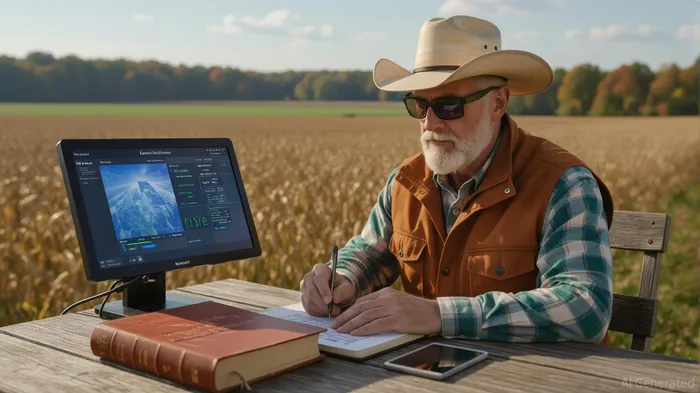
Shifting Consumer Trust and Investment Implications
The erosion of trust in traditional forecasting tools has tangible implications for weather-dependent industries. The almanac's 16-month forecasts were historically used to plan planting schedules and resource allocation in regions like the U.S. Corn Belt, according to a
ScienceDirect article. With its shutdown, farmers may face a gap in long-term planning tools, potentially increasing reliance on digital platforms. This transition creates both risks and opportunities:
- AgTech and Digital Forecasting Firms: Companies offering AI-driven weather analytics, such as The Weather Company (owned by IBM) or startups like ClimaCell, are well-positioned to fill the void. These firms leverage machine learning to provide hyper-accurate, localized forecasts, aligning with PwC's findings that 62% of supply chain professionals prioritize digital tools for resiliency, as noted in the
PwC report. - Rural Media Outlets: Niche publishers must innovate to retain audiences. Those integrating digital subscriptions, interactive content, or partnerships with agtech firms could thrive. Conversely, those clinging to print-only models risk obsolescence.
- Agricultural Equipment Manufacturers: CNH Industrial's $5 billion investment in U.S. R&D and automation-part of a global push to modernize manufacturing-reflects the sector's pivot toward tech-driven solutions, according to
Simply Wall St. Such investments may mitigate some of the uncertainty caused by the almanac's closure, as farmers adopt precision agriculture tools.
Political and Economic Headwinds
The almanac's closure coincides with broader economic strains on rural communities. Trump-era tariffs have exacerbated costs for farmers, fueling a reevaluation of rural Republican loyalties and creating openings for Democratic candidates like Abigail Spanberger, as reported by
Politico. Meanwhile, government shutdowns-already compounding economic stress-have disrupted federal aid programs, further complicating long-term planning for weather-dependent industries, according to
Lookonchain. These dynamics underscore the need for resilient, adaptive business models in rural-focused sectors.
Conclusion: Navigating the Digital Frontier
The Farmers' Almanac's end is more than a nostalgic event; it is a bellwether of media evolution and shifting consumer trust. For investors, the key lies in identifying companies that bridge the gap between tradition and innovation. Agtech firms, digital media platforms, and manufacturers prioritizing automation are poised to benefit, while legacy providers must adapt or risk irrelevance. As rural markets navigate this transition, the almanac's legacy-rooted in generational wisdom-will likely live on in the algorithms and data-driven tools shaping tomorrow's agricultural landscape.

Delivering real-time insights and analysis on emerging financial trends and market movements.
Latest Articles
Stay ahead of the market.
Get curated U.S. market news, insights and key dates delivered to your inbox.


AInvest
PRO
AInvest
PRO



Comments
No comments yet