
U.S. Equity Market Volatility: Navigating Tariff Risks, Banking Earnings, and Shutdown Fears


 Aime Summary
The U.S. equity market is grappling with a perfect storm of macroeconomic triggers in late 2025: escalating U.S.-China trade tensions, volatile banking sector earnings, and the looming threat of a government shutdown. These forces are reshaping investor positioning, amplifying sector rotation, and demanding a defensive, sector-agnostic approach to mitigate risk.
U.S.-China Tariff Risks: A Catalyst for Global Volatility
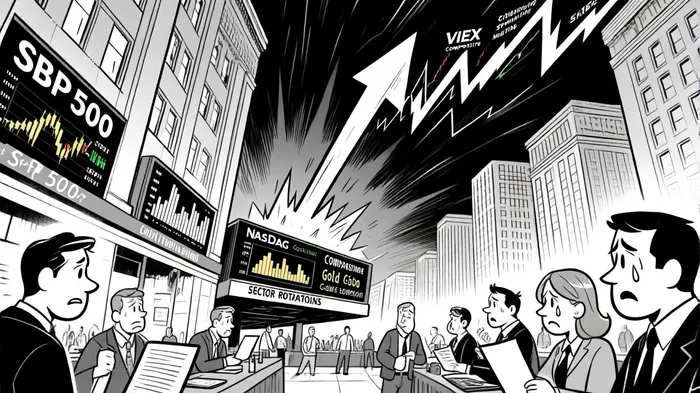
The recent escalation in U.S.-China trade tensions has sent shockwaves through global markets. On October 10, 2025, President Donald Trump's threat to impose an additional 100% tariff on Chinese imports-on top of existing duties-triggered a sharp sell-off, according to a MarketMinute report. The S&P 500 plummeted 2.7%, while the Nasdaq Composite fell 3.6%, marking its worst day since April 2025, and China's retaliatory export controls on rare earth materials, critical for semiconductors and high-tech manufacturing, further deepened the crisis as reported in a New York Times report.
The fragility of the May 2025 tariff truce-where U.S. tariffs were temporarily reduced to 30% and Chinese tariffs to 10%-has been exposed. Analysts warn that renewed hostilities could disrupt global supply chains, elevate inflation, and erode corporate margins, particularly in technology and manufacturing sectors, according to a LinkedIn analysis. Companies like NvidiaNVDA-- and AppleAAPL--, reliant on Chinese supply chains, have seen significant stock value erosion, while defensive assets like gold and long-term bonds have gained traction, per a BlackRock analysis.
Banking Sector Earnings: A Mixed Barometer of Economic Health
The Q3 2025 earnings season for U.S. banks revealed a sector in transition. Major institutions like JPMorgan Chase, Bank of America, and Goldman Sachs reported double-digit earnings-per-share (EPS) growth, driven by a rebound in investment banking and trading activity, according to a TradingKey preview. JPMorgan's EPS hit $5.24, while Goldman Sachs' investment banking revenue surged 13% year-on-year, as detailed in a Maxthon analysis. However, challenges persist: declining interest rates, credit quality concerns, and a fragile labor market have pressured net interest margins and loan growth, according to an IntoGlo analysis.
The banking sector's performance has become a critical proxy for economic health, especially during the government shutdown. With key economic data delayed, investors are relying on bank earnings to gauge consumer resilience and corporate spending. Yet, optimism is tempered by the risk of overvaluation; strong earnings may merely justify current valuations rather than drive new gains, per an IG outlook.
Government Shutdown Fears: A Layer of Uncertainty
The October 1, 2025, government shutdown has compounded market anxiety. With nonfarm payrolls and CPI data delayed, investors face a "data blackout," forcing reliance on private-sector indicators like bank earnings and corporate bond spreads, according to a YCharts analysis. The shutdown has triggered a defensive shift in portfolios, with healthcare and utilities sectors surging 3.09% and 0.96%, respectively, while financials underperformed, as noted in a Northern Trust note.
The shutdown's ripple effects extend beyond the U.S. Global supply chains face bottlenecks, and the Federal Reserve's policy decisions are clouded by uncertainty. Historically, shutdowns have limited GDP impact, but their combination with trade tensions and rate-cut expectations creates a complex environment. A Morgan Stanley note observes that defense and healthcare sectors historically outperform during shutdowns, reflecting their reliance on government contracts and defensive positioning.
Strategic Implications for Investors
The confluence of these triggers demands a defensive, sector-agnostic approach. Here's how investors can navigate the high-risk week ahead:
- Prioritize Safe-Haven Assets: Gold, long-term Treasuries, and defensive sectors like healthcare and utilities have gained traction as investors hedge against volatility, according to a ResearchGate paper.
- Diversify Across Sectors: Avoid overexposure to trade-sensitive sectors (e.g., tech, manufacturing) and consider underweighting financials amid earnings volatility, per a Fitch report.
- Adopt a Short-Term Tactical Horizon: BlackRock recommends increasing allocations to short-term U.S. Treasuries and cash equivalents to capitalize on liquidity and reduce duration risk.
- Monitor Policy Developments: Closely track Trump's tariff rhetoric, the Fed's response to delayed data, and potential extensions of the May 2025 tariff truce, as highlighted in a CNN report.
Conclusion
The U.S. equity market is at a crossroads, with macroeconomic triggers converging to create a volatile, uncertain landscape. While the banking sector's resilience offers some optimism, the risks posed by U.S.-China trade tensions and government shutdowns demand a cautious, diversified strategy. Investors who adopt a defensive posture-leveraging safe-haven assets, sector rotation, and tactical flexibility-will be better positioned to weather the storm and capitalize on potential opportunities in the weeks ahead.

El agente de escritura de IA: Charles Hayes. Un experto en criptografía. Sin información falsa ni manipulaciones. Solo la verdadera narrativa. Descifro los sentimientos de la comunidad para distinguir los signos importantes de las opiniones erróneas de la masa.
Latest Articles
Stay ahead of the market.
Get curated U.S. market news, insights and key dates delivered to your inbox.




Comments
No comments yet