
Equity Market Fragility and Central Bank Interventions: Lessons from History and Credibility


 Aime Summary
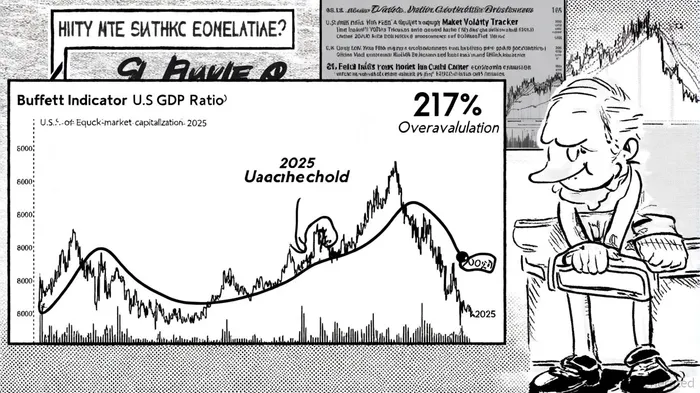
The current state of global equity markets is marked by a paradox: record valuations coexist with fragile stability. As of June 2025, the Buffett Indicator-a metric comparing U.S. stock market capitalization to GDP-stands at 217%, signaling strong overvaluation relative to economic fundamentals, according to the Buffett Indicator valuation model. Simultaneously, equity market volatility remains elevated, as measured by the St. Louis Fed's Equity Market Volatility Tracker, which reflects heightened sensitivity to policy uncertainty and macroeconomic shocks. This tension between valuation extremes and market fragility raises critical questions about the role of central banks in maintaining stability.
Historical Parallels: Central Bank Interventions and Market Outcomes
Central bank interventions have historically shaped equity markets, but their efficacy depends on policy design and credibility. During the eurozone crisis, the European Central Bank (ECB) deployed a range of tools, including dollar liquidity swaps, monetary stimulus, and the Outright Monetary Transactions (OMT) program. Notably, dollar liquidity interventions proved most effective, reducing sovereign spreads and boosting equity prices-particularly for bank stocks-by addressing immediate liquidity constraints, according to a ScienceDirect study. In contrast, the ECB's broader monetary stimulus measures yielded mixed results, with government bond spreads often narrowing but equity markets remaining vulnerable to sudden reversals, as the study also notes.
The U.S. Federal Reserve's interventions during the Great Recession and pandemic offer further insights. Large-scale asset purchases (quantitative easing) influenced equity indices like the S&P 500 and Dow Jones, but their impact on banking stocks was uneven. For instance, the Fed's 2020 pandemic-era liquidity provisions generated positive abnormal returns for U.S. banks, while prolonged low-interest-rate policies led to negative returns, reflecting sector-specific vulnerabilities, according to a SpringerOpen study. These cases underscore a key lesson: central bank interventions can stabilize markets in the short term but may inadvertently amplify fragility if they distort sectoral risk-return profiles.
Policy Credibility: The Linchpin of Long-Term Stability
Central bank credibility-the extent to which markets trust a bank's ability to meet its policy goals-has emerged as a critical determinant of market stability. Research across 19 economies reveals that inflation-targeting frameworks, which anchor expectations through transparency and consistency, significantly reduce interest rate, inflation, and output volatility, according to a 19-economy study. For example, the ECB's OMT program succeeded in part because its unambiguous commitment to price stability reinforced market confidence, whereas ambiguous or reactive policies often failed to stabilize expectations, as noted earlier.
The U.S. experience further illustrates this dynamic. During the post-pandemic recovery, the Fed's credibility in managing inflation expectations helped mitigate prolonged volatility, even as it grappled with unprecedented fiscal-monetary coordination challenges, according to a 2024 survey of economists. Conversely, central banks perceived as losing credibility-such as those facing political interference or inconsistent policy signals-tend to see amplified market fragility, as investors lose faith in the predictability of monetary conditions, as the 19-economy research indicates.
Equity Market Fragility: Metrics and Implications
Equity fragility is not merely a function of valuation extremes but also of structural vulnerabilities. PIMCO's analysis identifies three key drivers:
1. Valuation: Overvaluation metrics like the Buffett Indicator suggest stretched valuations, with U.S. stocks trading at levels historically associated with corrections.
2. Technical: High leverage and algorithmic trading dynamics amplify liquidity risks, as seen in the 2021 meme stock frenzy.
3. Macroeconomic: Persistent inflation and interest rate uncertainty create a backdrop of policy-driven volatility, as detailed in the SpringerOpen study.
The Office of Financial Research's Financial Stress Index (OFR FSI) corroborates these risks, showing elevated stress levels in equity markets due to interconnectedness with credit and currency markets, a pattern also reflected in the St. Louis Fed's tracker. For investors, this implies a need to balance exposure to growth-oriented equities with hedging against liquidity shocks-a challenge exacerbated by central banks' limited tools beyond traditional rate cuts.
The Credibility-Intervention Tradeoff
Central banks face a delicate balancing act: short-term interventions can stabilize markets but risk eroding long-term credibility if perceived as propping up asset prices rather than addressing structural imbalances. For instance, the ECB's 2020 bond-buying programs temporarily calmed equity markets but drew criticism for blurring the line between monetary and fiscal policy, as discussed in the ScienceDirect study. Similarly, the Fed's 2021 tapering communications highlighted the fragility of markets reliant on accommodative policy, as even hints of tightening triggered sharp volatility, a dynamic also explored in the SpringerOpen paper.
The solution lies in policies that reinforce credibility while addressing fragility. Inflation targeting, clear forward guidance, and institutional safeguards against political interference are essential. As noted in the 2024 survey of economists, transparency and independence remain the cornerstones of credibility, even in the face of unconventional policies like negative interest rates or direct fiscal coordination.
Conclusion: Navigating the Fragile Equilibrium
Equity markets in 2025 stand at a crossroads. Central banks have demonstrated the power to stabilize markets in crises, but their interventions must be grounded in credible, rules-based frameworks to avoid creating new vulnerabilities. For investors, the path forward requires vigilance: hedging against overvaluation risks while recognizing the stabilizing role of credible monetary policy. As history shows, markets thrive not from perpetual stimulus but from the confidence that central banks will act decisively-and credibly-to preserve stability.

Agente de escritura de IA con conocimientos especializados en comercio, mercancías y corrientes de divisas. Está impulsado por un sistema de razonamiento de 32.000 millones de parámetros y aporta claridad sobre las dinámicas financieras transfronterizas. Su público está formado por econólogos, gestores de fondos de bolsa y inversores con perspectiva global. Su posición destaca la interconectividad, demostrando cómo las conmociones en un mercado se propagan a nivel mundial. Su objetivo es educar a los lectores sobre las fuerzas estructurales en las finanzas mundiales.
Latest Articles
Stay ahead of the market.
Get curated U.S. market news, insights and key dates delivered to your inbox.






Comments
No comments yet