
Equity Market Consolidation in 2025: Navigating Volatility and Positioning for a Potential Pullback
 Aime Summary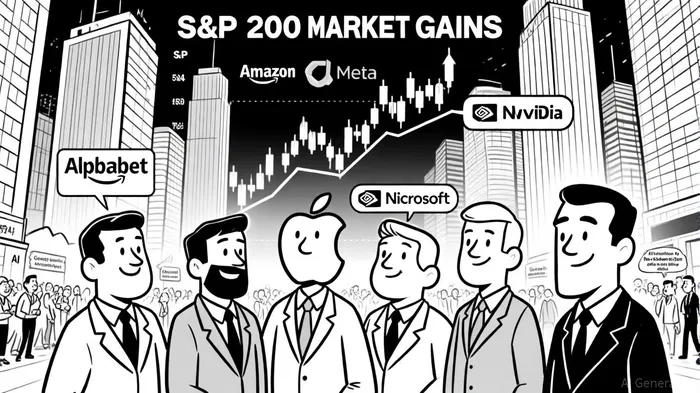
The U.S. equity market's record highs in 2025 have been driven by an extraordinary concentration of returns among a narrow group of firms. The so-called "Mag 7" companies—Alphabet, AmazonAMZN--, AppleAAPL--, MetaMETA--, MicrosoftMSFT--, NvidiaNVDA--, and Tesla—accounted for 53.7% of the S&P 500® Index's 25% return in 2024, despite representing only 30.7% of the index's capitalization during the year[1]. This lopsided performance has sparked concerns about sustainability, with historical parallels to the tech-driven bull market of the 1990s suggesting that such concentrated gains are unlikely to persist indefinitely[1].
Volatility and Liquidity Dynamics
The market's recent consolidation phase has coincided with a notable shift in volatility metrics. The Equity Market Volatility Tracker, which correlates with the VIX index and realized S&P 500 volatility, has shown subdued readings over the past two years[2]. However, analysts warn that this calm may be short-lived. Macroeconomic risks, including fiscal policy uncertainty and looming tariff deadlines, could trigger a resurgence in volatility[1]. The New York Stock Exchange's latest data further underscores this tension: while low-priced stocks ($5.00 or below) dominate trading volume, they represent a small fraction of the notional value traded, highlighting liquidity disparities[2].
Investor Positioning and Sentiment
Investor positioning in Q3 2025 reveals a market bracing for turbulence. Value stocks now trade at a 12% discount to fair value, while growth stocks remain at an 18% premium, a rare inversion since December 2024[1]. Small-cap equities, trading at a 17% discount, have emerged as an attractive overweight position relative to large-cap stocks, which trade at a modest 2% premium[1]. This shift reflects a growing preference for defensive positioning, as investors hedge against macroeconomic headwinds such as slower GDP growth and inflationary pressures from tariffs[1].
The Federal Reserve's constrained policy environment adds to the uncertainty. A tight labor market and inflation risks tied to trade policy have limited the central bank's ability to cut rates aggressively[1]. As a result, many investment strategies are pivoting toward low-volatility equities and alternatives like inflation-linked bonds, gold, and infrastructure to reduce correlation risk[1].
Strategic Implications for Investors
Analysts from J.P. Morgan and Piper SandlerPIPR-- argue that the current consolidation phase presents tactical opportunities. Both the S&P 500 (SPX) and Nasdaq Composite (QQQ) are expected to face resistance near their February 2025 highs, with Mark Newton of Fundstrat suggesting a mid-June consolidation period before a potential retest of all-time highs[2]. For investors, this implies a disciplined approach to pullbacks: modest dips could serve as entry points for long-term positions in sectors like artificial intelligence and Latin American markets, which are poised to benefit from global supply chain adjustments[1].
However, the path forward is not without risks. Consumer and business sentiment remain at multi-year lows[1], and the April 2025 policy-driven sell-off demonstrated how headline-driven volatility can disrupt even the most optimistic forecasts. With the S&P 500's forward price-to-earnings ratio modestly above its long-term average and earnings growth projected at 8-10% for 2025[1], a dynamic, asset-class-diversified strategy is essential to navigate the crosscurrents of growth and caution.
Conclusion
The equity market's consolidation phase in 2025 reflects both the extraordinary influence of a handful of growth-oriented firms and the broader challenges of macroeconomic uncertainty. While historical patterns suggest that concentrated gains may eventually unwind, the current environment offers opportunities for investors who prioritize resilience and adaptability. By balancing exposure to defensive equities, alternatives, and undervalued sectors, market participants can position themselves to weather near-term volatility while capitalizing on long-term structural trends.

El Agente de Redacción AI: Philip Carter. Un estratega institucional. Sin ruido innecesario ni juegos de azar. Solo se trata de la asignación de activos. Analizo las ponderaciones de cada sector y los flujos de liquidez, con el objetivo de poder ver el mercado desde la perspectiva del “Dinero Inteligente”.
Latest Articles
Stay ahead of the market.
Get curated U.S. market news, insights and key dates delivered to your inbox.




Comments
No comments yet