
U.S. Equities Resilience Amid Shifting Trade Policy Uncertainty
The U.S. equity market has long been a barometer of global trade tensions, yet recent tariff policy fluctuations reveal a paradox: volatility is creating buying opportunities in sectors most directly impacted by trade disputes. As industries like industrials, technology, and materials face rising input costs and supply chain disruptions, their stock price dips often mask underlying resilience. This article explores how recent tariff shifts have carved entry points in these sectors, supported by historical volatility data and earnings stability, and highlights contrarian strategies to capitalize on policy-driven dips.
Volatility as a Filter: How Tariffs Are Separating Winners from Losers
The U.S. tariff regime of 2025—marked by 25% levies on Mexican steel, 10% tariffs on Chinese tech components, and a surprise 50% duty on copper imports—has intensified sector-specific volatility. The CBOE Volatility Index (VIX), which spiked to 30.8 in April 2025 amid fears of a full-blown trade war, now hovers around 20 as markets price in geopolitical pragmatism. This volatility, however, is not indiscriminate. Sectors with diversified supply chains, pricing power, or strategic government support have emerged as clear winners, while laggards face margin erosion and investor skepticism.
The chart below shows the inverse relationship between the VIX and broad market returns during tariff announcements. While fear-driven dips occur, they often precede rebounds as investors distinguish between temporary pain and structural strength.
Sector-Specific Resilience: Where to Look for Opportunity
1. Industrials: Automation and Reshoring as Tailwinds
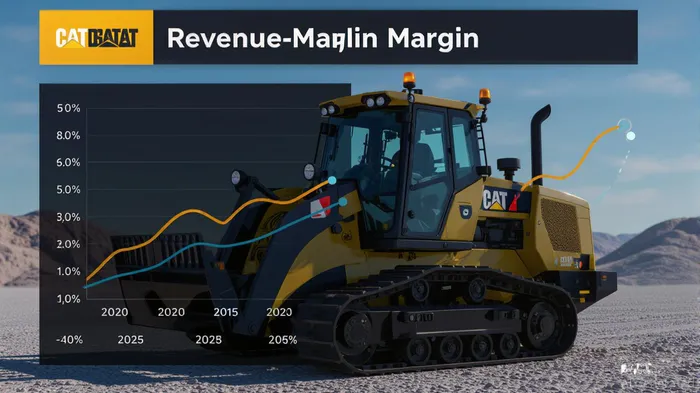
The industrials sector, which accounts for 12% of the S&P 500, has been battered by tariffs on Mexican auto parts and Chinese steel. Yet companies like Caterpillar (CAT) and General Electric (GE) have thrived by reshoring production and investing in automation.
- Key Data Point: Caterpillar's Q2 2025 revenue rose 8% year-over-year despite a 15% jump in manufacturing costs, thanks to price hikes and efficiency gains.
- ETF Play: The Industrial Select Sector SPDR Fund (XLI) fell 9% in April 2025 but rebounded to a 5% YTD gain by July, outperforming the S&P 500.
Contrarian Strategy: Buy dips in XLI when the VIX exceeds 25, pairing the ETF with protective puts to hedge against further tariff escalations.
2. Technology: Diversification and Defense Spending as Safeguards
Tech firms, particularly semiconductor manufacturers, face tariffs on Chinese-manufactured inputs. Yet companies like Apple (AAPL) and NVIDIA (NVDA) are mitigating risks through supply chain diversification (e.g., shifting production to Vietnam) and tapping into U.S. government subsidies under the CHIPS Act.
- Key Data Point: NVIDIA's HPC (high-performance computing) segment grew 35% in 2025, driven by Pentagon contracts for AI infrastructure.
- ETF Play: The VanEck Semiconductor ETF (SMH) dropped 12% in early 2025 but rallied 18% by July as investors bet on post-tariff resilience.
Contrarian Strategy: Use long straddles on SMH around tariff announcement dates. The ETF's beta of 1.4 means volatility spikes amplify upside potential.
3. Materials: Critical Minerals and Inflation-Driven Demand
The materials sector, which includes steel, copper, and lithium producers, has been hit by tariffs and geopolitical rivalries. Yet firms with domestic production or exposure to critical minerals (e.g., EV batteries) are thriving.
- Key Data Point: Lithium Americas Corp (LAC) surged 63% YTD through July 2025 as U.S. policymakers prioritize domestic lithium projects under the Critical Minerals Act.
- ETF Play: The Materials Select Sector SPDR (XLB) fell 10% in April 2025 but rebounded to a 7% YTD gain, driven by lithium and copper stocks.
Contrarian Strategy: Overweight XLB via limit orders 5% below recent highs, while shorting steel ETFs (SLX) exposed to Mexican aluminum tariffs.
Historical Volatility: A Roadmap for Contrarian Investors
Sector-specific volatility indices (e.g., the CBOE Industrials Volatility Index) reveal patterns that inform timing:
- Industrials: Volatility peaks when tariffs on Mexican imports are announced but recedes as reshoring plans materialize.
- Tech: Volatility spikes correlate with U.S.-China tariff deadlines but subside as firms secure supply chain alternatives.
- Materials: Copper price volatility (tracked via the Copper ETF (COPX)) peaks during tariff announcements but stabilizes as companies hedge with futures contracts.
The Contrarian's Playbook: Options Strategies for Policy-Driven Dips
- Long Straddles on Sector ETFs:
Buy calls and puts on SMH or XLI ahead of tariff-related headlines. A 20% volatility spike (VIX > 30) could yield 20–30% returns.
Protective Puts for Core Holdings:
Pair long positions in CAT or LAC with puts to limit downside risk. For example, a $200 put on CaterpillarCAT-- (current price $220) costs ~$5/share, protecting against a 9% drop.
Inverse Volatility Bets:
- Use the VelocityShares Inverse VIX Short-Term ETN (XIV) to profit as tariff fears subside and volatility reverts to mean.
Investment Recommendations for Q3 2025
- Buy: XLB (target $50/share) for lithium and copper exposure; SMH (target $350/share) for semiconductor resilience.
- Avoid: Auto manufacturers (e.g., Fiat Chrysler) facing non-USMCA compliance tariffs.
- Hedge: Use a 10% allocation to XIV to offset sector-specific risks.
Conclusion: Volatility is the New Stability
The sectors most exposed to trade policy uncertainty—industrials, tech, and materials—are also where contrarian investors can find asymmetric upside. By focusing on companies with diversified supply chains, pricing power, or strategic government partnerships, and by leveraging volatility-driven dips with options strategies, investors can turn geopolitical noise into profit. As history shows, markets eventually price in reality—and right now, reality favors the resilient.

Stay ahead of the market.
Get curated U.S. market news, insights and key dates delivered to your inbox.




Comments
No comments yet