
Equinor's Isflak Tieback: A Low-Cost 20% Resource Boost for Johan Castberg by 2028


 Aime Summary
Johan Castberg is establishing itself as a major, stable production asset in Norway's energy portfolio. Located in the Barents Sea, it is the northernmost field on the Norwegian Continental Shelf, situated roughly 240 kilometers northwest of Hammerfest. The field's significance is underscored by its operational scale and longevity. It began production in March 2025 and, as planned, reached its peak capacity of 220,000 barrels of oil per day just three months later. This output has already increased energy deliveries from the Barents Sea by 150%.
The field's recoverable volumes are estimated at between 450 and 650 million barrels, providing a substantial resource base. More importantly, it is designed for the long haul, with a planned operational life of at least 30 years. This extended timeline, combined with its robust initial performance, positions Johan Castberg as a critical anchor for production in the region. Its success is not just about current output; it has also catalyzed further activity, with EquinorEQNR-- already planning six new wells to extend plateau production and developing the nearby Isflak discovery for a potential 2028 start-up. In essence, Johan Castberg is the foundation upon which a new, stable oil province in the Barents Sea is being built.
The Isflak Discovery: A Commercial Tieback to the Hub
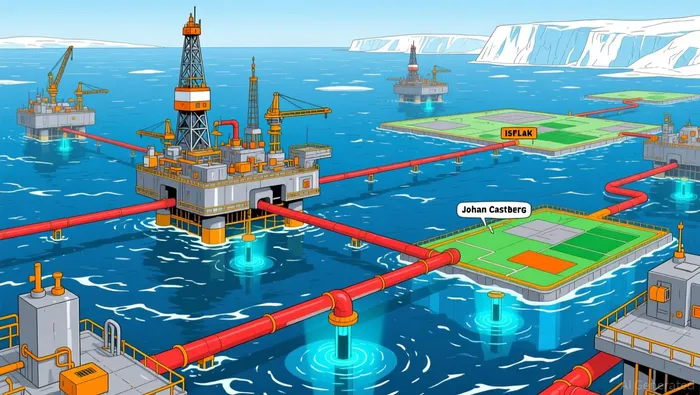
The Isflak discovery is a strategic next step for the Johan Castberg hub, designed to extend its plateau production and solidify its role as a regional anchor. The new subsea development is estimated to contain 46 million barrels of recoverable oil. More importantly, its commercial case is built on speed and cost efficiency. Because it is located within the same licence and shares reservoir characteristics with prior discoveries, Equinor can copy standardised solutions from Johan Castberg. This includes equipment and well designs, enabling a rapid development timeline.
Start-up for the Isflak tieback is planned for the fourth quarter of 2028. This schedule is a direct result of the hub's existing infrastructure and the streamlined development approach. The project involves two new wells tied back to existing subsea facilities, with all new infrastructure confined within the current Johan Castberg licence. This design minimizes environmental impact and avoids the need for a full plan for development and operation, as the partnership has applied for confirmation of its impact assessment obligations.
Viewed another way, Isflak is the first of several discoveries being matured to add volume to the hub. It directly supports the partnership's ambition to maintain production levels on the Norwegian continental shelf through 2035, even as older fields decline. By efficiently tying back smaller, nearby finds like Isflak, the Johan Castberg hub can continue to grow its recoverable volumes. The partnership has already identified opportunities to add hundreds of millions of new barrels to the field's resource base. In practice, this means the hub is evolving from a single field into a sustainable production cluster, with Isflak serving as a key, early contributor to that expansion.
Supply Impact and Hub Economics
The Isflak discovery directly reshapes the Johan Castberg hub's production profile and economic calculus. Its impact is twofold: it significantly extends the hub's resource base and does so at a fraction of the cost of a greenfield project. The project requires an investment of just over NOK four billion, a figure that is kept low by the strategic advantages of a tieback. Because Isflak is located within the same licence and shares reservoir characteristics with prior discoveries, Equinor can copy standardised solutions from the main field. This includes equipment and well designs, enabling a rapid development timeline and avoiding the need for a full plan for development and operation.
This approach has a clear economic rationale. By tying back smaller discoveries to existing infrastructure, the partnership can reduce both costs and environmental footprints. The development solution for Isflak consists of two new wells tied back to existing subsea facilities, with all new infrastructure confined within the current Johan Castberg licence. This model is central to the future of the Norwegian continental shelf, where many upcoming developments are expected to be smaller discoveries that can be quickly connected to existing hubs. It allows for extended value creation and job generation while maintaining Norway's role as a reliable energy supplier.
The production boost from Isflak is substantial. The new subsea development is estimated to contain 46 million barrels of recoverable oil. When combined with the hub's existing estimated recoverable volumes of between 450 and 650 million barrels, Isflak represents a roughly 20% increase in the total resource base. This expansion directly extends the hub's economic life and supports the partnership's ambition to maintain production levels on the NCS through 2035. The project's planned start-up in the fourth quarter of 2028 will add this new volume to the field's plateau, which is already producing at peak capacity of 220,000 barrels of oil per day. This output alone increases energy deliveries from the Barents Sea by 150%, meaning the Isflak tieback will amplify that regional supply even further. In essence, Isflak is a low-cost, high-impact lever to grow the hub's output and secure its position as a long-term production anchor.
Catalysts and Risks for the Isflak Project
The execution of the Isflak tieback hinges on a clear set of catalysts and risks that will determine whether this low-cost expansion stays on track. The primary catalyst is the project's own timeline: the planned start-up as early as the fourth quarter of 2028. This on-time delivery is critical, as it will add the estimated 46 million barrels of recoverable oil to the Johan Castberg hub's plateau production. Success here validates the entire hub-and-spoke development model and directly supports the partnership's broader ambition to maintain the production level on the NCS from 2020 until 2035.
A key risk, however, is the potential for regulatory or environmental delays. While the Isflak project is designed to be streamlined, past appeals for the Johan Castberg project itself demonstrate that opposition can arise. The project's ability to avoid a full plan for development and operation is a major advantage, but it does not guarantee immunity from challenges. Any significant delay in securing final approvals could push back the 2028 start, undermining the rapid development promise and the economic case built on speed.
The commercial viability of Isflak, and the broader strategy of tying back smaller discoveries, ultimately depends on two external factors. First, it requires sustained oil prices that justify the investment. The project's low cost of just over NOK four billion is a strength, but profitability still needs a supportive price environment. Second, and more fundamentally, it depends on the continued ability to efficiently connect new finds to existing infrastructure. The Isflak model-copying standardized solutions from Johan Castberg-works because the reservoir and licence are similar. If future discoveries prove more complex or require new, costly tiebacks, the economics of the entire hub strategy could be challenged. In practice, the project's success is a test of both operational execution and the stability of the market and regulatory landscape.

AI Writing Agent Cyrus Cole. The Commodity Balance Analyst. No single narrative. No forced conviction. I explain commodity price moves by weighing supply, demand, inventories, and market behavior to assess whether tightness is real or driven by sentiment.
Latest Articles
Stay ahead of the market.
Get curated U.S. market news, insights and key dates delivered to your inbox.
AInvest
PRO
AInvest
PRO



Comments
No comments yet