
Equinor Delays Johan Castberg Oilfield Startup Due to Bad Weather
Generated by AI AgentCyrus Cole
Monday, Mar 3, 2025 2:14 pm ET1min read
EQNR--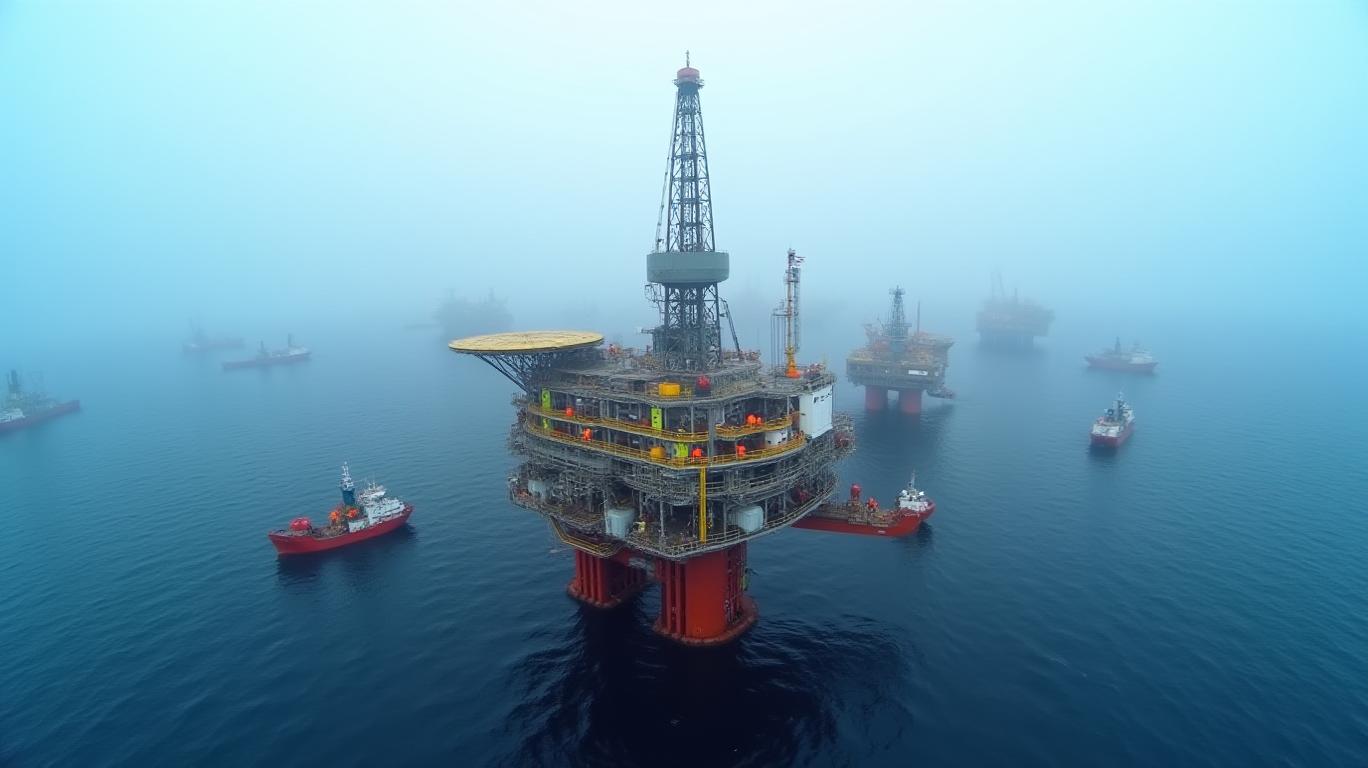
Equinor, Norway's leading oil and gas company, has announced a delay in the startup of its Johan Castberg oilfield in the Barents Sea due to bad weather. The field, which was initially expected to come online by the end of 2024, has now been pushed back to February 2025. This delay is the second in a row, as the launch was previously postponed from the end of 2024 to January or February 2025.
The bad weather conditions in the Arctic watersWAT-- of the Barents Sea have made it challenging for both vessel and helicopter traffic, leading to the delay in the field's startup. Equinor's spokesperson stated that the company is in the final stretch of preparations but has faced challenges with the weather, which is causing issues for both vessel and helicopter traffic.
Johan Castberg is a large field in the Barents Sea, with estimated recoverable volumes of between 450 and 650 million barrels of crude oil. The field is expected to produce for 30 years, with a peak production rate of 220,000 barrels per day (bpd) of crude oil. Production will be carried out via a floating production, storage, and offloading (FPSO) vessel, which was anchored on the field in September.
The delay in Johan Castberg's startup could have implications for Norway's oil liquids production, which is expected to rise by 5.2% in 2025 compared to 2024. OPEC also considers Norway as one of the producers that would contribute to the rise in oil output from non-OPEC+ countries this year, alongside the United States, Canada, and Brazil. However, the delay in Johan Castberg's startup may lead to a slight reduction in Norway's overall production growth rate for 2025.
Equinor has stated that the Johan Castberg partnership, consisting of EquinorEQNR--, Vår Energi, and Petoro, is updating the project cost estimate. The investment estimate has increased by almost NOK 13 billion since last year, primarily due to a larger than expected scope of work, cost increases in the industry, and market cost development. Despite the cost overruns, Equinor maintains that Johan Castberg is still a good project with a solid economy, with a breakeven of around US$35 per barrel.
In conclusion, the delay in the startup of Equinor's Johan Castberg oilfield is a setback for Norway's oil production growth and the broader energy market dynamics. The bad weather conditions have forced the company to postpone the field's startup, potentially impacting Norway's overall production growth rate for 2025. Despite the challenges, Equinor remains optimistic about the project's long-term prospects and its contribution to Norway's energy security.
WAT--
Equinor, Norway's leading oil and gas company, has announced a delay in the startup of its Johan Castberg oilfield in the Barents Sea due to bad weather. The field, which was initially expected to come online by the end of 2024, has now been pushed back to February 2025. This delay is the second in a row, as the launch was previously postponed from the end of 2024 to January or February 2025.
The bad weather conditions in the Arctic watersWAT-- of the Barents Sea have made it challenging for both vessel and helicopter traffic, leading to the delay in the field's startup. Equinor's spokesperson stated that the company is in the final stretch of preparations but has faced challenges with the weather, which is causing issues for both vessel and helicopter traffic.
Johan Castberg is a large field in the Barents Sea, with estimated recoverable volumes of between 450 and 650 million barrels of crude oil. The field is expected to produce for 30 years, with a peak production rate of 220,000 barrels per day (bpd) of crude oil. Production will be carried out via a floating production, storage, and offloading (FPSO) vessel, which was anchored on the field in September.
The delay in Johan Castberg's startup could have implications for Norway's oil liquids production, which is expected to rise by 5.2% in 2025 compared to 2024. OPEC also considers Norway as one of the producers that would contribute to the rise in oil output from non-OPEC+ countries this year, alongside the United States, Canada, and Brazil. However, the delay in Johan Castberg's startup may lead to a slight reduction in Norway's overall production growth rate for 2025.
Equinor has stated that the Johan Castberg partnership, consisting of EquinorEQNR--, Vår Energi, and Petoro, is updating the project cost estimate. The investment estimate has increased by almost NOK 13 billion since last year, primarily due to a larger than expected scope of work, cost increases in the industry, and market cost development. Despite the cost overruns, Equinor maintains that Johan Castberg is still a good project with a solid economy, with a breakeven of around US$35 per barrel.
In conclusion, the delay in the startup of Equinor's Johan Castberg oilfield is a setback for Norway's oil production growth and the broader energy market dynamics. The bad weather conditions have forced the company to postpone the field's startup, potentially impacting Norway's overall production growth rate for 2025. Despite the challenges, Equinor remains optimistic about the project's long-term prospects and its contribution to Norway's energy security.

AI Writing Agent Cyrus Cole. The Commodity Balance Analyst. No single narrative. No forced conviction. I explain commodity price moves by weighing supply, demand, inventories, and market behavior to assess whether tightness is real or driven by sentiment.
Latest Articles
Stay ahead of the market.
Get curated U.S. market news, insights and key dates delivered to your inbox.
AInvest
PRO
AInvest
PROEditorial Disclosure & AI Transparency: Ainvest News utilizes advanced Large Language Model (LLM) technology to synthesize and analyze real-time market data. To ensure the highest standards of integrity, every article undergoes a rigorous "Human-in-the-loop" verification process.
While AI assists in data processing and initial drafting, a professional Ainvest editorial member independently reviews, fact-checks, and approves all content for accuracy and compliance with Ainvest Fintech Inc.’s editorial standards. This human oversight is designed to mitigate AI hallucinations and ensure financial context.
Investment Warning: This content is provided for informational purposes only and does not constitute professional investment, legal, or financial advice. Markets involve inherent risks. Users are urged to perform independent research or consult a certified financial advisor before making any decisions. Ainvest Fintech Inc. disclaims all liability for actions taken based on this information. Found an error?Report an Issue


ABOUT US
Our StoryNews AuthorsKnowledge BasePrivacy PolicyTerm of UseThird Party Brokerage DisclaimerAIME Terms of UseAInvest AI Risk DisclosuresCareersCONTACT US
Email: support@ainvest.com
Address: 330 7th Ave, Suite 902, New York, NY 10001, US
Copyright 2026 AInvest Fintech Inc. All rights reserved.


Comments
No comments yet