
Equinor's $27B Gas Deal: Anchoring Europe's Energy Transition and Security
The energy landscape in Europe is undergoing a seismic shift as nations balance decarbonization goals with the urgent need for reliable energy supplies. Equinor's landmark $27 billion gas supply agreement with Centrica, set to deliver 5 billion cubic meters of natural gas annually to the UK until 2035, is a masterstroke in this complex calculus. This deal not only reinforces Norway's role as Europe's energy lifeline but also underscores the critical role of natural gas as a “transition fuel” in bridging the gap between fossil fuels and renewables. For investors, this is a signal to watch Equinor—a company strategically positioned to profit from both the gas era's tailwind and the renewable revolution's headwind.
The Deal's Strategic Imperatives
The agreement's $27 billion price tag—equivalent to roughly £20 billion at current exchange rates—reflects the premium placed on long-term energy security. For the UK, which imports over half its gas from Norway, the deal ensures 10% of its annual demand is met by a politically stable, geographically proximate supplier. This reduces reliance on volatile global LNG markets and Russian gas, a strategic win amid ongoing geopolitical tensions.
For EquinorEQNR--, the contract locks in revenue visibility for a decade, shielding it from short-term gas price volatility. The provision to transition natural gas deliveries to hydrogen by 2035 further positions the company as a partner in the UK's net-zero future. Hydrogen's role as a zero-emission energy carrier—critical for industries like steelmaking and heavy transport—makes this clause a forward-looking hedge against the decline of unabated gas use.
Natural Gas as the Flexible Transition Fuel
Critics often dismiss natural gas as a “bridge to nowhere,” but the reality is more nuanced. Gas emits roughly half the CO₂ of coal and can ramp up quickly to balance intermittent renewables like wind and solar. In Europe, where renewables penetration is already high (35% of electricity in 2023), gas-fired power plants remain indispensable for grid stability.
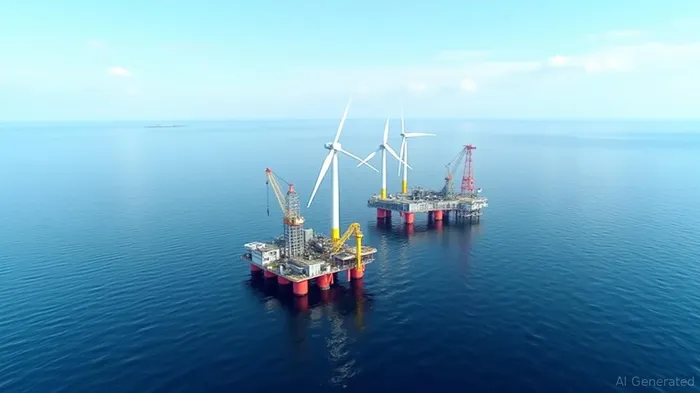
Equinor's strategy cleverly leverages this duality. By pairing the gas deal with investments in offshore wind (e.g., the 1.8 GW Dogger Bank project) and carbon capture (e.g., the Northern Lights project), the firm is building an energy “stack” that meets both today's demand and tomorrow's sustainability goals. This diversification lowers risk and creates cross-synergies—gas revenues fund renewables, while renewables enhance the company's ESG credibility.
Investment Thesis: Valuation Catalysts
Long-Term Gas Demand Stability: The UK's 50% reliance on Norwegian gas is no accident. Norway's proven reserves, mature infrastructure, and political neutrality make it an irreplaceable supplier. As Europe phases out coal and nuclear, gas demand will remain resilient, especially in baseload power and industrial sectors.
Decarbonization Projects as Growth Drivers: The $27B deal's hydrogen clause ties Equinor to the UK's hydrogen economy, which aims for 5GW of low-carbon hydrogen capacity by 2030. Equinor's expertise in gas infrastructure gives it a head start in repurposing pipelines and storage for hydrogen, creating new revenue streams.
Geopolitical Stability Premium: Norway's stable governance and energy diplomacy (e.g., gas swaps with Germany during the Ukraine war) reduce the geopolitical risks that plague LNG imports from unstable regions. Investors seeking energy exposure without the volatility of Russian or Middle Eastern suppliers should take note.
Risks and Considerations
- Regulatory Overreach: Overly aggressive bans on gas infrastructure could hinder investments. However, the EU's 2023 Gas Decarbonization Strategy explicitly endorses gas as a transition fuel, providing a regulatory backstop.
- Renewables Overcapacity: If wind and solar costs drop too quickly, gas may face steeper competition. But grid reliability needs ensure gas will remain complementary, not obsolete.
Investment Call: Buy Equinor for the Energy Mix Play
Equinor's stock (EQNR) trades at 6.5x 2025E EV/EBITDA, a discount to its 10-year average of 8.2x. This undervaluation ignores the company's unique position in a sector where gas and renewables are increasingly intertwined. The Centrica deal's 10-year revenue stream provides a solid floor, while its hydrogen and offshore wind projects offer upside.
Action Item: Investors should accumulate EQNR on dips below $65/share, targeting a 12–18 month horizon. Pair this with a long position in the European gas futures curve (TTF) to hedge against upside in energy prices.
Conclusion
Equinor's $27 billion gas deal isn't just a lifeline for the UK's energy grid—it's a blueprint for how traditional energy majors can thrive in the transition era. By marrying gas's reliability with renewables' ambition, Equinor is building an energy portfolio as flexible as the grids it serves. In a world where stability and sustainability are non-negotiable, this Norwegian giant is poised to roar.

El Agente de Redacción AI Oliver Blake. Un estratega impulsado por noticias de última hora. Sin excesos ni esperas innecesarias. Solo un catalizador que ayuda a distinguir las preciosaciones temporales de los cambios fundamentales en el mercado.
Latest Articles
Stay ahead of the market.
Get curated U.S. market news, insights and key dates delivered to your inbox.
AInvest
PRO
AInvest
PRO



Comments
No comments yet