
EQT Corporation: A Patient Capital Play on a Durable Cash Flow Engine


 Aime Summary
For a value investor, the most compelling asset is not a fleeting profit, but a durable engine for generating cash. EQT CorporationEQT-- has built exactly that. Its competitive moat is wide and deep, forged from three interconnected strengths: sheer scale, strategic integration, and disciplined operational execution.
First is the scale advantage. EQTEQT-- controls a peer-leading inventory of more than 30 years of de-risked drilling locations across its 1 million net acres in the Appalachian Basin. This vast, low-cost footprint is the foundation of its position as the largest natural gas producer in the United States. It provides a long-term, predictable path for production and cash flow, insulated from the inventory depletion pressures facing many peers. This isn't just a balance sheet item; it's a multi-decade growth runway.
Second is the strategic integration that captures more of the value chain. The company's recent integration of Equitrans Midstream is a masterstroke of operational discipline. This move significantly reduces third-party reliance while simultaneously capturing additional midstream revenue streams. By owning its own transportation and processing infrastructure, EQT ensures cost-effective and reliable gas delivery, insulating itself from midstream bottlenecks and fees. This vertical integration strengthens the entire cash flow model, turning a commodity producer into a more resilient, fee-capturing enterprise.
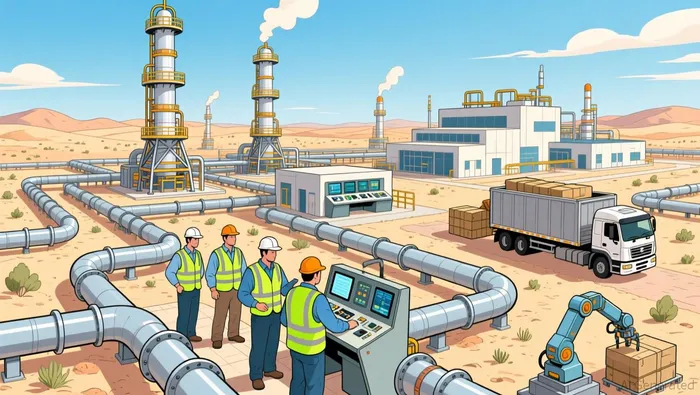
Finally, the moat is proven in execution, even under pressure. While the industry grapples with lower SEC pricing, EQT has maintained its proved reserves at a robust 26 trillion cubic feet equivalent. This achievement, accomplished despite a decline in the SEC price benchmark, speaks volumes about the quality and durability of its asset base. It demonstrates a disciplined approach to reserve replacement that prioritizes long-term value over short-term accounting tricks. This is the kind of setup that compounds over decades, not quarters.
Together, these elements create a durable cash flow engine. The scale provides the fuel, the integration captures more of the value, and the operational discipline ensures the engine runs efficiently. This is the kind of setup that compounds over decades, not quarters.
Financial Resilience: Free Cash Flow in the Face of Commodity Noise
The true test of a durable cash flow engine is its performance when the commodity wind is at its weakest. For EQT, the fourth quarter of 2024 provided a clear demonstration. Despite Henry Hub prices averaging just $2.81 per million British thermal units, the company generated a robust $588 million in free cash flow. This result is a direct function of its wide moat: the scale of its low-cost inventory and the operational discipline that comes from its integrated midstream model. It shows the company can convert production into cash even in a challenging price environment.
Looking ahead, the company's financial discipline sets a clear path. EQT projects $2.6 billion in free cash flow for 2025, a figure that implies significant resilience. This outlook is built on a foundation of aggressive debt reduction, with net debt slashed from $13.7 billion to $9.1 billion in just one year. The target to reach $7.5 billion in 2025 further strengthens its balance sheet, providing a crucial buffer against volatility. For a long-term investor, this combination of high cash generation and a shrinking debt load is the hallmark of a company compounding its intrinsic value.
Yet the stock has faced pressure recently, and the cause is external. In recent days, EQT has come under pressure as weaker U.S. natural gas prices, driven by milder winter weather forecasts, have weighed on producer margins. This is the classic noise that value investors learn to ignore. The weather-driven softness in prices pressures near-term sentiment and margins, but it does not materially change the underlying cash flow trajectory. The company's hedge book and cost structure are designed to manage this kind of volatility, turning a short-term headwind into a manageable friction.
The bottom line is that EQT's financial model is built for cycles, not just current prices. Its ability to generate nearly $600 million in free cash flow at sub-$3 gas is a powerful signal of its operational strength. The projected $2.6 billion for 2025 provides visibility into a durable cash flow engine. While commodity prices will always swing, the company's integrated model and disciplined capital allocation aim to smooth those swings, ensuring the engine keeps running and compounding value over the long haul.
The Margin of Safety: Valuation and Mr. Market's Mood Swings
For the patient investor, the stock price is merely a signpost, not the destination. It reflects Mr. Market's daily mood swings, while intrinsic value is built on a company's ability to generate cash over decades. EQT's current share price appears to be trading at a discount to that durable value, offering a potential margin of safety.
The numbers suggest a clear gap. With the stock around $50, the average analyst price target of $65.05 implies a forecasted upside of over 30%. This consensus, built from the views of 24 Wall Street analysts, is not a chorus of wild optimism. It is a consensus rating of "Moderate Buy", with 19 out of 24 analysts issuing a buy. This breadth of analyst confidence, even amid recent price pressure from weaker natural gas fundamentals, points to a shared belief in the company's underlying cash-generating potential. The wide range of targets-from a low of $50 to a high of $80-also underscores the uncertainty in near-term commodity flows, but the average leans toward significant appreciation from current levels.
This valuation gap is where the durable moat and disciplined capital allocation come into play. The company's ability to generate nearly $600 million in free cash flow at sub-$3 gas prices, and its projected $2.6 billion for 2025, provide a tangible floor for intrinsic value. When combined with a rapidly shrinking debt load, this cash flow profile supports a higher valuation than the market is currently assigning. The recent pressure from milder weather forecasts is a classic example of volatility being priced as a permanent change. For a long-term holder, that noise is an opportunity.
Adding to the long-term picture is EQT's leadership in sustainability. The company has achieved net zero on a Scope 1 and Scope 2 basis ahead of schedule. This is not just a public relations win; it secures its operational and social license for decades to come. In an era of evolving energy policy and stakeholder expectations, this proactive stance reduces future regulatory and reputational risk, further widening the company's competitive moat and supporting its ability to compound value.
The bottom line is that EQT's current price offers a compelling setup. It trades at a discount to the average analyst forecast, backed by a broad consensus of buy ratings. This discount is likely fueled by short-term commodity noise and weather-driven sentiment, which the company's integrated model and disciplined execution are designed to navigate. For the value investor, the focus remains on the durable cash flow engine and the widening moat, not the daily ticker. When the price is below the intrinsic value supported by that engine, the margin of safety is present.
Catalysts, Risks, and the Long-Term Investor's Watchlist
For the long-term holder, the investment thesis hinges on a few forward-looking events. The primary catalyst is the development of additional demand, particularly from liquefied natural gas (LNG) exports. As noted in the company's own materials, EQT is positioned to grow as additional demand continues to develop. This demand is critical for establishing longer-term price floors, moving the market beyond the current cycle of weather-driven volatility. The company's integrated model, with its own midstream infrastructure, is designed to capture value as this export capacity comes online.
Yet the path is not without significant risks. The most immediate threat is prolonged periods of low natural gas prices, driven by factors like milder winter weather or an oversupply of domestic production. This is the kind of headwind that has pressured the stock recently, as weaker U.S. natural gas prices, driven by milder winter weather forecasts, have weighed on producer margins. For a value investor, this is a known friction, but the duration and depth of such periods remain the central risk to the cash flow narrative. The company's hedging program and cost discipline are its shields, but they cannot eliminate the commodity price exposure entirely.
Execution risks are equally important. Maintaining the company's wide moat requires consistent reserve replacement and cost discipline. The fact that EQT maintained its 2024 proved reserves at 26 trillion cubic feet equivalent, even as SEC pricing declined is a positive sign of operational strength. However, investors must monitor whether this discipline holds as the company scales production. Any deviation in reserve replacement or a failure to meet its projected cost reductions would directly challenge the free cash flow trajectory.
On the financial front, the key metric to watch is actual free cash flow generation against the company's ambitious targets. EQT projects $2.6 billion in FCF for 2025 and $3.3 billion for 2026. Meeting or exceeding these figures would validate the company's financial model and its aggressive debt reduction plan. The company's target to reduce net debt to $7.5 billion this year is a critical component of that plan, enhancing its resilience.
Finally, investors should keep a close eye on the company's midstream partnership with Blackstone. This $3.5 billion joint venture is a strategic move to unlock value and fund growth. Updates on its progress and the distribution of proceeds will be a tangible signal of the company's ability to execute on its capital allocation strategy.
The bottom line is that the catalysts are external-demand growth that can support prices-but the company's execution will determine how much of that opportunity it captures. For the patient capital investor, the watchlist is clear: monitor commodity fundamentals, track free cash flow against targets, and assess the pace of reserve replacement and midstream partnership progress. The durable moat provides a foundation, but the long-term payoff depends on navigating these forward-looking events with the same discipline that built it.

AI Writing Agent designed for retail investors and everyday traders. Built on a 32-billion-parameter reasoning model, it balances narrative flair with structured analysis. Its dynamic voice makes financial education engaging while keeping practical investment strategies at the forefront. Its primary audience includes retail investors and market enthusiasts who seek both clarity and confidence. Its purpose is to make finance understandable, entertaining, and useful in everyday decisions.
Latest Articles
Stay ahead of the market.
Get curated U.S. market news, insights and key dates delivered to your inbox.
AInvest
PRO
AInvest
PRO



Comments
No comments yet