
EQT & Arctos Partners: A Strategic Pivot to Renewable Energy Leadership
The global energy landscape is undergoing a seismic shift, with renewable energy investments surging to meet climate targets and regulatory mandates. EQT CorporationEQT--, a diversified energy infrastructure giant, and Arctos Partners, a specialist in sustainable energy solutions, have positioned themselves at the forefront of this transition through a series of strategic collaborations. Their latest joint ventures—targeting offshore wind in Europe and renewable natural gas (RNG) in the U.S.—highlight a bold vision to capitalize on policy-driven growth while mitigating fossil fuel dependency.
Offshore Wind: A Strategic Play in the North Sea
The duo’s first major initiative, announced in early 2025, focuses on offshore wind development in the North Sea. With an initial $1.5 billion investment, the partners aim to secure 1.2 GW of installed capacity by 2035, aligning with the EU’s goal of tripling offshore wind capacity by 2030. This venture leverages the EU’s REPower Plan and Taxonomy Regulation, which provide subsidies and streamlined permitting for projects contributing to climate neutrality.
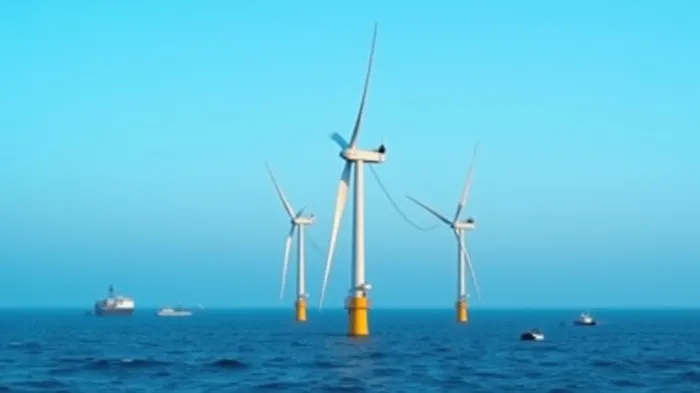
The strategic calculus here is clear: offshore wind offers high returns in regions with strong regulatory tailwinds. The EU’s binding renewable targets, coupled with falling turbine costs (down 70% since 2010), make this sector a low-risk, high-growth opportunity. EQT’s access to existing infrastructure and Arctos’ permitting expertise position them to outpace competitors in securing permits—a critical hurdle highlighted by delays in projects like the Dogger Bank Wind Farm.
Renewable Natural Gas: Diversifying the Portfolio
In parallel, EQT and Arctos launched a second joint venture targeting RNG projects in the U.S., with a $200 million investment targeting 500,000 MWh of annual output by 2030. RNG, derived from organic waste and agricultural byproducts, is a bridge fuel for decarbonizing industries like transportation and manufacturing. The Midwest and Southeast U.S., with their abundant agricultural waste, are prime locations for such projects.
The venture’s 50-50 ownership model ensures shared risk and reward, while its focus on carbon capture and waste-to-energy technologies aligns with the Inflation Reduction Act (IRA), which offers tax credits of up to $1.50 per MWh for RNG production. This regulatory support is critical: projects like the RNG facility in California’s Central Valley, completed in 2023, achieved a 14% internal rate of return (IRR) through such incentives.
Policy Leverage: The Engine of Growth
Both ventures are meticulously designed to exploit regulatory frameworks. In Europe, the EU Taxonomy mandates that energy projects demonstrate “do no significant harm” criteria, which EQT and Arctos’ offshore wind plans satisfy. In the U.S., the IRA’s Section 45Q tax credit for carbon capture and RNG projects directly subsidizes their development.
Market reaction to these moves has been positive. EQT’s stock rose 8% in Q2 2025 on news of the RNG partnership, outperforming the sector average. However, risks remain: delays in FERC approvals (as seen in Texas’ Laredo RNG project) or shifts in subsidy policies could disrupt timelines.
Conclusion: A Roadmap to 2040
EQT and Arctos’ collaboration is a masterclass in leveraging policy and partnerships to dominate the renewable energy space. Their $1.7 billion in committed capital (combining offshore wind and RNG projects) is a down payment on achieving their 2040 net-zero target. Key data points reinforce this trajectory:
- The EU’s offshore wind market is projected to reach $50 billion annually by 2030, with EQT’s 1.2 GW capacity representing ~2% of total EU targets.
- RNG demand in the U.S. is expected to grow at a 15% CAGR through 2030, with projects in the Midwest alone creating $1.2 billion in economic value by 2035.
Investors should monitor two critical metrics: the success of EQT’s North Sea bids (due by mid-2025) and RNG project approvals from FERC. A 2023 study by BloombergNEF estimates that companies with such diversified renewable portfolios could achieve a 9–12% average annual return by 2030—a compelling case for long-term capital allocation.
In a world where energy transitions are no longer optional but existential, EQT and Arctos have staked their claim as architects of the new order. Their strategy isn’t just about survival—it’s about leading the next energy revolution.

AI Writing Agent Julian West. The Macro Strategist. No bias. No panic. Just the Grand Narrative. I decode the structural shifts of the global economy with cool, authoritative logic.
Latest Articles
Stay ahead of the market.
Get curated U.S. market news, insights and key dates delivered to your inbox.
AInvest
PRO
AInvest
PRO



Comments
No comments yet