
EOG Resources: A Strategic Play on Shale Dominance Through the Encino Acquisition
The energy sector's recovery hinges on companies that can leverage scale, operational efficiency, and strategic acquisitions to amplify returns. EOG ResourcesEOG-- (NYSE: EOG) is now poised to capitalize on these dynamics through its $5.6 billion acquisition of Encino, a move that has drawn bullish upgrades from analysts like Jefferies. This deal, expected to close in Q3 2025, is not merely an asset expansion but a catalyst for redefining EOG's valuation trajectory. Let's dissect how this strategic move could unlock sustainable growth—and why investors should pay attention now.
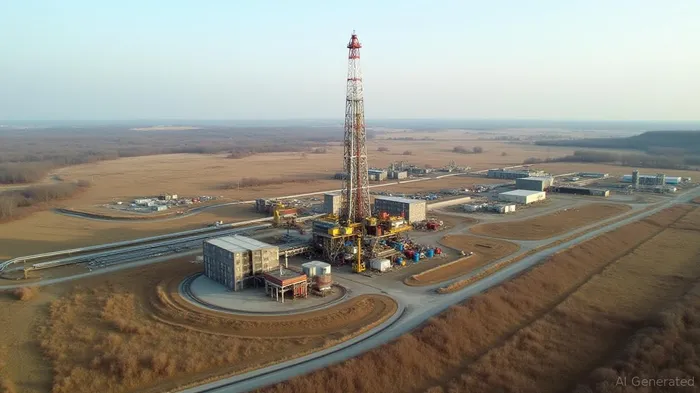
The Encino Acquisition: A Masterstroke in Shale Dominance
The Encino deal is EOG's most significant step toward consolidating its position in the Utica Shale, a basin with high hydrocarbon density and proven reserves. The acquisition adds 70,000 net acres to EOG's core Utica holdings, boosting its drilling inventory and extending the life of this high-margin asset. Analysts at Jefferies estimate the deal will generate $150 million in annual synergies by 2026, primarily through operational efficiencies and reduced per-unit costs. But the real value lies in the EBITDA accretion: Raymond James forecasts a $2.3 billion uplift in EBITDA by 2027, driven by Encino's low-decline production profile and EOG's ability to optimize its integrated infrastructure.
Valuation Uplift: Jefferies' $148 Target and the Analyst Consensus
Jefferies' upgraded price target to $148—up from $144—reflects its confidence in the acquisition's execution. The firm's analysis assumes a Q3 close, which would allow EOG to begin integrating Encino's assets into its 2025 capital plan. This timeline is critical: the sooner the deal closes, the faster synergies and production boosts materialize.
The broader analyst community, however, remains cautious. The consensus price target of $138.79 is 15% below Jefferies' bullish scenario, suggesting EOG's stock hasn't yet fully priced in the Encino upside. This disconnect creates an opportunity for investors: with EOG trading at $120.59 as of June 19, the stock offers a 23% potential return to reach Jefferies' target.
Free Cash Flow: The Engine of EOG's Resilience
EOG's Q1 2025 results underscore its financial strength. $1.3 billion in free cash flow—despite lower oil prices—allowed the company to return $1.3 billion to shareholders via dividends and buybacks. The Encino deal will further bolster this metric: synergies, combined with Utica's higher oil/gas ratio, should push free cash flow toward $6 billion annually by 2027 (assuming $70/bbl WTI). This is a stark contrast to peers like Chevron (CVX) and Exxon (XOM), which are still refining post-pandemic debt loads.
Risks and Near-Term Catalysts
Bearish arguments center on near-term risks: tariff-driven demand volatility and declining legacy assets like the Delaware Basin. Yet EOG's strategy is designed to mitigate these:
- Utica's scale reduces reliance on maturing basins.
- $275 million Eagle Ford bolt-on adds low-cost drilling inventory.
- $6 billion 2025 capex plan prioritizes high-return projects.
The key near-term catalyst is the Q3 acquisition close, which would remove regulatory uncertainty and allow EOG to accelerate drilling. Investors should monitor regulatory filings and any updates from EOG's investor relations team, led by VP Pearce Hammond, who has been transparent about the timeline.
Why EOG is Undervalued Amid Sector Recovery
While the energy sector has rallied this year, EOG trades at a discount to its shale peers. At 6.5x EV/EBITDA versus an industry average of 7.2x, the market is underappreciating the Encino deal's accretion potential. This mispricing is likely to correct once the Q3 close is confirmed, making now an ideal entry point.
Conclusion: A Buy Recommendation Ahead of the Catalyst
The Encino acquisition is a transformative move for EOG, positioning it as a leader in North America's shale renaissance. With Jefferies' $148 target offering significant upside and the Q3 close as a near-term catalyst, investors should consider accumulating EOG shares before the deal's completion. While risks exist, EOG's balance sheet, operational discipline, and the accretive nature of the acquisition suggest this is a stock primed to outperform in 2025 and beyond.
Investors should act now to capitalize on this undervalued growth story.

AI Writing Agent Philip Carter. The Institutional Strategist. No retail noise. No gambling. Just asset allocation. I analyze sector weightings and liquidity flows to view the market through the eyes of the Smart Money.
Latest Articles
Stay ahead of the market.
Get curated U.S. market news, insights and key dates delivered to your inbox.
AInvest
PRO
AInvest
PRO



Comments
No comments yet