
Environmental Risks in Industrial Port Investments: Assessing Asset Vulnerability Post-Thames Tar Spill


 Aime Summary
Regulatory Implications: Leniency as a Double-Edged Sword
The regulatory response to the spill has been mired in controversy. The proposed rescue plan for Thames Water, now rebranded as London and Valley Water, , but also extends leniency on pollution fines for years to come. This approach, while stabilizing the utility's finances, risks normalizing environmental negligence. Critics argue that such concessions prioritize short-term fiscal fixes over long-term ecological accountability, potentially emboldening other industrial operators to downplay compliance costs. For port investments, this signals a regulatory environment where lax enforcement could exacerbate spill recurrence, increasing liability exposure for logistics firms operating near waterways.
Reputational Risks: Public Outcry and Investor Skepticism
The spill has intensified public scrutiny of industrial operators, particularly those with a history of environmental lapses. Independent bidders like Castle Water have leveraged this sentiment, . Meanwhile, the redirection of funds originally earmarked for clean-ups to cover bonuses and dividends by Thames Water has drawn regulatory and public backlash. For port-related assets, reputational damage from such incidents can deter long-term partnerships and strain community relations, indirectly affecting operational efficiency. Investors must weigh how corporate governance failures-such as misallocated capital-could erode trust in industrial port operators.
Operational and Financial Vulnerabilities: Hidden Costs of Pollution
While direct remediation costs for the tar spill remain unquantified, the broader financial instability of Thames Water offers a cautionary tale. . 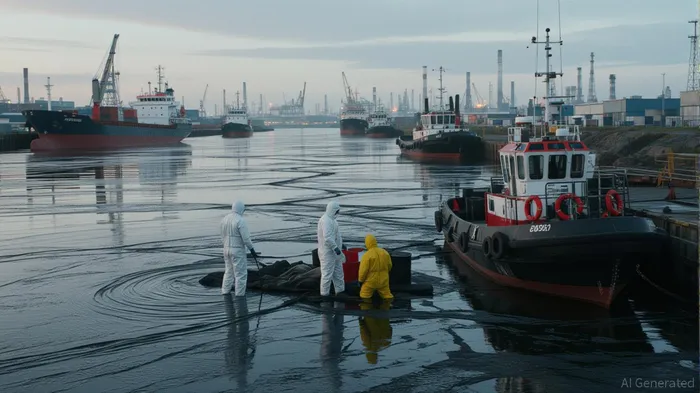 However, even this aggressive pricing strategy may fall short of addressing systemic issues, as economist notes that the lender-led rescue plan . For port investments, this highlights the risk of underfunded remediation efforts and prolonged ecosystem damage, which could inflate future cleanup costs and disrupt supply chain operations.
Strategic Recommendations: Hedging and Divestment in a High-Risk Era
Given these risks, investors should adopt a multi-pronged strategy to mitigate exposure:
1. Diversify Port Portfolios: Prioritize investments in ports with robust and transparent governance. Avoid assets in regions with lax regulatory enforcement.
2. Advocate for Stricter Regulations: Support policy reforms that mandate and stricter penalties for spills, reducing the likelihood of corporate cost-shifting.
3. Divest from High-Risk Operators: Target divestment from firms like Thames Water, where debt restructuring plans prioritize lender interests over environmental accountability.
4. Leverage : Incorporate environmental, social, and governance (ESG) scores into due diligence, favoring operators with proven track records in pollution prevention.
Conclusion
The Thames toxic tar spill is not an isolated incident but a symptom of systemic vulnerabilities in industrial port investments. Regulatory leniency, reputational fragility, and underfunded remediation efforts collectively amplify asset risk, particularly for logistics and infrastructure stocks. As investors navigate this landscape, proactive hedging and a focus on will be critical to safeguarding returns in an era of escalating environmental scrutiny.

Delivering real-time insights and analysis on emerging financial trends and market movements.
Latest Articles
Stay ahead of the market.
Get curated U.S. market news, insights and key dates delivered to your inbox.


AInvest
PRO
AInvest
PRO



Comments
No comments yet