
Environmental Risk and Infrastructure Resilience: Emerging Liabilities in Industrial Accidents and Their Impact on Insurance and ESG Investing


 Aime Summary
The Financial and Environmental Crisis at Thames Water
Thames Water, the UK's largest water utility, is nearly £20 billion in debt and teetering on the brink of collapse. Its financial distress has led to a scramble among lenders and potential bidders for a rescue plan. The current proposal, led by London and Valley Water, involves a 25% debt write-off and £4 billion in new capital injections, but it also demands years of regulatory leniency on pollution fines. This leniency, critics argue, risks normalizing environmental negligence. Castle Water, a competing bidder, has countered with a £1 billion additional investment plan focused on overhauling infrastructure to reduce pollution. The stark contrast between these proposals reveals a tension between short-term financial survival and long-term environmental stewardship.
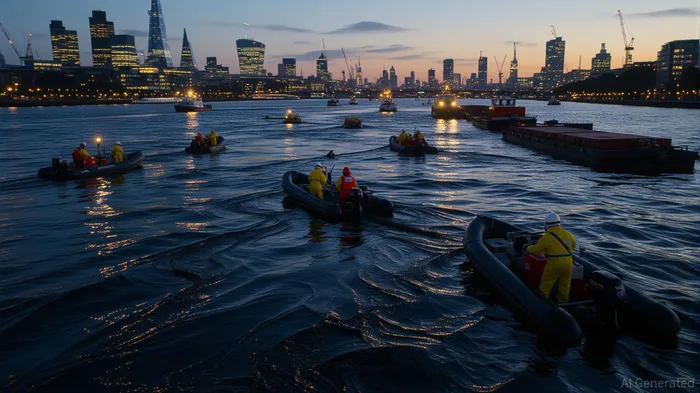
The tar spill, while a single incident, is emblematic of systemic failures. Aging infrastructure, underfunded maintenance, and a lack of regulatory teeth have created a perfect storm. According to a BBC report, independent experts question whether the lenders' primary goal is minimizing their own losses rather than ensuring sustainable operations. This raises concerns about recurring incidents and their cumulative impact on ecosystems and public trust.
Insurance Implications: Liability and Uncertainty
While direct data on insurance premium changes linked to the spill is scarce, the incident signals growing liability risks for utilities and insurers alike. The proposed regulatory leniency for pollution fines could temporarily reduce Thames Water's financial exposure, but it may also embolden other firms to prioritize cost-cutting over safety. Insurers, meanwhile, face a dilemma: underwriting for companies with weak environmental safeguards could lead to higher claims in the future, yet stringent underwriting criteria might price out financially distressed firms.
The insurance industry's response will likely hinge on how regulators balance enforcement with corporate survival. If pollution incidents become normalized, insurers may demand higher premiums or impose stricter coverage terms for utilities. Conversely, prolonged regulatory leniency could erode the credibility of environmental risk assessments, creating a moral hazard. As noted by industry analysts, the Thames spill exemplifies how infrastructure failures can blur the lines between insurable and uninsurable risks.
ESG Investing: A Test of Values and Returns
The spill has also intensified scrutiny of ESG (Environmental, Social, and Governance) investment strategies. Investors are increasingly factoring in environmental liabilities, and Thames Water's crisis offers a case study in how such risks can derail ESG scores. Castle Water's bid, with its emphasis on pollution reduction, appeals to ESG-focused investors seeking alignment with sustainability goals. In contrast, the London and Valley Water plan, which prioritizes debt relief over environmental fixes, risks alienating this growing segment of the market.
This divergence reflects a broader debate: Can ESG investing coexist with traditional financial rescue models? The Thames Water saga suggests that investors must weigh not just a company's profitability but also its capacity to mitigate environmental harm. A report by the Guardian highlights how Castle Water's additional £1 billion investment is framed as a "green" solution, contrasting sharply with the lender group's profit-driven approach. Such cases may push ESG funds to adopt stricter criteria for infrastructure investments, favoring firms that integrate resilience into their core operations.
Regulatory Responses and the Path Forward
Regulators face a dual challenge: stabilizing a critical utility while enforcing environmental accountability. The proposed leniency for Thames Water's pollution fines sets a precarious precedent. If regulators prioritize corporate survival over enforcement, it could undermine public confidence in ESG commitments and weaken the deterrent effect of environmental laws. Conversely, stringent penalties might accelerate the company's collapse, disrupting water services for millions.
The spill also underscores the need for updated infrastructure resilience frameworks. Aging systems, like those in Thames Water's network, are increasingly vulnerable to climate stressors and operational failures. Policymakers must consider how to fund modernization without overburdening ratepayers or investors. The Castle Water bid, with its upfront capital injection, hints at a model where private investment is tied to measurable environmental outcomes-a framework that could gain traction in post-pandemic economies.
Conclusion
The 2025 Thames tar spill is more than an environmental accident; it is a symptom of a systemic crisis at the intersection of infrastructure, finance, and sustainability. For investors, the incident highlights the growing importance of environmental risk assessment in portfolio decisions. For insurers, it signals the need to recalibrate underwriting models to account for industrial liabilities. And for regulators, it serves as a stark reminder that infrastructure resilience cannot be decoupled from environmental accountability. As the world grapples with climate change and aging systems, the Thames Water case offers a cautionary tale-and a blueprint for how to avoid the next disaster.

Delivering real-time insights and analysis on emerging financial trends and market movements.
Latest Articles
Stay ahead of the market.
Get curated U.S. market news, insights and key dates delivered to your inbox.


AInvest
PRO
AInvest
PRO



Comments
No comments yet