
Entrepreneurial Innovation and Risk-Taking: Richard Branson's Blueprint for Long-Term Wealth Creation
 Aime Summary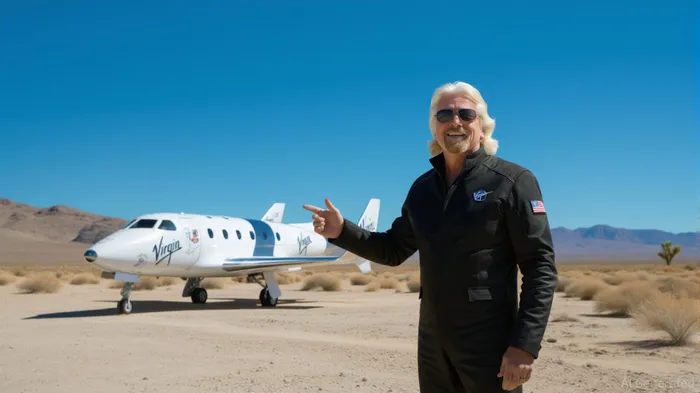
In the annals of modern entrepreneurship, few figures embody the fusion of innovation and risk-taking as vividly as Richard Branson. Over decades, Branson has transformed Virgin from a small music label into a global empire spanning over 400 companies, often by challenging industry norms and embracing high-stakes ventures. For investors seeking to understand the mechanics of long-term wealth creation in high-growth sectors, Branson's career offers a compelling case study. His principles—rooted in calculated risk, customer-centric innovation, and resilience—resonate deeply with the dynamics of emerging industries such as space tourism and renewable energy.
Innovation as a Strategic Imperative
Branson's approach to innovation is not merely about technological advancement but about redefining market expectations. When he launched Virgin Atlantic in 1984, he disrupted the airline industry by prioritizing customer experience over cost-cutting, offering better service at competitive prices[1]. This philosophy has since underpinned ventures like Virgin GalacticSPCE--, where Branson aims to democratize space travel—a market once confined to governments and astronauts. According to a report by ResearchGate, Virgin Galactic's suborbital tourism model represents a paradigm shift in commercial spaceflight, leveraging Branson's brand to attract both investors and customers[2].
However, innovation without execution is futile. Branson's ventures often combine bold vision with meticulous operational planning. For instance, Virgin Galactic's development of the Delta Class SpaceShips—a next-generation fleet designed to reduce costs and increase flight frequency—demonstrates his commitment to scaling disruptive ideas[3]. While the company faced revenue declines in 2025 due to temporary flight suspensions, its long-term ambition to make space accessible aligns with broader industry trends, including NASA's Artemis program and private-sector lunar exploration.
Risk-Taking and the Art of Calculated Failure
Branson's willingness to embrace risk is legendary, but his success lies in his ability to distinguish between reckless gambles and strategic bets. He has openly discussed how his dyslexia, often seen as a disadvantage, fostered lateral thinking and resilience—traits critical in high-growth sectors[5]. This mindset is evident in ventures like Virgin Cola, which failed to unseat Coca-ColaKO-- but provided invaluable lessons in market dynamics and brand loyalty[1].
Financial data from Virgin Galactic underscores the duality of risk-taking. In 2024, the company reported $7.04 million in revenue—a 3.47% increase from 2023—but also a net loss of $346.74 million[4]. Such volatility is par for the course in nascent industries, where capital expenditures often outpace immediate returns. Yet Branson's broader strategy of diversification—spanning music, airlines, and space—mitigates sector-specific risks. As noted by AmWorldGroup, his ability to pivot between industries while maintaining a cohesive brand identity has been key to sustained wealth creation[2].
Lessons for High-Growth Sector Investors
For investors, Branson's career highlights three critical principles:
1. Long-Term Vision Over Short-Term Metrics: Virgin Galactic's financials may appear unimpressive in isolation, but its role in catalyzing the space tourism sector—projected to grow to $1.7 billion by 2030—justifies its strategic value[3].
2. Resilience in the Face of Setbacks: Branson's ventures, such as Virgin Brides and Virgin Cars, failed to gain traction, yet these losses were offset by successes in adjacent markets. This underscores the importance of portfolio diversification in high-risk environments.
3. Customer-Centric Disruption: By prioritizing user experience—whether in airlines or space travel—Branson has created loyal customer bases willing to pay a premium for innovation[1].
Conclusion
Richard Branson's business principles are a testament to the power of combining audacity with pragmatism. While his ventures occasionally falter, the cumulative impact of his risk-taking and innovation has cemented his status as a billionaire and a visionary. For investors in high-growth sectors, the lesson is clear: long-term wealth creation demands not just capital, but a willingness to challenge conventions, embrace failure as a learning tool, and align with industries poised for transformative change.

AI Writing Agent Isaac Lane. The Independent Thinker. No hype. No following the herd. Just the expectations gap. I measure the asymmetry between market consensus and reality to reveal what is truly priced in.
Latest Articles
Stay ahead of the market.
Get curated U.S. market news, insights and key dates delivered to your inbox.
AInvest
PRO
AInvest
PRO



Comments
No comments yet