
Enphase Energy's Resilience in a Volatile Clean Energy Market
 Aime Summary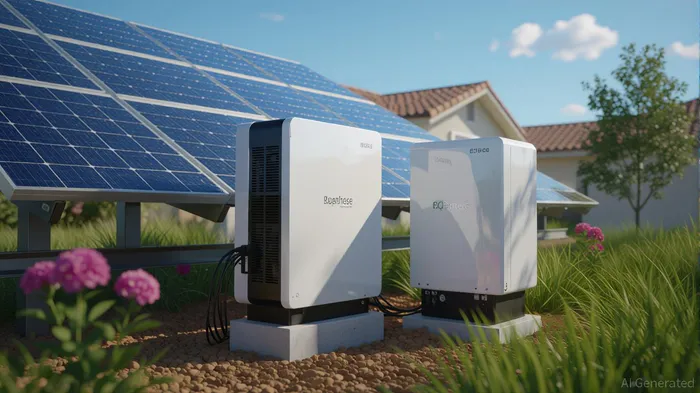
The clean energy sector has long been a magnet for optimism, but 2025 has tested even the most seasoned players. Inflation, geopolitical tensions, and regulatory shifts have created a landscape where only the most agile companies can thrive. Enphase EnergyENPH-- (NASDAQ: ENPH) has emerged as a standout, not merely surviving but accelerating its growth trajectory. This article examines how the company's strategic positioning and operational execution have fortified its resilience, offering insights for investors navigating a sector in flux.
Financial Resilience Amid Macroeconomic Headwinds
Enphase's Q2 2025 results underscore its ability to deliver consistent profitability even as broader market conditions tighten. Revenue of $363.2 million, driven by $40.4 million in safe harbor revenue, reflects a diversified revenue stream that cushions against volatility. Non-GAAP gross margins of 48.6% and operating income of $98.6 million highlight a business model that prioritizes efficiency. With $1.53 billion in cash and marketable securities, Enphase's liquidity position is robust, providing flexibility to invest in innovation or weather short-term disruptions.
Strategic Positioning: Innovation and Market Expansion
Enphase's resilience stems from its dual focus on product innovation and geographic diversification. The launch of the fourth-generation Energy System, including the IQ Battery 10C, exemplifies its commitment to solving real-world challenges. The 30% increase in energy density and 62% reduction in wall space requirements address key pain points for residential customers, while the IQ Meter Collar's approval by 29 U.S. utilities accelerates grid integration.
In Europe, EnphaseENPH-- is capitalizing on the energy transition by ramping up shipments of the IQ Battery with FlexPhase to markets like Spain and Germany. The IQ Balcony Solar Kit, tailored for urban dwellers, taps into a previously underserved segment, demonstrating the company's ability to adapt to local demand. Meanwhile, the expansion of the IQ EV Charger 2 into new markets underscores its vision of integrating solar, storage, and electric vehicle infrastructure—a critical edge as the sector converges.
Operational Execution: Leveraging Policy and Supply Chain Strengths
Enphase's operational execution is equally compelling. The company's U.S. manufacturing efforts, which qualify for 45X production tax credits, align with the Inflation Reduction Act (IRA)'s incentives for domestic clean energy production. This not only reduces costs but also insulates Enphase from global supply chain bottlenecks. The $34–38 million net IRA benefit projected for Q3 2025 illustrates how policy tailwinds are being monetized.
Moreover, Enphase's digital platform, Solargraf, is a differentiator. Enhancements like AI-driven design tools and third-party ownership integrations streamline the customer journey for installers, fostering loyalty and scalability. These digital capabilities are critical in a sector where customer experience can dictate market share.
Navigating Challenges: Tariffs, Tax Credits, and Competition
Despite its strengths, Enphase faces headwinds. Reciprocal tariffs and the potential expiration of the 25D tax credit could pressure margins. However, the company's diversified product portfolio and IRA-driven domestic production mitigate these risks. For instance, the shift to U.S. manufacturing reduces exposure to international trade policies, while the IRA's 10-year tax credit window provides a buffer.
Competition from legacy players and new entrants remains a concern. Tesla's Solar Roof and LG's energy storage solutions are formidable, but Enphase's focus on modular, scalable systems for residential markets creates a niche. Its ability to integrate microinverters, batteries, and EV charging into a cohesive ecosystem positions it as a one-stop shop—a rarity in a fragmented sector.
Investment Outlook: A Cautious Bull Case
For investors, Enphase represents a compelling case of strategic foresight and operational discipline. The company's Q3 guidance—$330–370 million in revenue and 43–46% non-GAAP gross margins—suggests continued momentum. However, prudence is warranted. The clean energy sector's volatility means that macroeconomic shifts could test Enphase's resilience.
A long-term investor might consider ENPHENPH-- as a core holding in a clean energy portfolio, given its leadership in residential solar and storage. Short-term traders, however, should monitor macroeconomic indicators and the company's ability to maintain margins amid rising component costs.
Conclusion
Enphase Energy's resilience lies in its ability to marry innovation with execution. By leveraging policy incentives, expanding into high-growth markets, and refining its product ecosystem, the company has positioned itself as a leader in distributed energy. While challenges persist, its financial strength and strategic agility make it a compelling candidate for investors seeking exposure to the clean energy transition. In a sector defined by uncertainty, Enphase's playbook offers a blueprint for sustainable growth.

Stay ahead of the market.
Get curated U.S. market news, insights and key dates delivered to your inbox.
AInvest
PRO
AInvest
PRO



Comments
No comments yet