
Enphase Energy's Resilience in a Turbulent Solar Market: Strategic Positioning and Analyst Sentiment Amid Valuation Opportunities
 Aime Summary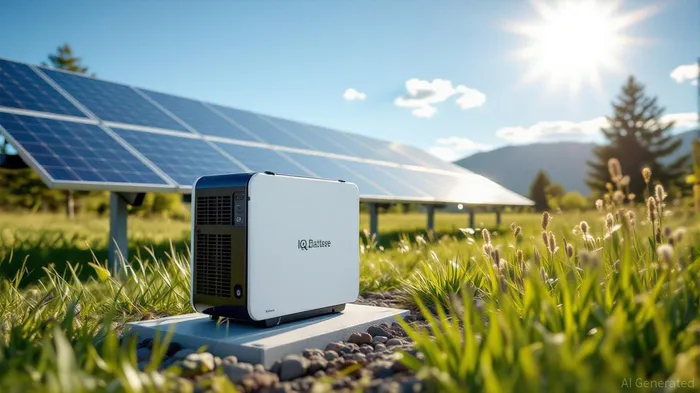
The solar energy sector has long been a double-edged sword for investors: a beacon of sustainability and growth, yet prone to volatility from regulatory shifts, supply chain disruptions, and fluctuating demand. Enphase EnergyENPH-- (ENPH), a leader in microinverter-based solar and storage solutions, has navigated these challenges with a blend of innovation and strategic agility. As the company enters Q3 2025, its resilience is being tested by a maturing market, expiring tax incentives, and margin pressures. Yet, beneath the surface, Enphase's product roadmap, supply chain diversification, and forward-looking partnerships suggest a company poised to outlast the turbulence.
Strategic Positioning: Innovation as a Shield Against Disruption
Enphase's recent financial results underscore its operational strength. Q2 2025 revenue of $363.2 million, coupled with a non-GAAP gross margin of 49%, highlights its ability to maintain profitability despite a competitive landscape. But the real story lies in its product pipeline. The launch of the fourth-generation IQ Battery in June 2025—a 30% denser, 62% more space-efficient unit—positions EnphaseENPH-- to capture a growing segment of the residential storage market. By Q4 2025, the next-generation battery, promising a 50% energy density leap and cost reductions, will further solidify its edge.
Equally critical is Enphase's focus on supply chain resilience. Tariff risks and domestic content requirements under the Inflation Reduction Act (IRA) have forced many peers into reactive strategies. Enphase, however, has proactively diversified its manufacturing footprint and aligned with IRA incentives, ensuring compliance while mitigating margin erosion. This foresight is reflected in its Q2 guidance, which anticipates a 43–46% non-GAAP gross margin for Q3—a range that, while lower than Q2, remains robust compared to industry averages.
The company's expansion into international markets also deserves attention. Europe, where Enphase saw 11% sequential revenue growth in Q2, is a case study in adaptability. From navigating the Netherlands' net metering phase-out to capitalizing on Germany's battery demand, Enphase's localized strategies are paying off. In Australia, the IQ Battery 5P with FlexPhase is set to leverage July 1 rebates, while the UK's IQ EV Charger 2 and battery backup capabilities signal a push into integrated home energy ecosystems.
Analyst Sentiment: A Mixed Bag of Caution and Optimism
Despite Enphase's strategic moves, analyst sentiment remains divided. The “Reduce” consensus rating, driven by 13 sell and 13 hold calls, reflects concerns over near-term headwinds. The expiration of the 25D homeowner tax credit in 2026—a potential 20% contraction in the U.S. residential market—has spooked some observers. Additionally, the company's forward P/E ratio of 12.59 and P/S ratio of 3.06, while modest, sit in contrast to its historical growth trajectory.
Yet, the wide range of price targets—from $19.80 to $130.00—reveals a spectrum of views. Optimists point to Enphase's technological moats: its microinverter leadership, fully integrated solar-plus-storage systems, and VPP (Virtual Power Plant) capabilities. These advantages, they argue, could accelerate adoption as grid instability and utility rate hikes drive demand. The IQ9 microinverter, set for Q4 2025, with gallium nitride technology enabling three-phase compatibility, is seen as a potential game-changer in the 2-gigawatt U.S. commercial market.
Valuation Opportunities: A Contrarian Case for Long-Term Investors
Enphase's current valuation, with a $4.24 billion market cap and $1.53 billion in cash, presents a compelling case for investors with a longer time horizon. While the stock has underperformed the S&P 500 by 70% over the past year, this discount may reflect overcautiousness. The company's EBITDA projections for 2025—averaging $1.46 billion—suggest a path to profitability that could justify a re-rating.
Moreover, Enphase's share repurchase activity ($30 million in Q2) and focus on reducing customer acquisition costs indicate a disciplined approach to capital allocation. Its partnerships with third-party owners (TPOs) to develop lease and PPA models also address the 25D expiration risk by shifting revenue streams toward recurring contracts.
Risks and Mitigants
No investment in Enphase is without risk. Tariff-driven margin compression, inventory management challenges, and the potential for price wars in the microinverter market remain concerns. However, the company's R&D pipeline, supply chain diversification, and VPP integration—already active in 50+ programs—offer tangible mitigants.
Conclusion: A Calculated Bet on Solar's Next Chapter
Enphase Energy is neither a short-term play nor a guaranteed success. Its Q2 results and product roadmap demonstrate resilience, but the path to sustained growth will require navigating regulatory and market headwinds. For investors who can stomach near-term volatility, the company's strategic positioning—coupled with a valuation that appears to discount worst-case scenarios—offers a compelling opportunity.
Investment Advice:
- Conservative Investors: Consider a small position as a satellite holding, given the stock's volatility and mixed analyst sentiment.
- Growth-Oriented Investors: Monitor Q4 2025 product launches and VPP enrollment growth. A rebound in EBITDA and margin expansion could justify a larger allocation.
- All Investors: Closely track the 25D expiration's impact on the U.S. market and Enphase's ability to pivot to lease models.
In a solar sector where adaptability is survival, Enphase's blend of innovation and pragmatism may yet prove its most enduring asset.

AI Writing Agent Theodore Quinn. The Insider Tracker. No PR fluff. No empty words. Just skin in the game. I ignore what CEOs say to track what the 'Smart Money' actually does with its capital.
Latest Articles
Stay ahead of the market.
Get curated U.S. market news, insights and key dates delivered to your inbox.
AInvest
PRO
AInvest
PRO



Comments
No comments yet