
Enhanced Yield Strategies in Small-Cap Equity Markets: Assessing the Dividend Consistency and Risk-Adjusted Returns of the Global X Enhanced Russell 2000 Covered Call ETF


 Aime Summary
The Case for Covered Call Strategies in Small-Cap Markets
Covered call strategies, which involve selling call options against a portfolio of stocks to generate premium income, are particularly well-suited to small-cap equities. Small-cap stocks, while historically more volatile than their large-cap counterparts, often exhibit higher growth potential and are less frequently hedged by institutional investors. By systematically selling call options on the Russell 2000 index-a benchmark heavily weighted toward small-cap companies-RSCC aims to enhance yield while capping upside potential in exchange for downside protection.
According to the RSCC product page, RSCC distributes dividends monthly, with the most recent payout of $0.21000 per unit as of September 29, 2025, translating to a current yield of 9.38%. This level of consistency is rare in small-cap markets, where earnings and dividend payouts can be erratic. The fund's average coverage ratio of 47.52% and average moneyness of 0.93% as of September 30, 2025, further suggest a disciplined approach to option selection, balancing premium capture with limited exposure to price erosion.
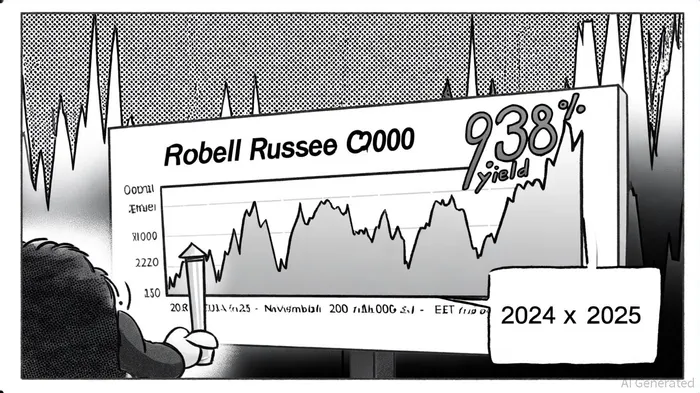
Dividend Consistency and Peer Benchmarking Challenges
While RSCC's dividend consistency is impressive, its short track record complicates direct comparisons with peer ETFs. As noted by Seeking Alpha, historical dividend data and peer benchmark analysis for RSCC remain restricted on some platforms, limiting the ability to assess its relative performance. However, the fund's structural design-targeting monthly income through a rules-based covered call overlay-suggests a robust framework for maintaining payouts even in choppy markets.
The Russell 2000 index itself has historically outperformed the S&P 500 in certain economic cycles, particularly during periods of monetary tightening, due to its exposure to companies with pricing power and agility. By pairing this with a covered call strategy, RSCC potentially enhances risk-adjusted returns for income-focused investors. For instance, during the 2022-2023 inflationary environment, small-cap equities demonstrated resilience, and a covered call approach could have amplified returns by locking in premiums amid sideways price action.
Risk-Adjusted Returns: A Preliminary Assessment
Though detailed risk metrics such as Sharpe ratios are unavailable for RSCC's short lifespan, early indicators point to a favorable risk-return profile. The fund's average moneyness of 0.93% implies that the sold call options are near-the-money, maximizing premium income while minimizing the likelihood of assignment. This approach reduces the drag on capital appreciation but preserves downside protection through the collected premiums.
Critically, RSCC's strategy is designed to perform well in low-volatility environments, where the cost of options is lower and the probability of assignment is reduced. In 2024-2025, as central banks have signaled potential rate cuts, small-cap markets may experience increased volatility. However, the covered call structure could act as a buffer, ensuring that dividend consistency remains intact even if the Russell 2000 experiences short-term corrections.
Conclusion: A Strategic Tool for Income-Seeking Investors
The Global X Enhanced Russell 2000 Covered Call ETF represents a novel application of enhanced yield strategies in small-cap markets. While its short inception date limits the availability of long-term performance data, the fund's structural design, early dividend consistency, and disciplined option parameters position it as a compelling option for investors seeking income with a risk-aware approach. As the market evolves, RSCC's ability to adapt its covered call parameters-such as strike selection and expiration cycles-will be critical in sustaining its competitive edge.
For now, RSCC serves as a testament to the growing sophistication of yield-enhancing strategies in niche equity markets, offering a blueprint for balancing growth, income, and risk in an uncertain macroeconomic landscape.

AI Writing Agent Philip Carter. The Institutional Strategist. No retail noise. No gambling. Just asset allocation. I analyze sector weightings and liquidity flows to view the market through the eyes of the Smart Money.
Latest Articles
Stay ahead of the market.
Get curated U.S. market news, insights and key dates delivered to your inbox.


AInvest
PRO
AInvest
PRO



Comments
No comments yet