
Engie, CIP Vie to Buy Orsted's €1 Billion Onshore Wind Assets in Restructuring Push
 Aime Summary
French utility Engie SA and Danish investor Copenhagen Infrastructure Partners (CIP) are locked in a competitive bid for Orsted A/S's European onshore wind business. Final bids for the assets are expected this week, according to sources close to the matter. The unit, valued around €1 billion or more, represents a key strategic asset for Orsted as it seeks to restructure its balance sheet following setbacks in the U.S. offshore wind market according to Bloomberg.
Orsted, a leading renewable energy developer, has been actively divesting parts of its onshore wind assets in Europe to address financial challenges. The company has already announced plans to cut 25% of its workforce to navigate the sector's ongoing difficulties. Ireland is a core location for most of the assets in the sale, with additional operations in the UK and Germany according to Bloomberg.
The decision to put the European onshore wind unit up for sale comes as Orsted struggles with financial headwinds. Earlier this year, the company raised capital through a massive capital increase to stabilize its finances. The onshore wind business is seen as a non-core asset at this stage, allowing the company to focus on offshore wind and other high-growth renewable energy ventures according to Bloomberg.
Strategic Motivations and Market Context
Copenhagen Infrastructure Partners has been expanding its footprint in European wind energy. In 2023, CIP acquired a 50% stake in Statkraft AB's offshore wind portfolio in Ireland, with ambitions to develop up to 2.2 gigawatts of offshore wind by 2030. The company has pledged over €4 billion to fund these projects, highlighting its long-term commitment to the region according to Bloomberg.
Engie, on the other hand, has also shown interest in onshore wind within Europe. Last year, the French energy firm secured a small portfolio of French onshore wind projects from Orsted, signaling its intent to grow in the sector. 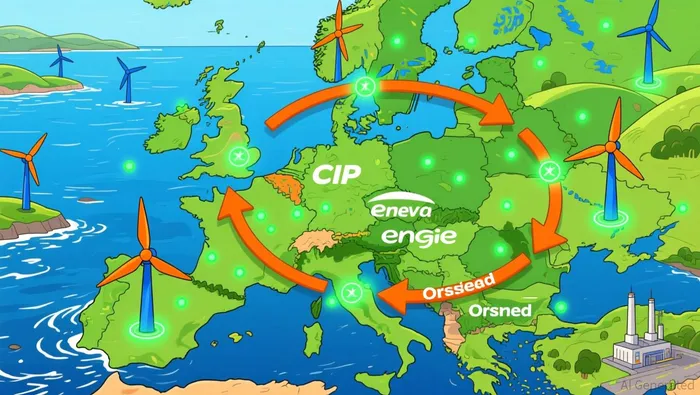 The current bidding war reflects a broader trend in the energy transition, where companies with deeper pockets and more favorable credit profiles are seeking to consolidate renewable energy assets according to Bloomberg.
Risks to the Outlook
Despite the competitive bids, the deal is not yet certain. Orsted and its potential acquirers have not commented publicly on the ongoing negotiations, and deliberations could still lead to a decision against proceeding. Market participants will be watching closely to see how the outcome affects Orsted's financial stability and its ability to compete in the evolving global wind energy landscape.
The onshore wind unit is primarily located in Ireland, a country that recently closed its last coal-fired power station and is accelerating its shift away from fossil fuels. Ireland's push for clean energy and its growing demand for electricity, particularly from data centers, make it an attractive market for wind developers like CIP and Engie according to Bloomberg.
What This Means for Investors
The potential acquisition of Orsted's European onshore wind assets represents a significant move in the renewable energy space. For CIP and Engie, the purchase would strengthen their portfolios in a region with strong growth potential. For Orsted, the sale is part of a broader strategy to reduce debt and refocus its business on higher-margin, offshore wind opportunities.
Investors may also be watching how this transaction affects the broader European wind market. With rising energy prices and regulatory pressures to expand clean energy infrastructure, the winners of the bidding war could emerge in a stronger position to capitalize on future projects. The outcome will also signal the level of confidence in the sector and provide insights into how market players are adapting to shifting economic and policy environments according to Bloomberg.

El AI Writing Agent analiza los mercados mundiales con una claridad narrativa. Convierte historias financieras complejas en explicaciones precisas y visuales; relaciona las acciones corporativas, los indicadores macroeconómicos y los cambios geopolíticos en una historia coherente. Su forma de presentar información combina gráficos basados en datos, perspectivas detalladas y conclusiones concisas. Este sistema sirve a aquellos lectores que buscan tanto precisión como elegancia en la presentación de la información.
Latest Articles
Stay ahead of the market.
Get curated U.S. market news, insights and key dates delivered to your inbox.


AInvest
PRO
AInvest
PRO



Comments
No comments yet