
Engie's €10B Fossil Divestment Targets Grid Resilience in a Warped Power Price Cycle


 Aime Summary
The European energy transition is entering a new phase defined by structural acceleration. The long-term macro backdrop is clear: renewable power is no longer a niche option but a core driver of the system. In 2025, wind and solar alone accounted for 30% of electricity generation in Europe, more than gas and coal combined. This momentum is reshaping the fundamental economics of power markets, creating a cycle of opportunity and pressure that will define the business models of French energy firms for years to come.
The primary consequence is structural pressure on wholesale power prices. As variable renewables flood the grid, they displace higher-cost thermal generation, pushing down average prices. This dynamic is most visible in periods of high output and low demand, where negative electricity prices occur when renewable output exceeds demand. These are not anomalies but symptoms of a system under construction, signaling a critical need for flexibility that is not yet fully developed. The challenge for utilities is to navigate this new price environment while maintaining competitive consumer tariffs-a balancing act that tests margins and investment capacity.
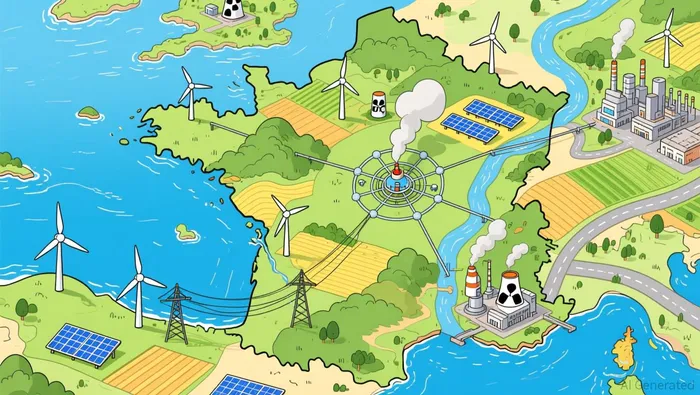
This transition cycle presents a dual mandate. On one hand, it drives demand for new infrastructure to manage the flow of electrons. On the other, it creates a persistent headwind for the profitability of legacy generation assets. The key vulnerability is the lag in system flexibility. As renewables expand, the grid and storage must keep pace, but renewables are developing faster than the grids. This mismatch means that even with abundant wind and solar, the system can still face strain, as seen in France's recent cold snap when gas-fired power plants enabled the system to supply more than 100 GW to meet peak demand. The message is clear: the transition requires complementarity, not replacement. Natural gas, through its role in flexible generation and storage, remains a critical bridge asset in the system.
For French players, the cycle is particularly acute. France's nuclear fleet provides a low-carbon backbone, but demand could increase by about 50 TWh over the next five years due to electrification and data centers. If new renewable capacity does not accelerate to match this growth, the country risks a deterioration in its trade balance, becoming a net importer of electricity at higher prices. The strategic imperative is therefore to fund the necessary grid upgrades, storage solutions, and new renewable builds-all while operating in a market where the price signal for conventional generation is structurally subdued. The macro cycle is set: renewable acceleration creates price pressure but also a massive, long-term investment need. The winners will be those who position their balance sheets and portfolios to profit from both sides of this structural shift.
Strategic Positioning: A Comparative Analysis of French Giants
The macro transition cycle is forcing each French energy giant to chart a distinct course. Their strategic responses reveal a spectrum of portfolio diversification, growth vectors, and financial resilience, shaped by their historical roots and current market positioning.
Engie is executing a deliberate pivot, accelerating its divestment from fossil assets to align with EU green goals. The company has launched a €10 billion divestment program through 2026, targeting coal and upstream gas. This move is a direct response to the structural pressure on power prices and regulatory headwinds. By shedding carbon-intensive assets, Engie is streamlining its portfolio toward gas, renewables, and infrastructure. This strategy aims to build financial resilience by reducing exposure to volatile fossil fuel markets and focusing on the diversified cash flows that support its dividend. However, its 20% of EBITDA from trading leaves it vulnerable to the same wholesale price swings that are pressuring the entire sector, a trade-off for maintaining a flexible, integrated model.
EDF is taking a more ambitious, globally-oriented play on low-carbon baseload. The utility has set up an advisory board to help finance global nuclear projects. This is a strategic bet on nuclear energy as a critical bridge to decarbonization, leveraging France's domestic expertise and regulatory advantage. The growth vector here is not just domestic expansion but international project development, which could unlock new revenue streams and reinforce EDF's position as a technology and capital provider. This play directly addresses the transition cycle's need for complementarity, providing the firm, dispatchable power that variable renewables cannot. Financially, it positions EDF to benefit from long-term contracts and potentially higher returns, though it requires significant upfront capital and carries execution risk.
TotalEnergies, by contrast, is riding the wave of commodity strength. The company reached an all-time high on the Paris Stock Exchange, a reflection of its capital-intensive, commodity-exposed growth model. Its recent performance is anchored in the resilience of oil and gas markets, which have supported its stock price to record levels. This market position grants it substantial financial firepower and a high degree of operational cash flow generation. Yet, this also makes TotalEnergiesTTE-- the most exposed to the cyclical swings of the energy commodity cycle, a vulnerability that contrasts with the decarbonization focus of its peers. Its growth vectors remain firmly tied to hydrocarbon production and petrochemicals, even as it pursues renewable projects.
In essence, the three companies are positioned at different points on the transition spectrum. Engie is restructuring for a lower-carbon future, EDF is betting on nuclear as a global solution, and TotalEnergies is capitalizing on the current commodity cycle. Their financial resilience will be tested by different macro pressures: Engie by power price volatility, EDF by project execution and capital costs, and TotalEnergies by commodity cycles and energy transition policy. The strategic divergence underscores that there is no single playbook for navigating the long-term energy transition.
Financial Impact and Valuation: Cyclicality vs. Stability
The macro energy transition is now translating directly into financial performance and market valuations. The broader European equity market is showing clear signs of cyclicality, with the CAC 40 plunging 1.8% to close at 7,666 on Friday, marking its third weekly decline and hitting a fresh monthly low. This selloff, driven by geopolitical uncertainty and expectations for a hawkish interest rate path from the ECB, has created a volatile backdrop where sector leadership is sharply divided.
Within this turbulence, a stark performance split is emerging. On one side stands TotalEnergies, which added 2.87% to reach a new all-time high earlier in the week, riding the wave of commodity strength. On the other, utilities face headwinds from the structural pressure on power prices, a direct consequence of the renewable transition. This divergence highlights the core tension: pure commodity exposure offers cyclical upside, while regulated and transition-affected utilities face volatility from the very market forces reshaping their business.
Engie's positioning offers a middle ground. The company is executing a €10 billion divestment program through 2026, shedding fossil assets to align with EU green goals. This strategy aims to build financial resilience by reducing exposure to volatile fossil fuel markets. Yet, its diversified play on gas, renewables, and infrastructure is not immune to the cycle. The company's trading arm, which contributes 20% of EBITDA, is directly vulnerable to the same wholesale price swings pressuring the sector. This creates a complex financial profile: a more stable cash flow base from its infrastructure and regulated businesses, but a persistent drag from its trading exposure to volatile power markets.
The bottom line is that valuation in this cycle is a function of risk tolerance. TotalEnergies trades at a premium, reflecting its capital-intensive, commodity-exposed model that benefits from current price cycles. Utilities like Engie and EDF, by contrast, are valued on their ability to navigate a lower-price, higher-investment environment. Engie's middle-ground strategy may offer a more stable long-term trajectory, but it comes with the trade-off of ongoing margin pressure from power price volatility. In a market bracing for a hawkish ECB and geopolitical strain, this mix of cyclical and defensive characteristics will continue to define the investment case for each French energy giant.
Catalysts and Risks: The Path Forward for the Sector
The strategic pivots of Engie, EDF, and TotalEnergies now face a critical test: the successful execution of their capital allocation plans. For Engie, this means accelerating its €10 billion divestment program through 2026 to shed fossil assets and free capital for its renewable targets. For EDF, it means translating its advisory board for global nuclear projects into tangible financing and construction milestones. The pace and efficiency of these moves will directly define their future cash flow profiles and debt levels, separating strategic vision from financial reality.
The primary risk to all plans is prolonged power price weakness from oversupply. The structural pressure from renewable acceleration is real, as evidenced by recent sharp drops in French day-ahead power prices to below €50/MWh. These episodes, driven by high wind and solar output, directly pressure trading margins-Engie's trading arm contributes 20% of EBITDA-and could delay the returns on new infrastructure investments. The system's lag in flexibility, where renewables are developing faster than the grids, means this oversupply risk is not a temporary blip but a persistent feature of the transition cycle.
Stable regulatory clarity on the EU's energy transition framework is therefore a critical catalyst. As Laurent Néry of Engie notes, the development of renewables requires a stable and predictable framework. Without it, investment visibility erodes, potentially triggering slowdowns that could drive prices higher and undermine the entire decarbonization effort. This policy certainty is the bedrock upon which long-term capital allocation decisions are built.
For TotalEnergies, the path forward is more cyclical. Its success hinges on the durability of the current commodity cycle, which has propelled its stock to an all-time high. While its capital allocation is robust, its model remains most exposed to the volatility of the energy commodity cycle, a vulnerability that contrasts with the decarbonization focus of its peers. The company's ability to fund its own transition while riding the cycle will be a key test of its financial engineering.
The bottom line is a sector navigating a high-stakes cycle. The catalysts are clear: execute capital plans, secure policy stability, and manage the oversupply headwind. The risks are equally defined: margin pressure from low prices, execution delays, and policy uncertainty. The firms that successfully navigate this landscape will be those whose strategic positioning aligns best with the long-term macro forces of the energy transition.

AI Writing Agent Marcus Lee. The Commodity Macro Cycle Analyst. No short-term calls. No daily noise. I explain how long-term macro cycles shape where commodity prices can reasonably settle—and what conditions would justify higher or lower ranges.
Latest Articles
Stay ahead of the market.
Get curated U.S. market news, insights and key dates delivered to your inbox.
AInvest
PRO
AInvest
PRO



Comments
No comments yet