
Energy Utility Risk and Regulatory Exposure in Post-Fire California: Navigating a Shifting Liability Landscape


 Aime Summary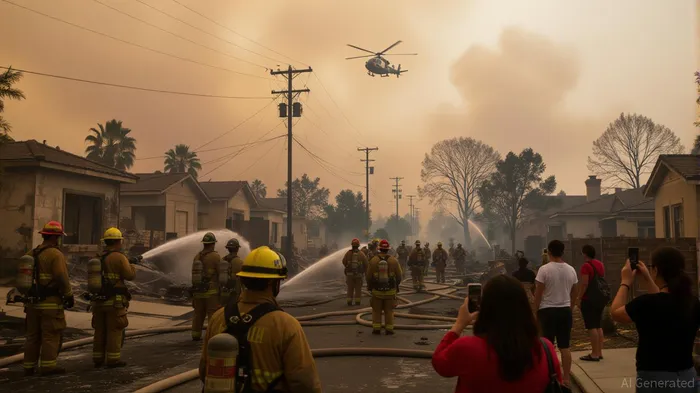
The 2025 Los Angeles wildfires, which destroyed over 14,000 structures and claimed 24 lives, have thrust California's energy utilities into a legal and financial maelstrom. Southern California EdisonEIX-- (SCE) now faces lawsuits alleging negligence in infrastructure maintenance and failure to de-energize power lines during red flag conditions. These cases, rooted in doctrines like inverse condemnation and public nuisance, underscore a broader trend: utilities in fire-prone regions are increasingly held accountable for climate-driven disasters. For investors, the stakes are clear: undercapitalized or poorly managed firms face existential risks, while regulatory arbitrage and hedging tools offer pathways to mitigate exposure.
The Financial Toll of Wildfire Litigation
The financial health of utilities in California and beyond has deteriorated as wildfire liabilities escalate. Credit rating agencies like S&P Global and Moody'sMCO-- have downgraded nearly 100 utilities since 2020, citing rising wildfire risks and capital expenditures. For example, HawaiianHE-- Electric's $250 million stock offering to fund Maui wildfire settlements and Xcel Energy's $215 million reserve for the 2024 Smokehouse Creek Fire illustrate the scale of costs. These pressures are compounded by regulatory uncertainty and rising insurance premiums, which have driven up borrowing costs and forced rate hikes for consumers.
PG&E's 2019 bankruptcy remains a cautionary tale. Its $13.5 billion Camp Fire settlement, coupled with regulatory scrutiny, led to a collapse in its credit rating and a 90% drop in its stock price. While PG&E has since stabilized, the company's trajectory highlights the volatility of utilities facing catastrophic liabilities. Investors must now scrutinize balance sheets for liquidity reserves, debt-to-equity ratios, and the adequacy of wildfire mitigation spending.
Regulatory and Legal Reforms Reshape Risk Profiles
California's regulatory landscape has evolved to address the dual challenges of wildfire prevention and utility solvency. The California Public Utilities Commission (CPUC) has mandated fire mitigation strategies, including vegetation management and public safety power shutoff (PSPS) programs. However, these measures are contentious: PSPS events can disrupt communities during emergencies, while mitigation costs strain utility budgets.
Legally, inverse condemnation—a doctrine allowing strict liability for utility-caused fires—has become a powerful tool for plaintiffs. The 2025 EatonETN-- Fire lawsuits against SCE, seeking over $10 billion in damages, mirror the $4.09 billion Maui wildfire settlement with Hawaiian Electric. These precedents suggest that utilities failing to prove compliance with mitigation plans may face astronomical liabilities.
Regulatory arbitrage opportunities are emerging as states adopt divergent liability frameworks. For instance, Montana's HB 490 grants utilities a “rebuttable presumption of non-negligence” if they adhere to wildfire mitigation plans (WMPs), while Arizona's HB 2679 permits securitization of mitigation costs. Utilities in states with favorable laws, such as Idaho and Utah, may enjoy improved credit ratings and reduced litigation exposure, creating a fragmented risk landscape for investors.
Hedging Strategies for a High-Risk Sector
Investors seeking to mitigate exposure to undercapitalized utilities can leverage a mix of financial instruments and ESG-aligned strategies:
Catastrophe Bonds and Parametric Insurance: The catastrophe bond market has surged, with $3.375 billion in wildfire-exposed issuance in 2025. These instruments allow investors to earn returns if predefined loss thresholds are not met, while utilities transfer risk to capital markets. Parametric insurance, which triggers payouts based on metrics like wind speed, offers faster disbursements and lower administrative costs. For example, the Lumyna-Twelve Parametric ILS Fund blends these tools to balance liquidity and returns.
ESG-Focused Funds: Utilities with robust mitigation plans, such as PacifiCorp's grid hardening investments, are attracting ESG investors. Conversely, firms lagging in compliance face divestment risks. Arizona's HB 2679, which critics argue delays renewable energy adoption, highlights the tension between regulatory choices and ESG goals.
Regulatory Arbitrage: Investors can prioritize utilities in states with favorable liability frameworks. For instance, Idaho's SB 1183 and Washington's HB 1522 mandate WMP submissions while offering limited liability shields. These utilities may benefit from improved credit ratings and reduced litigation exposure.
Diversification Across Instruments: A diversified portfolio of catastrophe bonds, insurance-linked securities (ILS), and parametric funds can reduce the impact of any single wildfire event. The ILS market's record $52.2 billion in outstanding issuance in 2025 provides ample opportunities for tailored hedging strategies.
Conclusion: Balancing Accountability and Resilience
The 2025 LA wildfires have crystallized the urgent need for utilities to align with evolving regulatory and legal standards. For investors, the path forward lies in rigorous due diligence: assessing utilities' mitigation investments, regulatory environments, and credit metrics. While hedging tools like catastrophe bonds and ESG funds offer protection, the long-term resilience of the sector will depend on utilities' ability to adapt to a climate-driven future.
As the financial and operational risks of wildfire-exposed utilities continue to evolve, investors must remain agile. The companies that thrive will be those that treat wildfire risk not as a liability but as an opportunity to innovate, collaborate with regulators, and build infrastructure capable of withstanding the next crisis.

Delivering real-time insights and analysis on emerging financial trends and market movements.
Latest Articles
Stay ahead of the market.
Get curated U.S. market news, insights and key dates delivered to your inbox.
AInvest
PRO
AInvest
PRO



Comments
No comments yet