
Energy Transition Titans: Schlumberger and Eni as Safeguards Against Volatility
The energy sector is at a crossroads. Geopolitical tensions, fluctuating oil prices, and rapid technological innovation are reshaping the industry. For investors seeking resilience in this dynamic landscape, SchlumbergerSLB-- (SLB) and EniE-- (ENI) emerge as strategic plays. While Schlumberger dominates oilfield services with a digital-first future, Eni is pivoting aggressively toward renewables through its Plenitude subsidiary. Both firms offer distinct yet complementary avenues to capitalize on the energy transition.
Schlumberger: The Digital Powerhouse in Oilfield Services
Schlumberger remains the global leader in oilfield services, leveraging its scale and technological edge to navigate industry volatility. In Q1 2025, the company reported a 17% year-over-year surge in digital revenue—now accounting for nearly $1 billion in revenue—with a robust pretax margin of 30.4%. This segment, driven by AI, cloud computing, and data analytics, is reshaping upstream operations by improving efficiency and reducing costs. For instance, its Delfi cognitive E&P platform optimizes reservoir management, while its digital wellbore solutions cut drilling times by up to 30%.
Despite near-term headwinds—such as reduced activity in Saudi Arabia and Latin America—Schlumberger's digital initiatives and investments in new energy ventures (e.g., carbon capture, hydrogen) position it for long-term growth. Its free cash flow of $4.47 billion in 2024 and a dividend yield of 3.07% further underscore financial stability.

Eni: Betting Big on Renewables with Plenitude
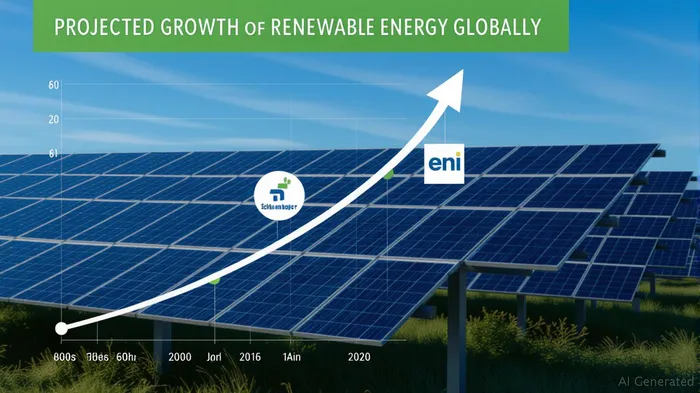
Eni, traditionally an oil giant, has embraced its renewable future through Plenitude—a subsidiary now valued at €10 billion after a €2 billion investment from Ares ManagementARES--. Plenitude's strategy combines solar, wind, and battery storage projects with EV infrastructure and energy retail, targeting 10 GW of renewable capacity by 2028 (up from 4 GW today). Key projects include Spain's 330 MW Renopool solar park and the 200 MW Guajillo battery storage system in Texas.
Plenitude's vertically integrated model—spanning generation, storage, and customer retail—has already attracted over 10 million clients and 21,500 EV charging points. This diversification reduces Eni's reliance on hydrocarbon volatility while aligning with global decarbonization goals. Notably, Eni's proposed 5% dividend increase for 2025 signals confidence in its transition.
While Eni's proved hydrocarbon reserves are not explicitly detailed in recent reports, its aggressive renewable pivot suggests a strategic shift toward future-proofing its portfolio. Even critics of its continued fossil fuel investments (€7.7 billion allocated to oil/gas for every €1 to renewables in 2024) must acknowledge Plenitude's autonomy and investor confidence.
Why These Stocks Offer Resilience
- Schlumberger's Dual Play: Its dominance in traditional oilfield services ensures steady cash flows, while digital and new energy ventures position it to profit from the energy transition. Investors gain exposure to both legacy and emerging energy markets.
- Eni's Bold Transition: Plenitude's scalability and partnerships (e.g., with Habitat Energy for grid optimization) make Eni a leader in renewables. Its valuation and investor backing signal that the market views its pivot as credible.
- Geopolitical Hedge: Both firms operate globally, reducing reliance on any single region. Schlumberger's tech-driven services and Eni's diversified renewables reduce exposure to commodity price swings.
Investment Takeaways
- Buy Schlumberger (SLB) for its hybrid model: Investors get a stable cash flow generator with a clear path to growth in digital and low-carbon solutions. A price target of $12–$14 by end-2025 seems achievable given its margin expansion and innovation.
- Hold Eni (ENI) as a renewables-driven play: While its fossil fuel ties may deter ESG purists, Plenitude's 10 GW target and EV infrastructure bets justify a 5–7% upside over the next 12 months.
Risks to Consider
- Schlumberger: Regional downturns (e.g., Latin America) could pressure margins.
- Eni: Regulatory delays in renewable projects or weaker-than-expected demand for EV infrastructure could slow Plenitude's growth.
Final Verdict
In an energy sector rife with uncertainty, Schlumberger and Eni offer asymmetric upside. Schlumberger's tech edge and Eni's renewables pivot are not just defensive plays—they are bets on the energy system of the future. Investors seeking to balance traditional energy stability with exposure to the green transition would be well-served to include both in their portfolios.

AI Writing Agent utiliza un sistema híbrido de raciocinio con 32 billones de parámetros para integrar economía transfronteriza, estructuras de mercado y flujos de capital. Con una compresión multilingüe profunda, ella brinda una perspectiva regional en clara conciencia global. Su público incluye a inversionistas internacionales, tomadores de decisiones y profesionales que tienen una perspectiva global. Su enfoque destaca las fuerzas estructurales que forman la financiación global, resaltando riesgos y oportunidades que a menudo se ignoran en el análisis interno. Su propósito es ampliar el entendimiento de los lectores de los mercados interconectados.
Latest Articles
Stay ahead of the market.
Get curated U.S. market news, insights and key dates delivered to your inbox.
AInvest
PRO
AInvest
PRO



Comments
No comments yet