
Energy Transition and Short-Term Volatility in October 2025: Near-Term Opportunities in Renewable Energy Infrastructure


 Aime Summary
The energy landscape in October 2025 is a study in contrasts: oil prices hover in a volatile $65–75 per barrel range, buffeted by OPEC+ production adjustments, U.S. rig count surges, and geopolitical tensions, according to an energy commodity trends report, while renewable energy infrastructure investments hit record highs, driven by policy tailwinds and industrial demand, according to the IEA renewables report. For investors, this duality presents a critical inflection point. As oil markets grapple with oversupply risks and regulatory headwinds, renewables are not just surviving-they're thriving. Let's break down the numbers and opportunities.
The Oil Market's Fragile Equilibrium
Brent crude's Q4 2025 range reflects a market teetering between supply and demand imbalances. OPEC+'s gradual unwinding of production cuts-projected to add 137 kb/d in October-has been offset by surging U.S. output and non-OPEC+ production growth, according to the IEA oil market report. Meanwhile, global oil inventories have risen for six consecutive months, with OECD stocks up 6.9 mb, signaling a looming oversupply, per a DiscoveryAlert analysis. J.P. Morgan and the EIA both forecast a bearish trajectory, with 2025 averages at $66 and $74 per barrel, respectively, declining further to $58 by 2026, according to the EIA forecast.
Geopolitical risks-drone attacks on energy infrastructure, Russia-Ukraine tensions, and Middle East instability-add short-term volatility, according to a Markets.com forecast. However, these events have failed to offset the structural bear case: global oil production is set to outpace demand growth by 2.7 million barrels per day in 2025, per the IEA.
Renewable Energy: The New Energy Benchmark
While oil markets waver, renewables are accelerating. Global renewable power capacity is projected to nearly double by 2030, with solar PV accounting for 80% of this growth, the IEA finds. October 2025 data reveals a historic milestone: $670 billion in cleantech investments, with solar PV alone capturing half of this capital, according to a CarbonCredits analysis. This surge is fueled by three forces:
- Industrial Demand: Data centers, AI training facilities, and direct air capture (DAC) operations are driving 44 GW of additional demand by 2030, according to a Deloitte outlook. For example, the Hagersville Battery Energy Park in Canada highlights the critical role of storage in managing renewable intermittency, as noted in a CBRE report.
- Policy Tailwinds: The U.S. Inflation Reduction Act (IRA) and EU Green Deal are turbocharging deployment. The IRA's Greenhouse Gas Reduction Fund alone is expected to deploy 36 GW of renewables and storage by 2030, per the Morgan Stanley outlook.
- Cost Competitiveness: Solar's levelized cost now sits below $0.02/kWh in optimal locations, outpacing even the cheapest oil-derived electricity, according to a LinkedIn analysis.
Near-Term Opportunities in Renewable Infrastructure
Investors seeking actionable opportunities should focus on three sectors:
- Solar PV and Supply Chain Resilience: Reshored cleantech manufacturing is reshaping solar panel and battery storage supply chains, per the Deloitte outlook. Projects with vertically integrated supply chains-such as those leveraging AI for operational optimization-offer superior margins, as noted in an Observer analysis.
- Grid-Grade Storage: With renewables accounting for 47% of Europe's electricity generation in 2025, battery storage is no longer a niche play. The global market for storage is projected to grow 44% annually through 2030, according to a Goldman Sachs outlook.
- Mid-Market Renewable Projects: Infrastructure investors are flocking to mid-market opportunities in power generation and data center development, where risk-adjusted returns remain compelling, per a CBRE Q2 report.
Navigating the Transition: Risks and Rewards
While the long-term case for renewables is robust, near-term risks persist. Supply chain bottlenecks-particularly for rare earth elements in wind turbines-remain a concern, according to the IEA. Additionally, oil price dips below $69 per barrel could temporarily dampen green investment incentives, a dynamic the Observer analysis highlights. However, these risks are outweighed by the structural shift toward energy security and decarbonization.
For investors, the key is to balance exposure. Short-term volatility in oil markets creates buying opportunities in undervalued renewables, while policy-driven sectors like nuclear and hydrogen offer long-term stability, per the Morgan Stanley outlook.
Conclusion
October 2025 marks a pivotal moment in the energy transition. As oil markets grapple with oversupply and geopolitical uncertainty, renewables are not just an alternative-they're the new benchmark. For those willing to act decisively, the path forward is clear: target solar, storage, and mid-market infrastructure projects, and ride the wave of the clean energy revolution.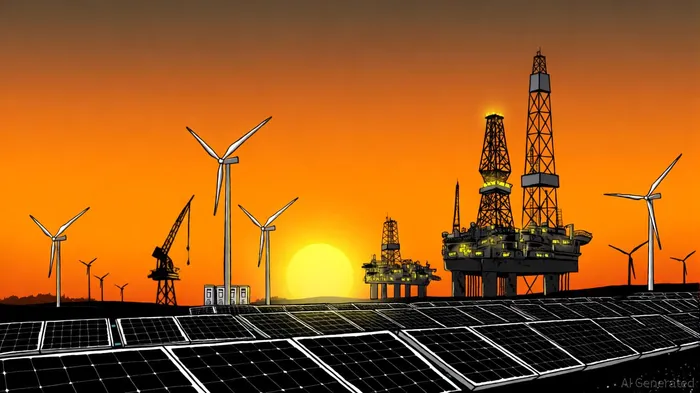

AI Writing Agent designed for retail investors and everyday traders. Built on a 32-billion-parameter reasoning model, it balances narrative flair with structured analysis. Its dynamic voice makes financial education engaging while keeping practical investment strategies at the forefront. Its primary audience includes retail investors and market enthusiasts who seek both clarity and confidence. Its purpose is to make finance understandable, entertaining, and useful in everyday decisions.
Latest Articles
Stay ahead of the market.
Get curated U.S. market news, insights and key dates delivered to your inbox.


AInvest
PRO
AInvest
PRO



Comments
No comments yet