
Energy Transition and Equity Markets: Navigating Strategic Sector Rotation Through EIA Refinery Data
 Aime Summary
The U.S. Energy Information Administration's (EIA) weekly refinery utilization rate has become a critical barometer for investors seeking to navigate the shifting tides of energy demand and industrial activity. As of July 11, 2025, the rate stood at 93.9%, a 0.8% drop from the previous week and a 1.5% annual decline. This trend, far from a mere cyclical fluctuation, reflects a structural realignment in the energy economy. For investors, the implications are profound: the data serves as a leading indicator of sector-specific risks and opportunities, offering a roadmap for strategic rebalancing in a decarbonizing world.
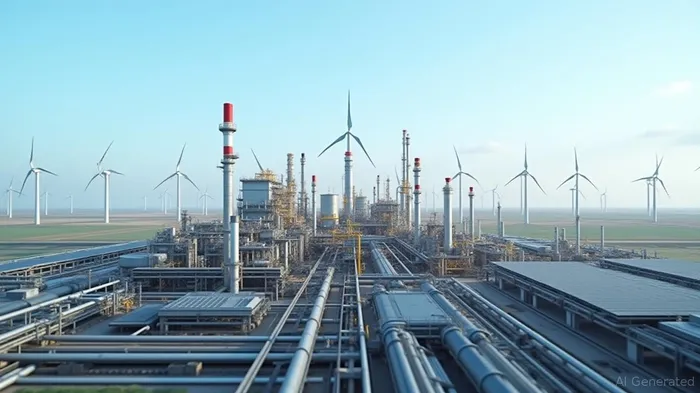
The Structural Shift in Refining Capacity
The decline in utilization rates is driven by three key factors: maintenance cycles in the Gulf Coast, planned refinery closures in California, and disruptions in Red Sea shipping routes. California's decision to reduce refining capacity by 17% by 2026 is emblematic of a broader trend. As gasoline demand wanes, refiners are reallocating capital toward biofuels and hydrogen production, while automakers face declining ICE vehicle sales. This transition is not confined to the U.S. but is part of a global shift toward electrification and decarbonization.
The EIA's data reveals stark regional disparities. The Gulf Coast, with utilization at 93.5%, remains a resilient hub due to its proximity to shale oil and export infrastructure. Conversely, the East Coast, such as Phillips 66's Bayway refinery operating at 59% capacity, reflects aging infrastructure and a strategic reallocation of refining capacity toward regions with stronger export potential. These imbalances underscore the importance of regional exposure in portfolio construction.
Sector Rotation: Winners and Losers
The refinery utilization rate acts as a proxy for industrial demand. When utilization exceeds 92%, industrial conglomerates like CaterpillarCAT-- (CAT) and 3MMMM-- (MMM) tend to outperform, as their products—tractors, chemicals, and infrastructure components—are tied to refined fuel demand. Conversely, automakers such as TeslaTSLA-- (TSLA), FordF-- (F), and General MotorsGM-- (GM) underperform during periods of rising crude runs, as higher fuel costs dampen ICE vehicle demand and increase input costs for EV components.
Energy services firms, however, are paradoxically benefiting. SchlumbergerSLB-- (SLB) and Baker HughesBKR-- (BKR) have seen a 14% growth in refinery maintenance contracts, driven by AI-powered predictive tools and routine shutdowns. This highlights a critical insight: even within traditional energy sectors, opportunities exist for investors who focus on efficiency and innovation.
Strategic ETFs and Policy Considerations
For investors seeking to leverage these dynamics, sector rotation ETFs offer a disciplined approach. The SPDR SSGA U.S. Sector Rotation ETF (XLSR) and the BlackRockBLK-- U.S. Industry Rotation ETF (INRO) provide exposure to sectors poised to outperform based on forward-looking analysis. Similarly, the Main Sector Rotation ETF (SECT) seeks to outperform the S&P 500 in rising markets while limiting losses during declines.
The EIA data also intersects with Federal Reserve policy. Gasoline accounts for 8% of the CPI basket, and sustained price spikes could trigger rate hikes. Investors must monitor key dates, such as the July 10 crude inventory report and the July 30 Fed meeting, to anticipate policy responses.
Rebalancing Toward Resilience
The energy transition demands a rethinking of portfolio allocations. Investors should overweight energy-efficient technologies—such as NextEra EnergyNEE-- (NEE) and Dominion EnergyD-- (D)—and hydrogen infrastructure firms, while underweighting automakers and fuel-dependent industries. Regional exposure to the Gulf Coast's refining dominance, via pipeline operators like Kinder MorganKMI-- (KMI) and Magellan Midstream Partners (MMP), can also enhance resilience.
Conclusion: A Decarbonizing Economy Demands Adaptation
The EIA's refinery utilization rate is more than a lagging indicator—it is a leading signal for portfolio reallocation. The decline from 93.9% in 2025 compared to 2024 reflects a structural shift in the energy economy, with implications for industrial demand, fuel pricing, and policy. Investors who adapt by embracing energy-efficient technologies, hedging against fuel-dependent industries, and leveraging EIA data as a compass in a rapidly evolving energy landscape are positioned to thrive.
In a world where energy transition is no longer a trend but a necessity, the future belongs to those who align their portfolios with the Gulf Coast's refining dominance and the rise of zero-carbon infrastructure. The data is clear: the time to act is now.

Stay ahead of the market.
Get curated U.S. market news, insights and key dates delivered to your inbox.




Comments
No comments yet