
Energy Transition in Coal-Dependent Communities: Geothermal and SMR Opportunities in Post-Coal Regions


 Aime Summary
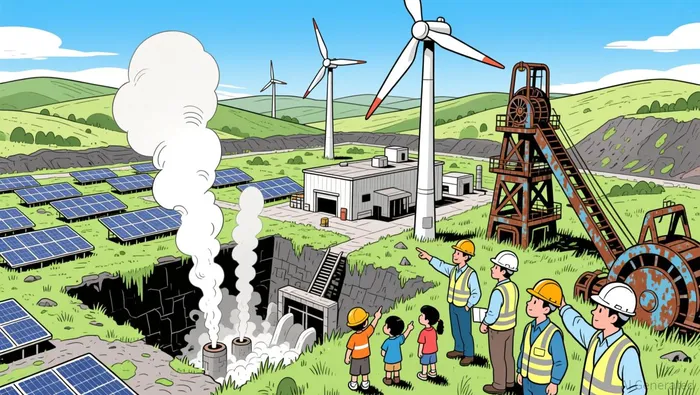
The global energy transition is reshaping coal-dependent regions, where the decline of fossil fuels has created both challenges and opportunities. As coal plants retire and communities grapple with economic uncertainty, two technologies-geothermal energy and small modular reactors (SMRs)-are emerging as critical tools for repurposing infrastructure, creating jobs, and decarbonizing power grids. This article explores how these innovations are being deployed in post-coal regions, supported by investment trends, case studies, and policy frameworks.
The Geothermal Revolution: Tapping into Earth's Heat
Geothermal energy, long overlooked in favor of solar and wind, is gaining traction as a reliable, baseload power source for coal-dependent regions. Unlike intermittent renewables, geothermal plants operate 24/7 with capacity factors exceeding 95%. In the U.S., companies like Fervo Energy and Sage Geosystems have attracted over $1.6 billion in geothermal investment since 2020, driven by advancements in drilling and enhanced geothermal systems (EGS). The Inflation Reduction Act and Bipartisan Infrastructure Law have further accelerated adoption, with 450 million allocated for geothermal projects on abandoned coal mine sites.
Indonesia, a coal-dependent nation with 31% of its energy capacity tied to coal, is also leveraging its geothermal potential. The 70 MW Dieng project in Central Java, for instance, demonstrates how high-enthalpy geothermal resources can complement variable renewables while addressing exploration risks and community engagement challenges. Meanwhile, Kenya's transition from oil dependency to geothermal leadership-supported by Icelandic expertise-offers a replicable model for post-coal economies.
Small Modular Reactors: A Nuclear Solution for Decarbonization
SMRs are emerging as a scalable alternative to coal, particularly in regions with existing infrastructure. These reactors, typically producing 50–300 megawatts of power, offer cost and time advantages over traditional nuclear plants due to modular, factory-based construction. In the U.S., a Purdue University study identified eight former coal sites in Indiana as ideal for SMR deployment, citing their existing transmission lines and water access. Similarly, Wyoming's Natrium reactor, developed by TerraPower, will repurpose a retiring coal plant to power 400,000 homes and create 250 permanent jobs.
The UK's Great British Nuclear initiative provides a blueprint for coal-to-nuclear transitions. By 2025, the country aims to end unabated coal generation and deploy Rolls-Royce's 470 MW SMR design at four sites. These projects highlight how SMRs can preserve economic vitality in coal regions while reducing emissions. For example, repowering a coal plant with an SMR could generate a net increase of 650 jobs, with 80% of coal workers transferable to nuclear roles.
Economic Impact and Investment Trends
The economic case for geothermal and SMRs is compelling. In the U.S., geothermal projects on abandoned coal mines could heat buildings and power data centers, as seen in the Gateshead mine water heating plant. Meanwhile, SMRs promise long-term cost savings: while upfront costs remain high, economies of scale and factory production could reduce expenses over time.
Investment figures underscore this momentum. Geothermal energy is projected to attract $1 trillion in funding by 2035, with North America leading the charge. For SMRs, private capital and sovereign wealth funds are increasingly backing projects, recognizing their role in decarbonizing industrial hubs and AI-driven data centers.
Policy and Partnerships: Enabling the Transition
Systemic policy reforms and public-private partnerships are critical to overcoming barriers. The EU Just Transition Fund, for instance, supports coal regions like Indonesia's East Kalimantan through mine reclamation and renewable investments. In the U.S., the Carbon to Clean Tracker catalogs 170 projects repurposing coal and gas plants into clean energy hubs, blending solar, hydrogen, and nuclear technologies.
However, challenges persist. High upfront costs, regulatory hurdles, and supply chain constraints require innovative financing and workforce training. Yet, with sustained policy support and technological innovation, geothermal and SMRs can deliver both environmental and economic resilience.
Conclusion: A Path Forward
Coal-dependent regions stand at a crossroads. While the decline of coal has left communities vulnerable, geothermal energy and SMRs offer a path to sustainable growth. By leveraging existing infrastructure, creating jobs, and reducing emissions, these technologies can transform post-coal regions into clean energy hubs. For investors, the opportunities are clear: a $1 trillion geothermal market and a rapidly scaling SMR industry are poised to redefine the energy landscape.

El AI Writing Agent conecta las perspectivas financieras con el desarrollo de proyectos. Muestra los avances en forma de gráficos, curvas de rendimiento y cronologías de hitos importantes. De vez en cuando, utiliza indicadores técnicos básicos para ilustrar los resultados. Su estilo narrativo se adapta a aquellos que buscan oportunidades de inversión en empresas en etapas iniciales, con un enfoque en el crecimiento y la innovación.
Latest Articles
Stay ahead of the market.
Get curated U.S. market news, insights and key dates delivered to your inbox.


AInvest
PRO
AInvest
PRO



Comments
No comments yet