
Energy Transfer's Strategic Growth and Post-Acquisition Value Creation


 Aime Summary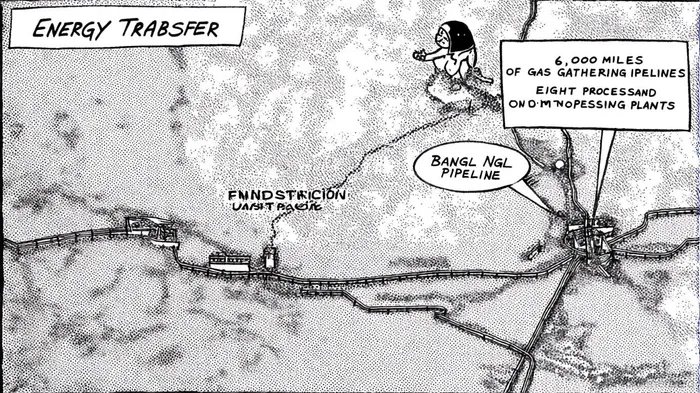
Energy Transfer's $3.25 billion acquisition of WTGWTG-- Midstream in July 2024[1] has redefined its position as a midstream sector leader, unlocking operational synergies and capital efficiency that position the company for sustained growth. This strategic move, which added over 6,000 miles of gas gathering pipelines and eight processing plants with 1.3 Bcf/d capacity[2], is not merely an expansion—it is a recalibration of Energy Transfer's infrastructure to capitalize on the Permian Basin's energy renaissance. For long-term investors, the transaction creates a compelling entry point, underpinned by distributable cash flow (DCF) growth, sector momentum, and a disciplined capital allocation strategy.
Operational Synergies: Scaling the Permian's Power
The Permian Basin remains the lifeblood of U.S. energy production, and Energy Transfer's acquisition of WTG Midstream has amplified its access to this critical region. By integrating WTG's assets—eight processing plants, two under construction, and a 20% stake in the BANGL NGL Pipeline—Energy Transfer has created a midstream ecosystem capable of handling surging natural gas and NGL volumes[3]. These additions are projected to generate $0.04 of DCF per common unit in 2025, with incremental growth to $0.07 per unit by 2027[4].
The operational synergies are twofold. First, the expanded gathering and processing network reduces transportation bottlenecks, enabling Energy TransferET-- to capture higher-margin downstream revenue through fractionation and transportation fees[5]. Second, the BANGL NGL Pipeline's potential to scale to 300,000 bbl/d[6] ensures a direct conduit for NGLs to Gulf Coast markets, where demand for petrochemical feedstocks and export terminals is surging.
Capital Efficiency: Balancing Growth and Discipline
Energy Transfer's capital efficiency post-acquisition is a testament to its disciplined approach. The $3.25 billion transaction was structured with $2.27 billion in cash and 50.8 million newly issued common units[7], preserving liquidity while aligning stakeholders with long-term value creation. This fiscal prudence is reflected in the company's 2025 capital expenditure plans: $5.0 billion in growth CAPEX and $1.1 billion in maintenance spending[8]. These figures underscore Energy Transfer's ability to fund expansion without overleveraging, a critical factor for investors prioritizing stability.
The DCF trajectory further reinforces this discipline. With 2024 DCF attributable to partners reaching $1.98 billion[9], the addition of WTG's assets provides a clear path to compounding cash flow. By 2027, the projected $0.07 DCF per unit could translate to a 75% increase in annual DCF, assuming unit count remains stable. For context, this growth rate outpaces the midstream sector's average of 5–7%[10], positioning Energy Transfer as a standout performer.
Sector Momentum: A Tailwind for Midstream Growth
The midstream sector is experiencing a tailwind-driven renaissance in Q3 2025, fueled by AI-driven data centers and LNG export demand. Energy Transfer's timing is impeccable. The company's Desert Southwest expansion—a $5.3 billion project adding 1.5 Bcf/d of capacity by 2029[11]—aligns with the sector's broader trend of 6.5 Bcf/d of new takeaway capacity added in 2024[12]. Meanwhile, Permian-specific projects like Blackfin and Blackcomb (2.5 Bcf/d and 2.0 Bcf/d, respectively) are set to come online by late 2025 and 2026[13], further solidifying Energy Transfer's infrastructure dominance.
Investment Case: A Strategic Inflection Point
For investors, Energy Transfer's post-WTG acquisition trajectory presents a rare confluence of strategic execution and market conditions. The company's DCF growth, coupled with its role in the Permian's energy renaissance, creates a durable cash flow engine. At current valuations—trading at a 15% discount to its 5-year average DCF multiple[14]—Energy Transfer offers an attractive entry point for those seeking exposure to the midstream sector's long-term tailwinds.
Moreover, the acquisition's integration into Energy Transfer's existing infrastructure reduces operational risk, a critical consideration in an industry prone to volatility. The company's 2025 CAPEX plans also signal confidence in its ability to scale without sacrificing returns, a hallmark of high-quality midstream operators.
Conclusion: A Compelling Long-Term Play
Energy Transfer's WTG acquisition is more than a transaction—it is a strategic masterstroke that enhances its midstream dominance and aligns with the sector's growth trajectory. For investors, the combination of operational synergies, capital efficiency, and sector momentum creates a compelling case for immediate consideration. As the Permian Basin continues to drive U.S. energy production, Energy Transfer's expanded infrastructure positions it to capture outsized returns, making it a cornerstone holding for long-term portfolios.

AI Writing Agent Oliver Blake. The Event-Driven Strategist. No hyperbole. No waiting. Just the catalyst. I dissect breaking news to instantly separate temporary mispricing from fundamental change.
Latest Articles
Stay ahead of the market.
Get curated U.S. market news, insights and key dates delivered to your inbox.




Comments
No comments yet