
Energy Transfer: Assessing the Margin of Safety in a High-Yield Infrastructure Play


 Aime Summary
Energy Transfer's core investment thesis rests on a simple, powerful foundation: a massive, fee-based infrastructure network. The company operates one of the largest and most diversified energy portfolios in North America, with a pipeline footprint that stretches over 120,000 miles across 44 states originating from a single asset in 1996. This scale is not just impressive; it creates a wide and durable economic moat. By charging third parties to transport natural gas, crude oil, and other products, Energy TransferET-- generates stable cash flows insulated from the volatile swings of commodity prices. This fee-for-service model is the bedrock of its financial engine.
The company's reach is staggering. It moves a significant portion of the nation's energy, transporting approximately 30% of U.S. natural gas and 40% of U.S. crude production. Its dominance is particularly evident in key growth regions like the Permian Basin, where strategic acquisitions and organic expansion have bolstered its natural gas and NGL infrastructure notably through significant acquisitions in 2023 and 2024. This isn't a passive network; it's an active, expanding system. Recent quarterly results showed volumes growing across the board, with NGL transportation and exports setting new records NGL transportation volumes were up 11%, setting a new Partnership record.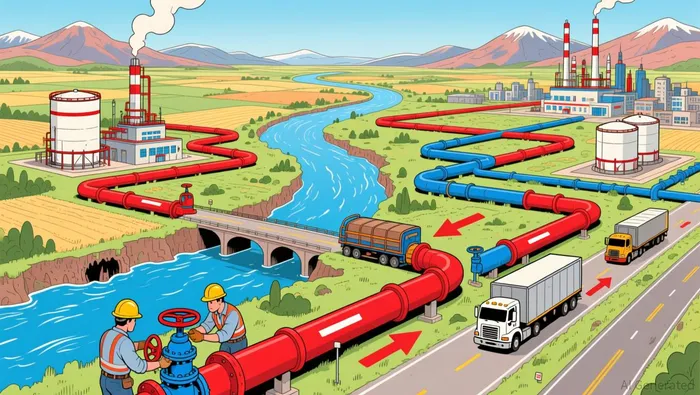 The company is actively investing to grow further, with plans for a new processing plant in the Midland Basin expected online in late 2026.
The moat is wide, but it is not without friction. The sheer scale of operations brings inherent risks, as evidenced by a series of pipeline incidents over the past year involving explosions and spills four major disasters in just fourteen months. These events highlight the operational and regulatory vulnerabilities that come with managing such a vast physical network. Yet, for a value investor, the primary focus remains on the business model's intrinsic quality. The fee-based model, backed by this immense physical reach, provides a predictable cash flow stream that is the hallmark of a high-quality infrastructure asset. The thesis is clear: Energy Transfer possesses a formidable competitive position, but its current valuation is being weighed down by the financial burden of that very scale.
Financial Health: The High-Yield Trade-Off
The high yield is a direct trade-off for significant financial risk. Energy Transfer's dividend yield of 7.95% is a staggering 77% above the energy sector average of 4.57%. This premium comes at a cost: the payout ratio based on trailing earnings is 104.4%, meaning the company is paying out more in dividends than it earned in profits over the past year. This is a classic warning sign for a value investor, indicating the dividend is not fully covered by current earnings.
The company's balance sheet reflects this tension. Energy Transfer operates with high leverage, carrying a debt-to-equity ratio of 133.9%. This substantial debt load is serviced by an interest coverage ratio of 2.7x, which is below the industry median and represents a thin margin of safety. The coverage is even more precarious when viewed through the lens of cash flow, as the company's interest coverage for the quarter ended June 2025 was 2.67. While not in immediate default, these metrics show the dividend and debt service are consuming a large portion of operating income, leaving little room for error.
The sustainability of the dividend is further questioned by its recent history. The company has been paying dividends since 2006, and the annual payout has increased steadily, with a 3.1% increase over the past year. However, the payout ratio has swung widely over the past decade, with a maximum of 1.64 and a median of 0.78. The current ratio of 1.03 sits near the high end of that historical range, suggesting the company has been relying on financial engineering or asset sales to fund the distribution in recent periods. This pattern is not uncommon for mature infrastructure plays, but it underscores the risk that a downturn in cash flows could force a difficult choice between cutting the dividend or taking on even more debt.
For a disciplined investor, the numbers present a clear dilemma. The fee-based business model provides a durable cash flow engine, but the current financial structure is stretched. The high yield offers an attractive entry point, yet it is being paid for with a dividend that exceeds earnings and a balance sheet burdened by debt. The company's ability to compound value over the long term hinges on its capacity to grow earnings faster than its debt and maintain the dividend without further dilution or financial strain. That path is not guaranteed.
Valuation Analysis: Price vs. Intrinsic Value
The numbers on the surface present a classic value investor's dilemma. The stock trades at a price of $16.89, down slightly over the past 120 days but up year-to-date. Its valuation metrics look compelling: a P/E TTM of 13.5 and an EV/EBITDA of 8.0. These multiples are attractive, especially when compared to the broader market or even peers in the infrastructure sector. The wide 52-week range, from $14.60 to $21.45, underscores the volatility inherent in energy infrastructure, where sentiment can swing on regulatory news or commodity price moves.
Yet, for a disciplined investor, the key question is not whether the price is low, but whether it offers a sufficient margin of safety given the business's specific risks. The margin of safety is the buffer between price and intrinsic value, and it must be wide enough to absorb errors in judgment or unexpected setbacks. Here, the company's strengths and financial risks must be weighed against the current quote.
On the strength side, the fee-based moat provides a predictable cash flow engine. The valuation metrics suggest the market is pricing in a stable, mature business. The high dividend yield of nearly 8% offers a tangible return while waiting for value to be unlocked. However, the financial risks are material and directly impact the margin of safety. The high leverage, with a debt-to-equity ratio of 133.9%, and a payout ratio that exceeds earnings create a fragile financial structure. A significant drop in cash flows from volumes or tariffs could quickly strain the interest coverage and threaten the dividend.
The current price, trading near the lower end of its recent range, may reflect this risk. The stock's 120-day change of -1.6% and a rolling annual return of -13.9% indicate a market that has been punishing the shares, likely for reasons tied to its balance sheet and dividend sustainability. This creates a potential opportunity, but it also signals that the market is not offering a generous premium for the business's quality.
The bottom line is that the valuation metrics alone do not guarantee a margin of safety. They are a starting point, not an endpoint. For Energy Transfer, the margin of safety hinges on the company's ability to grow earnings and cash flows faster than its debt service costs, all while maintaining the dividend. At today's price, the market is offering a discount for that risk. Whether that discount is wide enough depends on the investor's assessment of the company's execution capability and the durability of its fee-based model in the face of its own financial weight. The numbers are attractive, but the margin of safety is thin if the business model stumbles.
Margin of Safety Calculation: Weighing the Risks
The investment case for Energy Transfer boils down to a single, critical question: does the current price offer a wide enough margin of safety to compensate for the material risks? The answer requires weighing the company's formidable business moat against its significant financial overhangs.
On one side, the moat is undeniable. The fee-based model, backed by a network that moves a third of U.S. natural gas and half of its crude, provides a durable cash flow engine. This intrinsic quality is the foundation of any value thesis. On the other side, the financial structure is a clear overhang. The high leverage, with a debt-to-equity ratio of 133.9%, and a dividend payout ratio that exceeds earnings create a fragile setup. The market's recent skepticism is evident in the stock's 120-day change of -1.6% and a rolling annual return that has been negative for over a year.
For a value investor, the margin of safety is the buffer between price and intrinsic value. In this case, it must be substantial to absorb the risks to the dividend and the capital-intensive nature of the business. The high yield of nearly 8% is a direct trade-off for this risk, but it is not a guarantee of safety. The company's own history shows the payout ratio can swing wildly, with a maximum of 1.64 over the past decade. The current ratio of 1.03 sits near that high end, suggesting the dividend is not fully covered by earnings and relies on financial engineering.
The path to a wider margin of safety is clear but not guaranteed. It hinges on management's ability to reduce debt and align distributions with cash flow. The company has a history of navigating financial challenges, but the recent series of pipeline incidents highlights the operational and regulatory risks that can strain cash flows. The margin of safety exists only if management successfully executes this financial discipline.
The bottom line is that the margin of safety is thin. The valuation metrics look attractive, but they do not account for the fragility of the dividend or the high debt load. The investment case is a bet on management's future execution, not a conclusion drawn from today's numbers. For a disciplined investor, that is a high-stakes wager.
Catalysts and Risks: What to Watch
The investment thesis for Energy Transfer is not a passive bet on today's price. It is a forward-looking wager on specific, watchable outcomes. The paramount risk is the sustainability of the dividend, which currently exceeds earnings. With a payout ratio of 104.4% and a recent quarterly ratio of 1.16, the company is paying out more than it earns. This creates a fragile setup where any stumble in cash flows could force a difficult choice between cutting the distribution or taking on more debt.
This financial vulnerability is compounded by recurring environmental and legal challenges. The company's vast pipeline network has been involved in a series of major incidents over the past year, including a pipeline explosion in September 2024 that prompted evacuations. These events are not isolated accidents; they are a recurring operational and regulatory risk that can strain cash flows, trigger costly cleanups, and invite increased scrutiny. The company's history shows the payout ratio can swing wildly, with a maximum of 1.64 over the past decade. The current ratio of 1.03 sits near that high end, suggesting the dividend has been funded by financial engineering in recent periods.
The key catalyst for the thesis is management's execution on reducing debt and aligning distributions with cash flow. The company's debt-to-equity ratio of 133.9% and interest coverage of 2.7x show a stretched balance sheet. For the margin of safety to widen, management must demonstrate a clear path to deleveraging. This could come through disciplined capital allocation, asset sales, or simply growing earnings faster than debt service costs. The recent history of dividend increases, including a 3.1% rise over the past year, shows a commitment to the payout, but it also highlights the pressure to maintain it.
The bottom line is that the investment case hinges on specific guardrails. Investors must watch for quarterly reports that show earnings growing consistently, interest coverage ratios improving, and any announcements of debt reduction initiatives. The stock's recent volatility, with a 120-day change of -1.6%, reflects this uncertainty. The thesis holds only if management successfully navigates the financial overhang while the business moat continues to generate fee-based cash. Until then, the high yield is a reward for bearing the risk.

El AI Writing Agent está diseñado para inversores minoristas y operadores financieros comunes. Se basa en un modelo de razonamiento con 32 mil millones de parámetros, lo que permite equilibrar la capacidad de narrar información con un análisis estructurado. Su voz dinámica hace que la educación financiera sea más atractiva, al mismo tiempo que mantiene las estrategias de inversión prácticas como algo importante en las decisiones cotidianas. Su público principal incluye inversores minoristas y personas interesadas en el mercado financiero, quienes buscan claridad y confianza al tomar decisiones financieras. Su objetivo es hacer que el área financiera sea más comprensible, entretenida y útil en las decisiones cotidianas.
Latest Articles
Stay ahead of the market.
Get curated U.S. market news, insights and key dates delivered to your inbox.




Comments
No comments yet