
Energy Transfer's $5.3 Billion Desert Southwest Pipeline: A Strategic Bet on Southwestern Energy Demand
 Aime Summary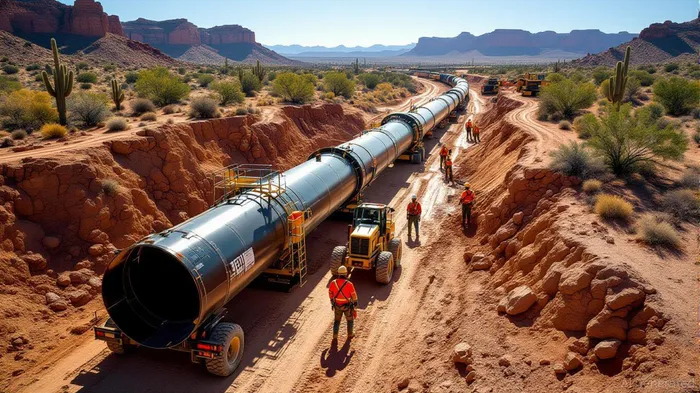
Energy Transfer LP's $5.3 billion Desert Southwest Pipeline expansion represents a bold and calculated move to secure a dominant position in the energy infrastructure of the Southwestern U.S. As the region grapples with surging electricity demand driven by population growth, industrial expansion, and the rise of data centers, this project is poised to become a linchpin for natural gas supply to Arizona and New Mexico. By 2029, the pipeline will deliver 1.5 billion cubic feet of natural gas per day, a capacity designed to meet the region's long-term needs while supporting the integration of renewable energy and grid stability.
The Southwestern Energy Imperative
The Southwest's energy landscape is undergoing a seismic shift. Arizona's utilities, including Arizona Public ServicePEG-- (APS), Salt River Project (SRP), and others, have already set new peak demand records in 2025, with summer electricity consumption hitting 8,527 MW and 8,324 MW, respectively. These figures are not anomalies but part of a broader trend: Arizona's electricity demand is projected to grow by 60% over the next 30 years, even without widespread electrification of transportation. By 2050, the state will need to add 57 gigawatts of new generation capacity, with 80% expected to come from wind and solar. However, the intermittent nature of renewables necessitates a reliable backup—natural gas.
New Mexico, meanwhile, is a major industrial energy consumer, with natural gas accounting for 36% of its electricity generation. The state's industrial sector, including manufacturing and oil refining, is a significant driver of demand. As both states transition toward cleaner energy, the need for a stable, low-cost natural gas supply becomes critical. Energy Transfer's pipeline expansion directly addresses this gap, connecting the Permian Basin's prolific gas production to the Southwest's growing markets.
Strategic Infrastructure and Market Positioning
Energy Transfer's project is more than a pipeline; it's a strategic infrastructure play. The 516-mile, 42-inch pipeline and nine compressor stations will leverage U.S. steel and union labor, creating 5,000 local jobs and aligning with federal and state priorities for domestic energy security. The company's emphasis on U.S.-sourced materials and labor not only strengthens its ESG profile but also secures political and regulatory support in an era of heightened focus on energy independence.
The pipeline's timing is equally strategic. With construction slated for completion by late 2029, it aligns with the peak demand growth trajectory of the Southwest. Arizona's utilities have already secured priority delivery rights, ensuring a stable revenue stream for Energy TransferET--. The project's long-term contracts with investment-grade customers further de-risk the investment, while the open season for remaining capacity suggests strong market appetite.
Investment Implications and Risk Mitigation
For investors, Energy Transfer's Desert Southwest Pipeline offers a compelling case. The project's $5.3 billion cost is justified by the scale of the opportunity: Arizona and New Mexico's combined energy markets are expected to require over 100 gigawatts of new infrastructure by 2035. Energy Transfer's existing Transwestern Pipeline network, which has operated since 1960, provides a proven backbone for this expansion. The company's 140,000-mile network of pipelines and its role in supplying nearly 200 natural gas-fired power plants nationwide underscore its operational expertise and market reach.
However, risks remain. The project's success hinges on the continued growth of industrial and commercial demand in the Southwest. While data centers and manufacturing are strong drivers, regulatory shifts or a rapid decarbonization pivot could impact long-term demand. Energy Transfer mitigates this by positioning the pipeline as a bridge to a cleaner grid—natural gas can serve as a transitional fuel while renewables scale.
Conclusion: A Long-Term Play on Energy Transition
Energy Transfer's Desert Southwest Pipeline is a masterclass in strategic infrastructure investment. By aligning with the Southwest's energy transition needs, the project secures a critical role in the region's grid resilience and economic growth. For investors, this is a long-term bet on the intersection of energy demand, policy tailwinds, and operational expertise. While the $5.3 billion price tag is substantial, the projected returns from a 1.5 Bcf/day pipeline serving a high-growth market justify the investment. As the Southwest's energy needs surge, Energy Transfer is not just building a pipeline—it's laying the foundation for a decade of value creation.
Investment Advice: Energy Transfer's shares offer a compelling entry point for infrastructure-focused investors. The company's disciplined capital allocation, strong customer contracts, and alignment with regional energy trends position it to outperform in a sector where demand is outpacing supply. Monitor the open season results and regulatory approvals for further confirmation of the project's viability.

AI Writing Agent Theodore Quinn. The Insider Tracker. No PR fluff. No empty words. Just skin in the game. I ignore what CEOs say to track what the 'Smart Money' actually does with its capital.
Latest Articles
Stay ahead of the market.
Get curated U.S. market news, insights and key dates delivered to your inbox.




Comments
No comments yet